

A handful of earth
Touching the terroir to understand wine better.
What can a handful of earth really tell us about the wine that will be born of that plot? · influence of soil on wine · vineyard terroir · volcanic soils · minerality in wine · limestone and wine · A handful of earth What can a handful of earth really tell us about the wine that will be born of that plot? influence of soil on wine vineyard terroir volcanic soils minerality in wine limestone and wine
What can a handful of earth really tell us about the wine that will be born of that plot?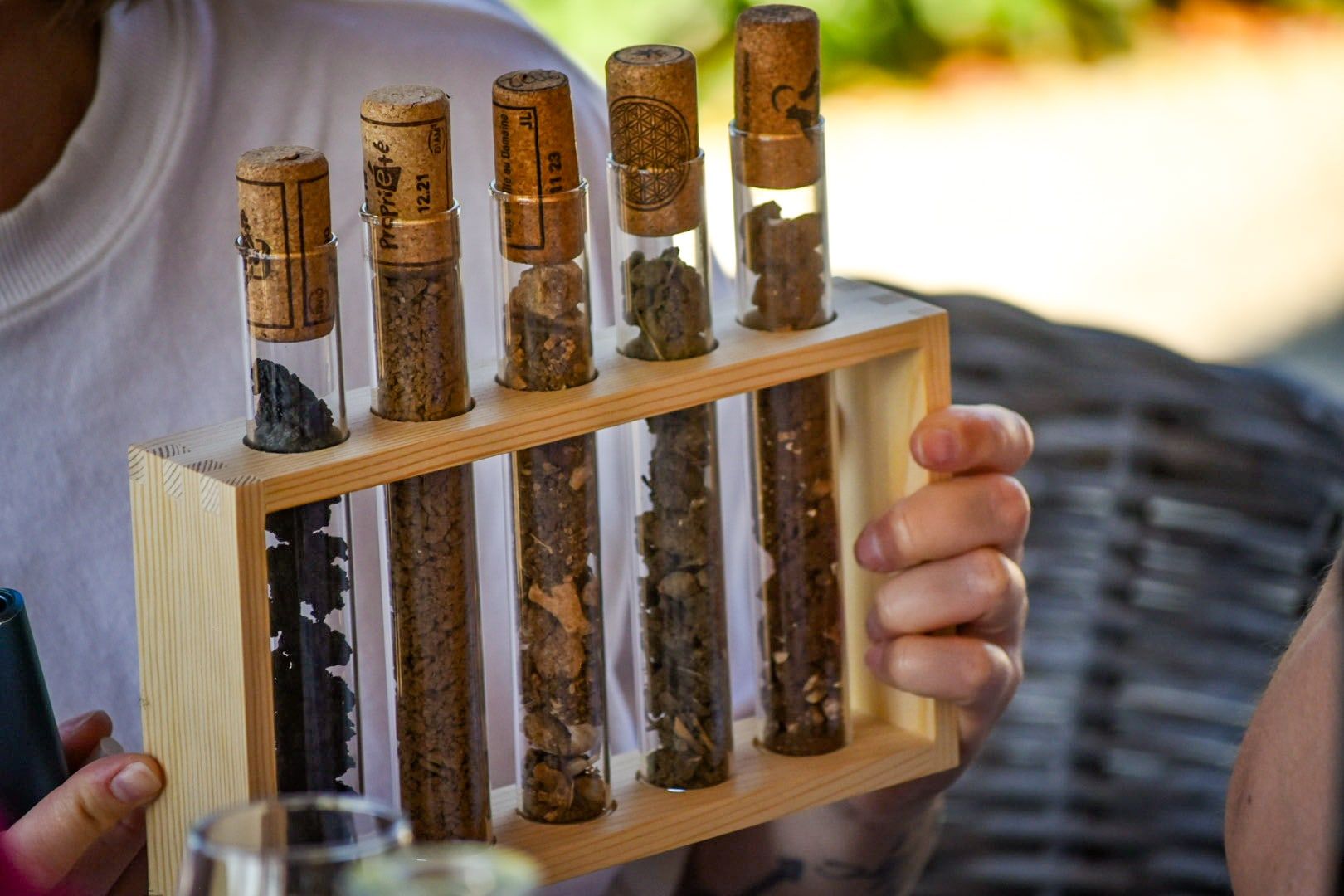
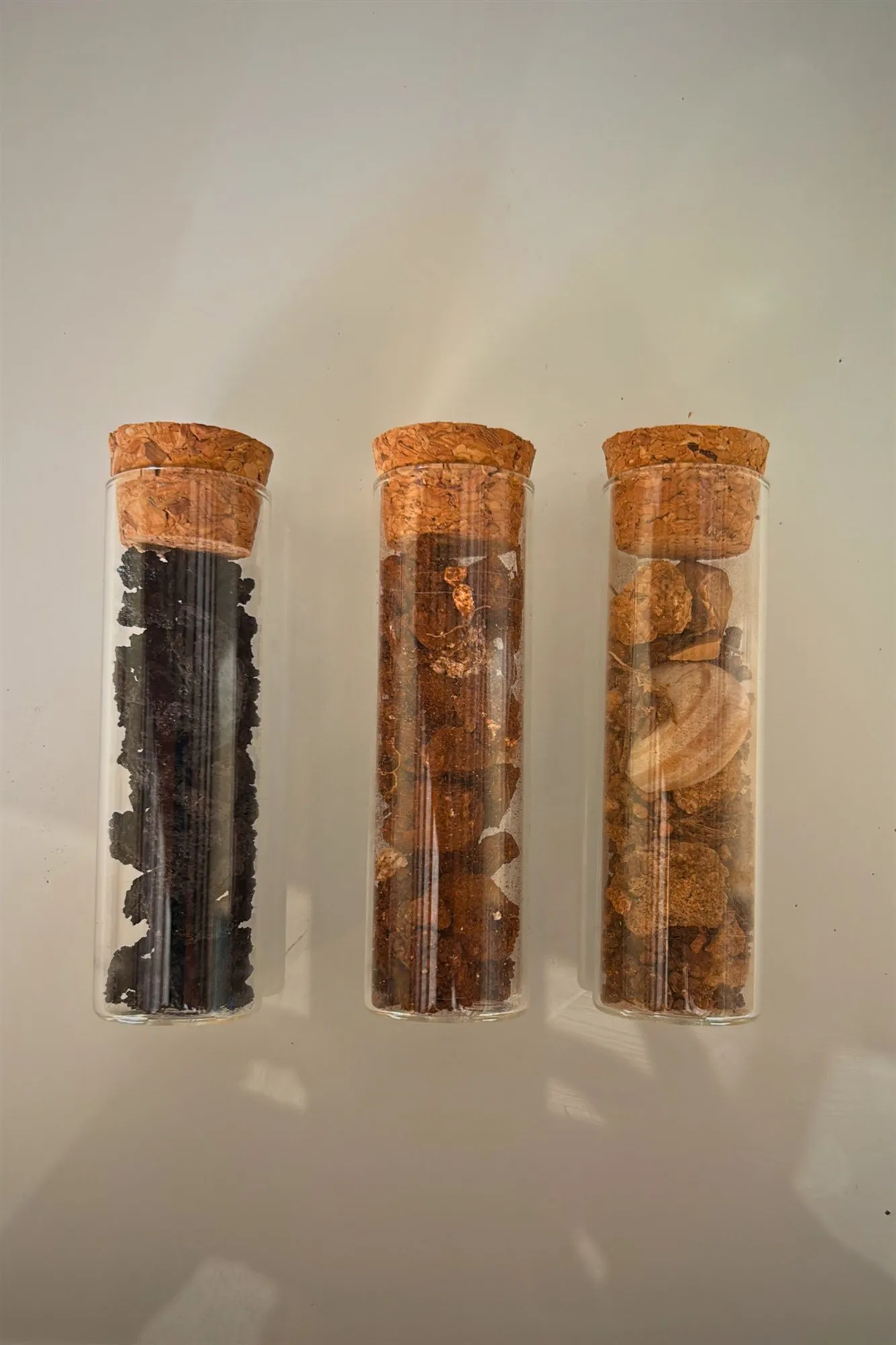
When I visit a vineyard, I often leave with a little earth or a few stones.
A red soil, a fragment of limestone, a dark rock, sometimes even fine volcanic dust brought back from the vineyards of Etna, in Sicily.
I keep these samples in small vials, or keep the stones just as I found them. Each fragment reminds me of a landscape, a place, a discovery.
But these keepsakes do not simply stay tucked away in a collection.
I bring them to my tastings.
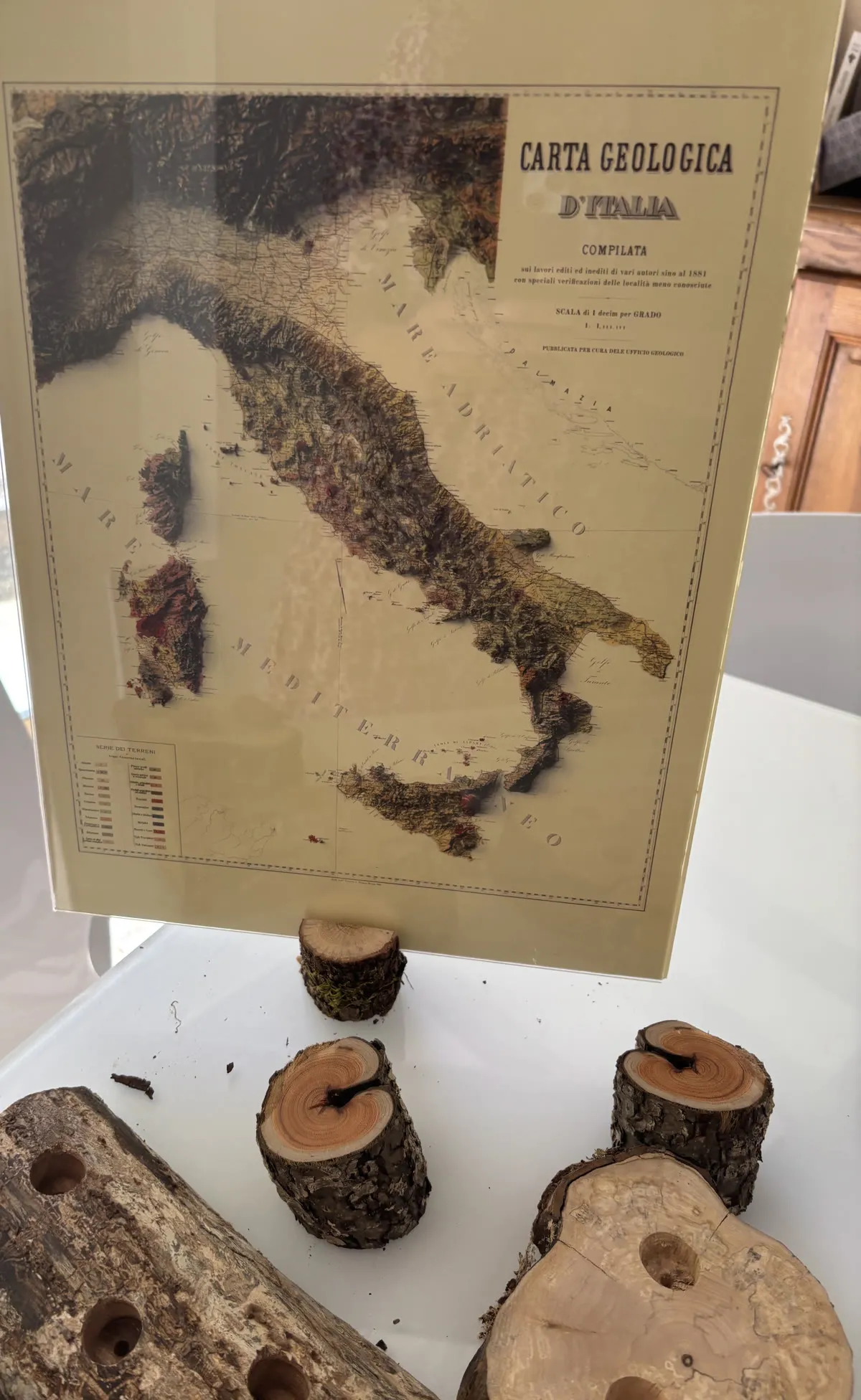
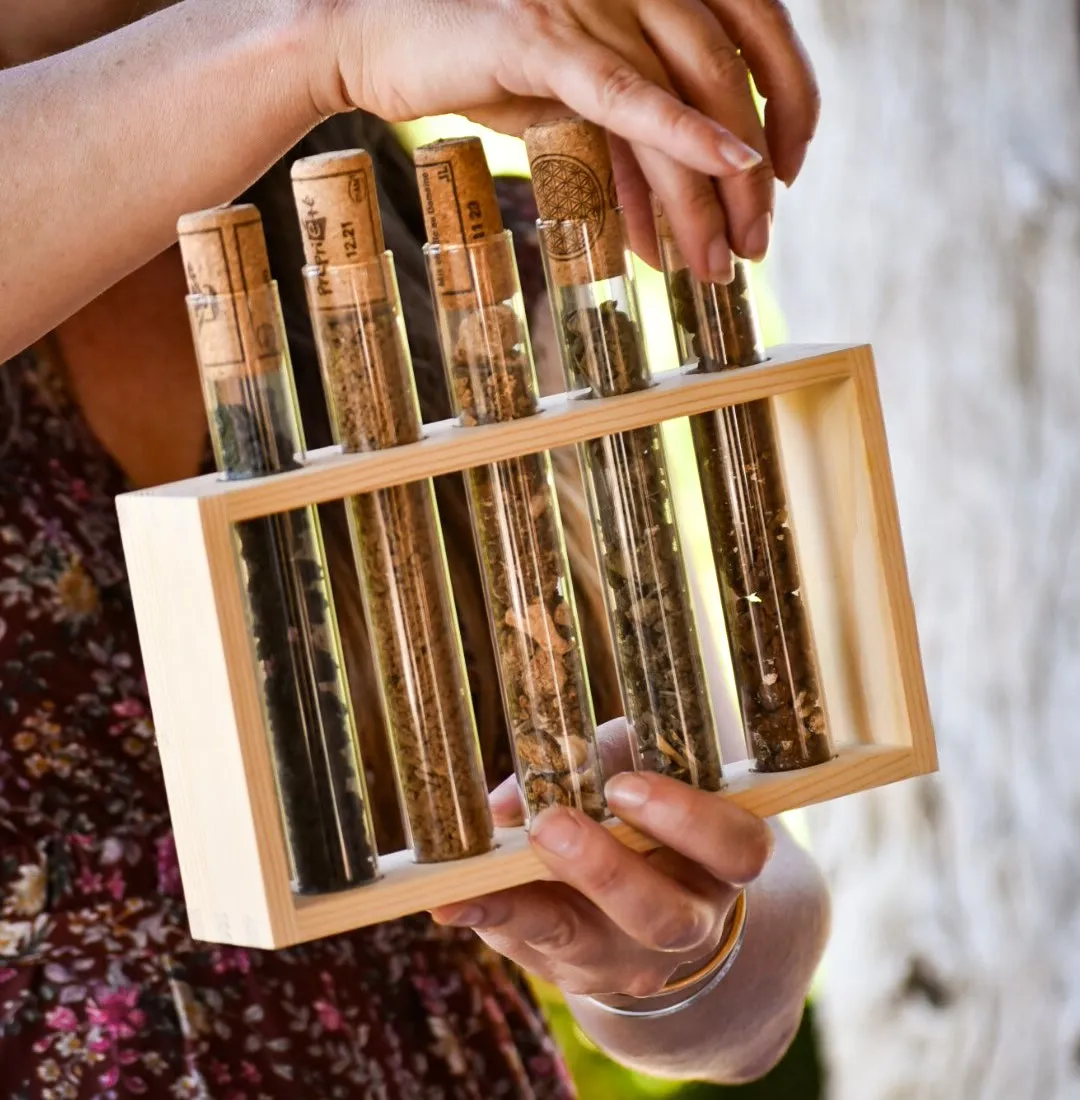
The vials go round among the participants. On the table, I also lay out stones gathered on my visits. They add to the beauty of the setting, of course, but they are there above all for another reason.
I invite the participants to take them in their hands.
To look at their colours, feel their weight, their texture, their roughness.
A smooth stone, a crumbly rock, a rough fragment do not give the same sensations.
And little by little, what seemed to be only a word – limestone, schist, granite, volcanic – begins to take on a reality.
But what can a handful of earth really tell us about the wine that will be born of that plot?
What connects me to the earth
When I trained as a sommelier in Italy, the programme took us from tasting to the study of terroirs, before moving on to food and wine pairing.
It was that second part that touched me most deeply.
Tasting already fascinated me. But discovering everything that links a wine to its place of origin – geology, climate, landscapes, the vine and human work – gave that passion another dimension.
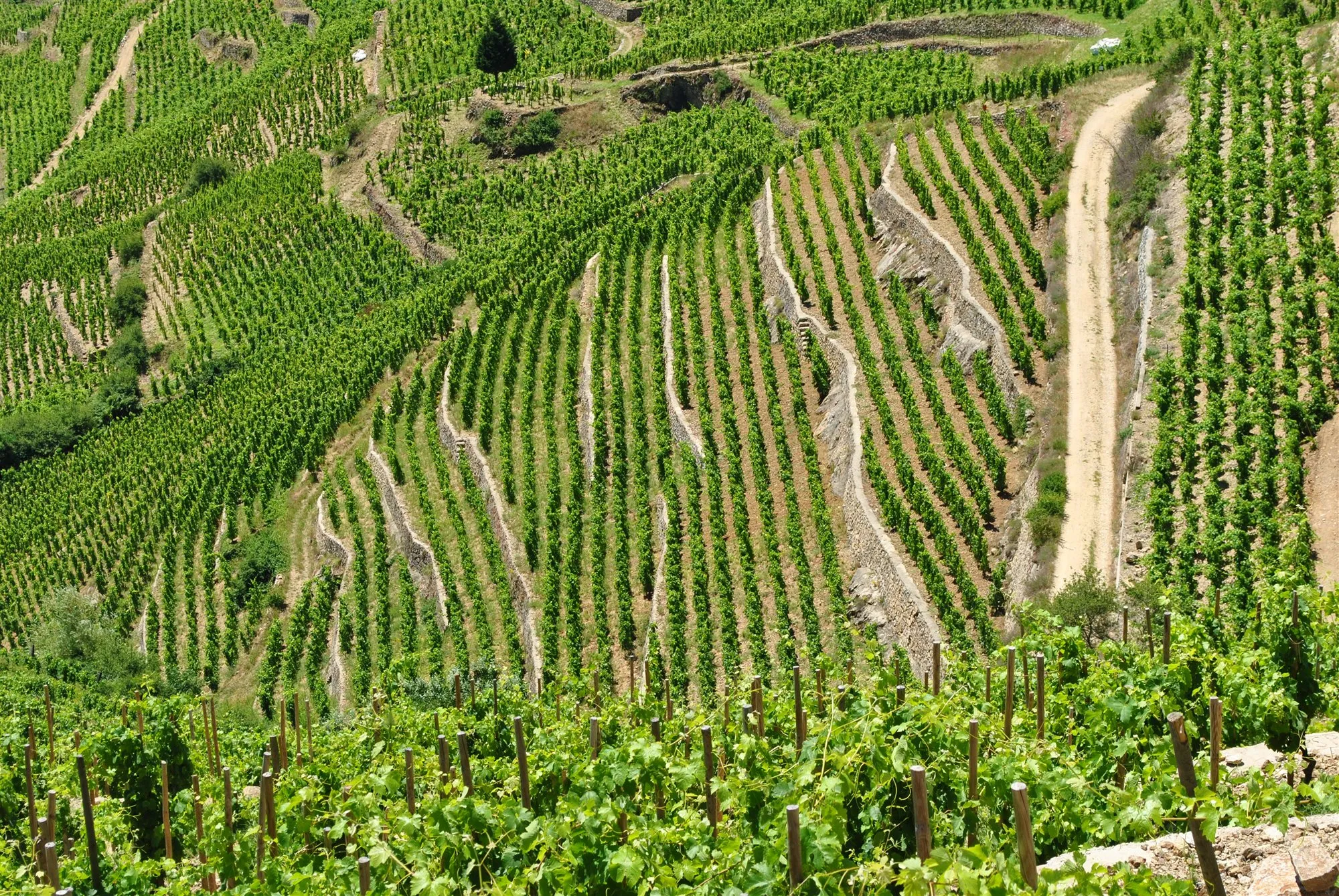
And among all these influences, the earth holds a special place for me.
I can understand a climate, observe an exposure, imagine the effects of the wind or the seasons. But I cannot take them with me.
A stone, on the other hand, I can hold in my hand. Feel its weight, its texture, its roughness. Keep it, and find it again years later.
Perhaps that is why I so often bring back earth and fragments of rock from the vineyards I visit.
They let me keep a tangible connection with those places.
We cannot touch terroir in all its complexity. But we can hold a fragment of it in our hands.
Beneath our feet, very different materials
When we talk about terroir, we readily mention limestone, clay, sand, schist or granite.
Yet these words do not all mean the same thing.
Limestone, granite and schist are rocks, while sand and clay refer notably to categories of particles found in soils.
A vineyard soil is in fact rarely made of a single material.
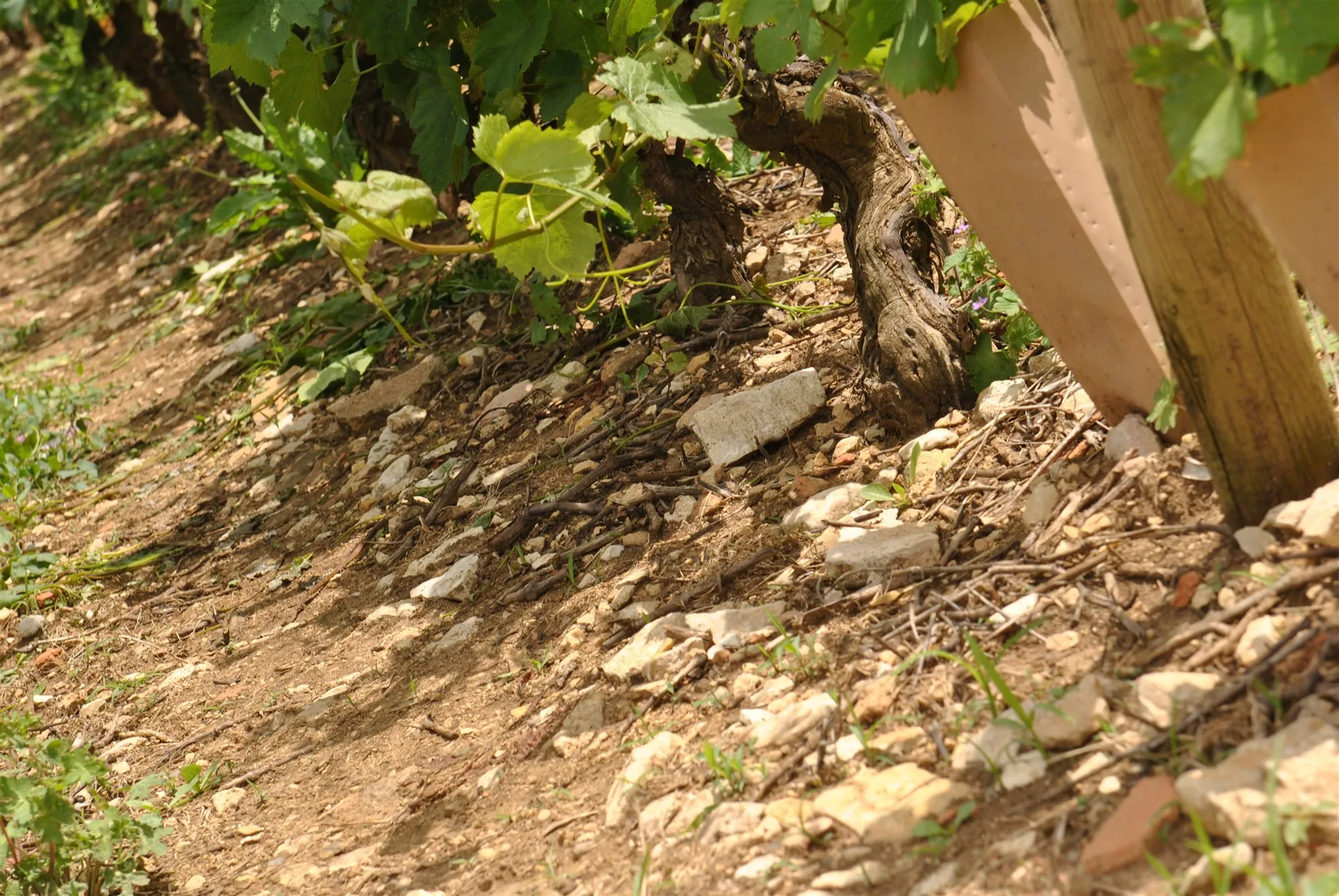
It may combine fine particles, rock fragments, organic matter and elements from different geological formations.
Its depth, structure, porosity and its capacity to hold water or let it flow matter as much as its composition.
A sandy soil generally lets water seep through easily, but often holds less of it than a soil rich in fine particles.
Clay can retain more water, although its behaviour varies with its nature, the structure of the soil and the climatic conditions.
Stones and coarse elements, for their part, can change how water moves, how heat is exchanged and how much space the roots can reach.
None of these characteristics is enough, on its own, to determine the quality of a vineyard.
Soil is not simply a material. It is an environment in which the vine must find its balance.
What the roots are looking for
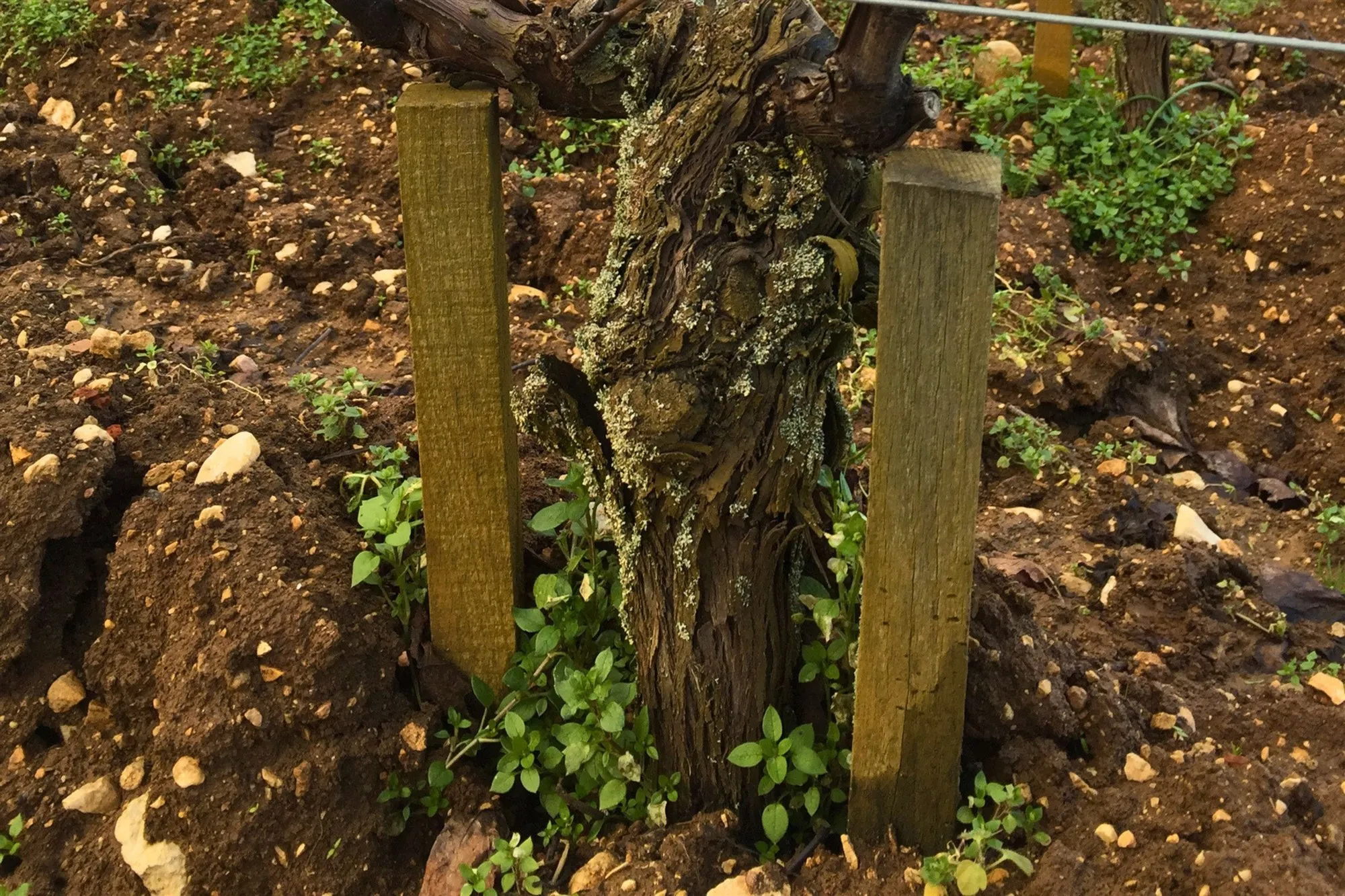
When we taste a wine, we often speak of its terroir as if the earth passed some of its taste directly into it.
But the path is more complex.
The roots take up water and the mineral elements essential to the vine’s development. They explore an environment whose physical and chemical properties influence the plant’s growing conditions.
The depth of the soil partly determines how far they can travel. Its structure governs the movement of air and water. Its composition and the way it functions contribute to the availability of nutrients.
A vine planted in a shallow, free-draining soil does not meet the same conditions as a vine grown in deep earth able to hold more moisture.
These differences can influence its vigour, the development of its foliage, the growth of the berries and their ripening.
But nothing can be interpreted independently of the climate.
In a hot, dry region, a soil’s ability to hold water can play an essential role. In a wetter environment, drainage can become especially important.
The same type of soil can therefore behave very differently from one vineyard to another.
To understand the earth, you also have to look at the sky.
Does wine taste of stone?
It is a question I love to explore during my tastings.
We sometimes use the words mineral, chalky, saline or flinty to describe certain impressions.
These expressions belong to the sensory language of wine. They help us share sensations that are not always easy to name.
But when a wine reminds us of chalk or stone, are we really tasting the rocks in the vineyard?
No, not directly.
The mineral elements taken up by the roots do not become aromas of limestone, flint or granite in the grape.
The sensations we call mineral can be linked to different characteristics of the wine: its acidity, certain aromatic compounds, its texture, or the sensory references we have built up through our experiences.
Minerality is not, in fact, a single property, defined and measurable in the same way as acidity or alcohol content.
This does not mean that soil has no influence.
It plays an indirect part, notably through the vine’s water supply, its growth and the ripening of the grapes.
But there is an essential difference between the influence of the soil on the wine and the idea that the wine would literally taste of that soil.
This nuance takes nothing away from the poetry of terroir.
On the contrary, it invites us to look more closely at everything that links the earth to the vine, and then to the wine.
From Chablis to Etna, landscapes beneath our feet
You only need to travel through a few wine regions to see how much geological landscapes can vary.
In Chablis, ancient marl and limestone formations shape the identity of many hillsides. In Champagne, chalk holds an important place in several winegrowing areas.
Further south, some vineyards grow on schist, on rounded pebbles or on materials from very different geological formations.
And then there is Etna.
On the slopes of this Sicilian volcano, the vine grows in landscapes marked by successive eruptions, lava flows and layers of volcanic material.
The soils there can vary considerably from one plot to the next, depending on their age, depth and composition.
From these vineyards, I brought back fine volcanic dust that I now keep in my vials.
When you look at them beside a pale soil or a fragment of limestone, the contrasts become immediately visible.
But it would be misleading to conclude that a wine from Etna automatically tastes of lava, or that a Chablis must recall chalk.
The grape variety, altitude, exposure, temperatures, water availability and the winemaker’s choices all play their part too.
Two neighbouring plots can give grapes with very contrasting profiles. Conversely, distant vineyards can produce wines with certain similarities.
Terroir is not a formula in which each rock would correspond to a precise taste.
It is an encounter between a place, a plant, a climate and human work.
When the stones pass from hand to hand
It is perhaps one of my favourite moments in my workshops.
The participants pick up the stones, turn them over, compare them. Some linger on a texture, others on the colour or the weight.
The questions come naturally.
Why is this rock so crumbly? How can roots grow in such stony ground? How does water move between these materials?
And above all, what might the vineyard this sample comes from look like?
I love watching them imagine a landscape from what they hold between their fingers.
This approach is very popular, because it brings a concrete dimension to notions that are often presented in abstract terms.
We are no longer just talking about geology or viticulture.
We observe, we touch, we compare. We look for connections.
Of course, a stone does not on its own reveal the full composition of a soil, its depth or how it works. Nor can it predict the aromas of a wine.
But it is a starting point.
It sparks curiosity, encourages questions and invites us to look at vineyard landscapes differently.
Terroir stops being merely a word we learn. It becomes something we can observe, touch and begin to understand.
The earth never tells the whole story
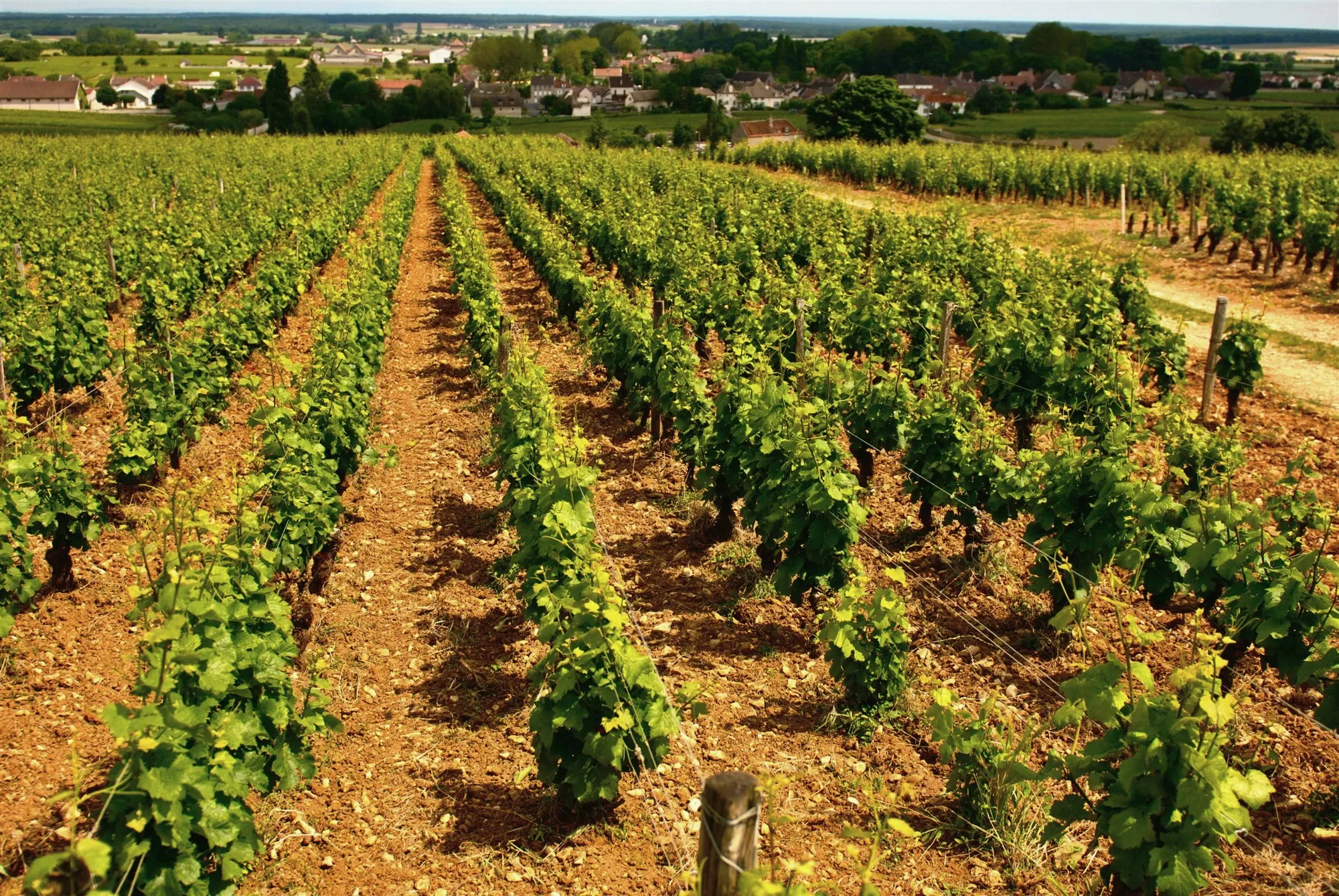
There remains, however, one essential dimension: the winemaker’s hand. Two plots with similar characteristics can produce different grapes depending on how they are farmed.
And beneath our feet there is also a whole living world: roots, fungi, micro-organisms and other organisms all play a part in how the soil works.
The earth is at once a material, a living environment and a memory of the landscape. It carries the traces of a sometimes very ancient geological history, while changing under the influence of climate, plants and farming practices.
That is why a handful of earth will never give us all the answers.
But it can teach us to ask better questions.
From earth to chalice
When I look at my vials, I do not see only a collection of earths.
I find landscapes I have walked through, vineyards I have discovered, materials I wanted to keep so that I could explore and share them better.
And when these samples go round a tasting table, they take on another dimension.
They become invitations to observe, to touch, to imagine.
Wine speaks to us of a place, but that place cannot be reduced to a rock, a soil or a single influence.
We have to learn to look at the whole: the earth, the climate, the vine, time and the choices of those who tend it.
A handful of earth does not tell us what the wine will taste like. It invites us to discover the world it comes from.
Alexandra Baudon · International sommelier and wine educator
The Journal letter
Once a month: new stories from the Journal, something to try at home and a little news from the workshop.
Thank you! The next letter will be waiting in your inbox.