

The wine I didn’t dare to choose
For years, people credited me with a knowledge of wine I did not have. Out of that unease, a promise was born.
For years, people credited me with a knowledge of wine I did not have. Out of that unease, a promise was born. · choosing a wine · confidence in tasting · wine for beginners · learning about wine · wine list · wine education · feeling at ease with wine · The wine I didn’t dare to choose For years, people credited me with a knowledge of wine I did not have. Out of that unease, a promise was born. choosing a wine confidence in tasting wine for beginners learning about wine wine list wine education feeling at ease with wine
For years, people credited me with a knowledge of wine I did not have. Out of that unease, a promise was born.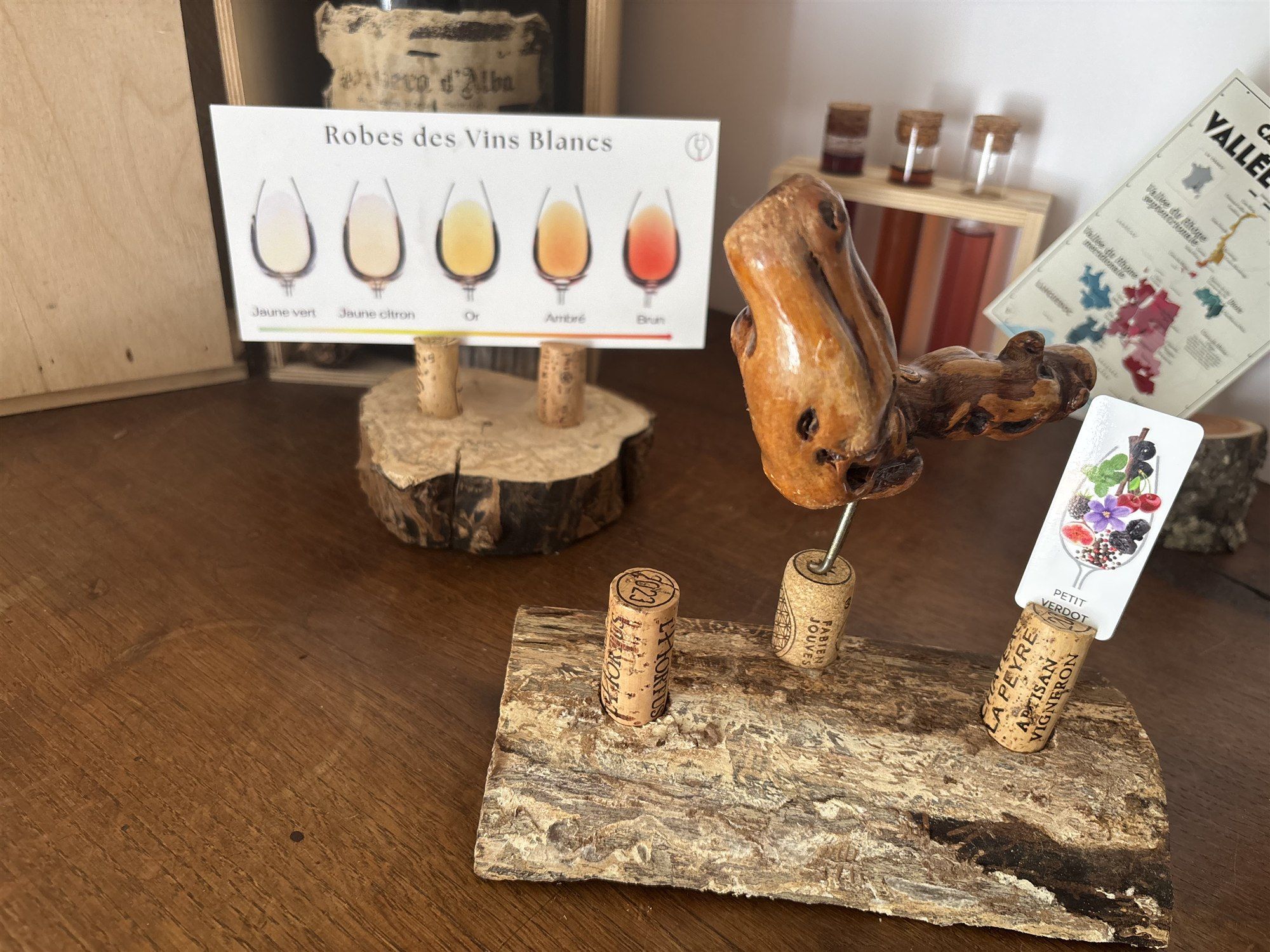
I lived and worked in England for about ten years, in international teams. I was young and still lacked a great deal of self-confidence.
I was often the only French person.
From time to time, we would go out for a drink as colleagues. And regularly, when it was time to choose the wine, all eyes turned to me.
I was French. So I must know.
Except that I didn’t.
I knew nothing about wine. Really nothing. I didn’t know what Burgundy was. I thought every sparkling wine in the world was called champagne. Champagne, the champagne method: to me, it was all the same.
So I chose more or less at random.
When the wine went down well, I was relieved. When the choice was less successful, I felt uncomfortable. But I didn’t dare explain that I didn’t really know what I was doing.
I let the others imagine that I knew.
These were only moments between colleagues, drinks shared after work. Nothing serious, in the end. Yet these situations came up often enough to leave me with a feeling of unease.
I would have loved to take part in those conversations differently. To understand what I was choosing, to explain what I liked, to find the words to express my impressions.
Instead, I rather dreaded the moment someone would hand me the wine list.
That feeling of having to know
What bothered me most, looking back, was perhaps a conviction I carried myself: as a French woman, I should have known about wine naturally.
As if one could know wine without ever having learned it.
Yet it was not about becoming an expert. A few landmarks would have been enough for me to choose with a little more confidence.
A promise, long before the first lessons
Ever since I was a teenager, I have loved sharing what I learn.
Even at thirteen, whenever I discovered something that interested me, I would ask to present it to my class.
A piece of knowledge seemed precious to me. Why keep it to yourself when you could share it?
I also loved looking for ways to bring it to life. An image, a demonstration, an object, a different way of presenting things. I wanted others to enjoy looking, listening, sometimes touching, having fun, and above all understanding and remembering.
So, during my years in England, I made myself a promise.
The day I had time to learn about wine, I would find a way to share that knowledge with those who, like me, felt lost in front of a wine list.
I wanted to imagine simple, visual materials that would give access to the first keys of understanding, without feeling like you were entering a world reserved for connoisseurs.
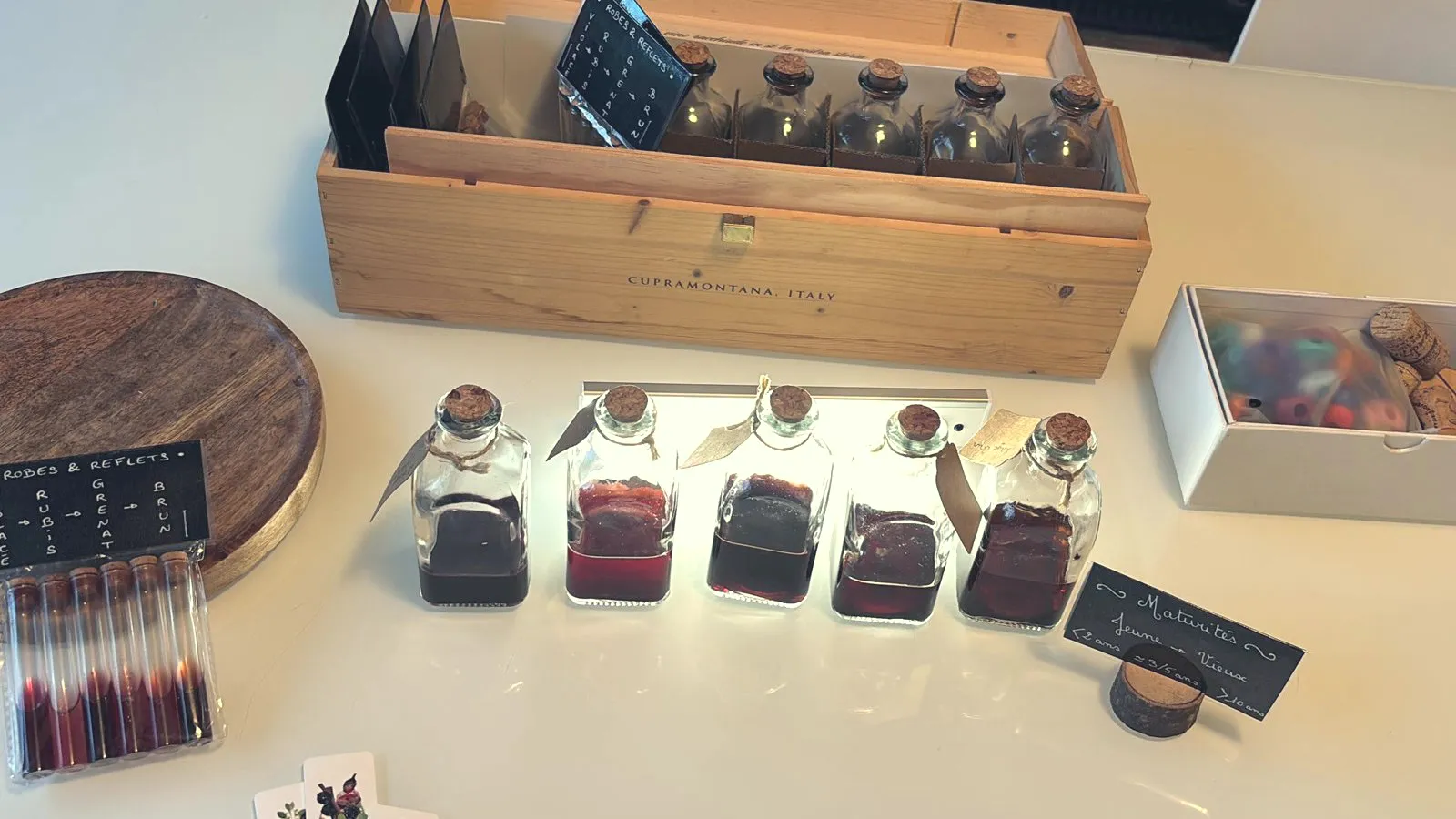
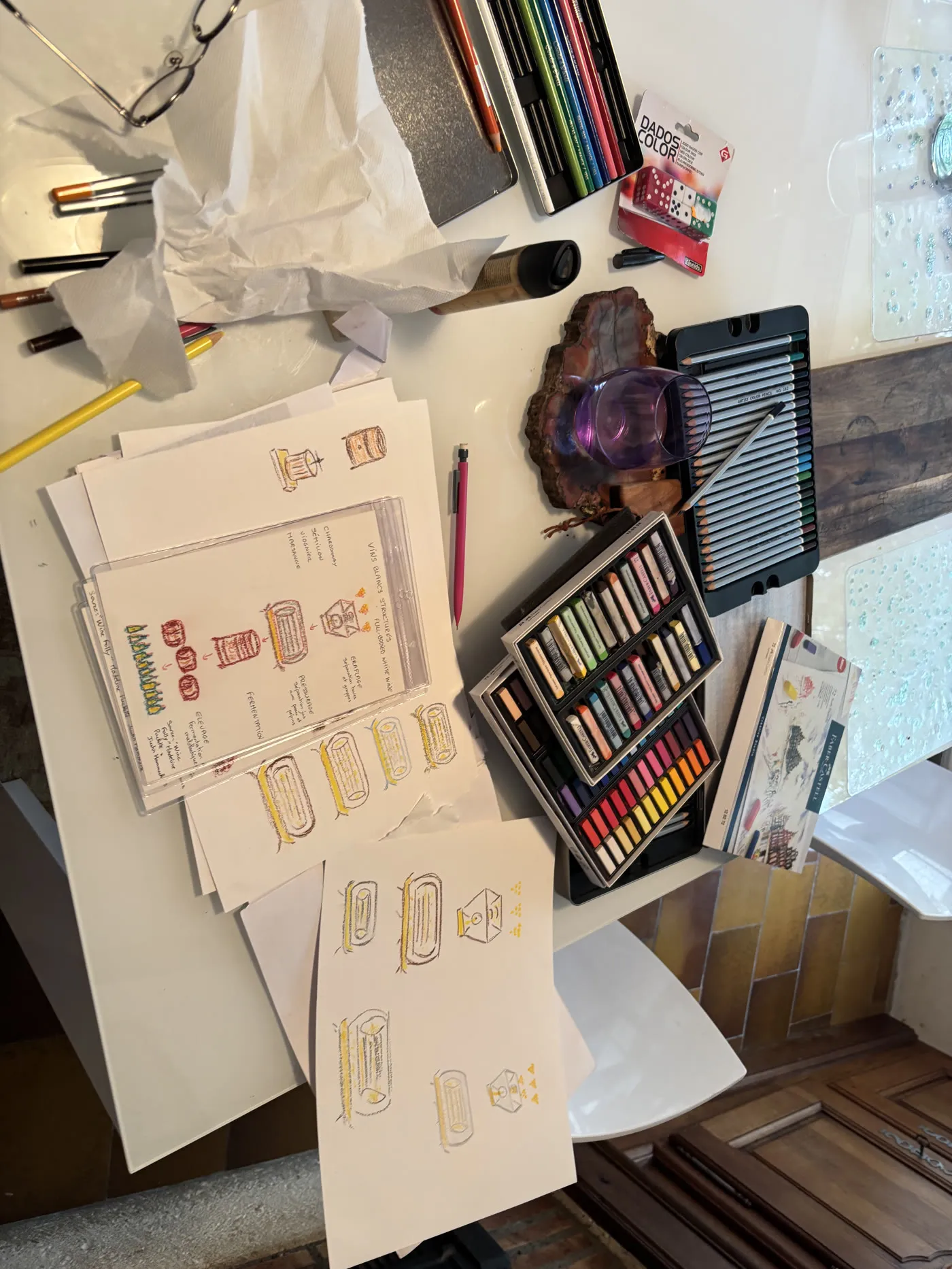
Materials that would help you choose a bottle, recognise your preferences, talk more easily and enjoy those shared moments more.
Not to impress others. To feel at home.
I didn’t yet know what it would all look like. But the desire was already there.
Learning with beginners in mind
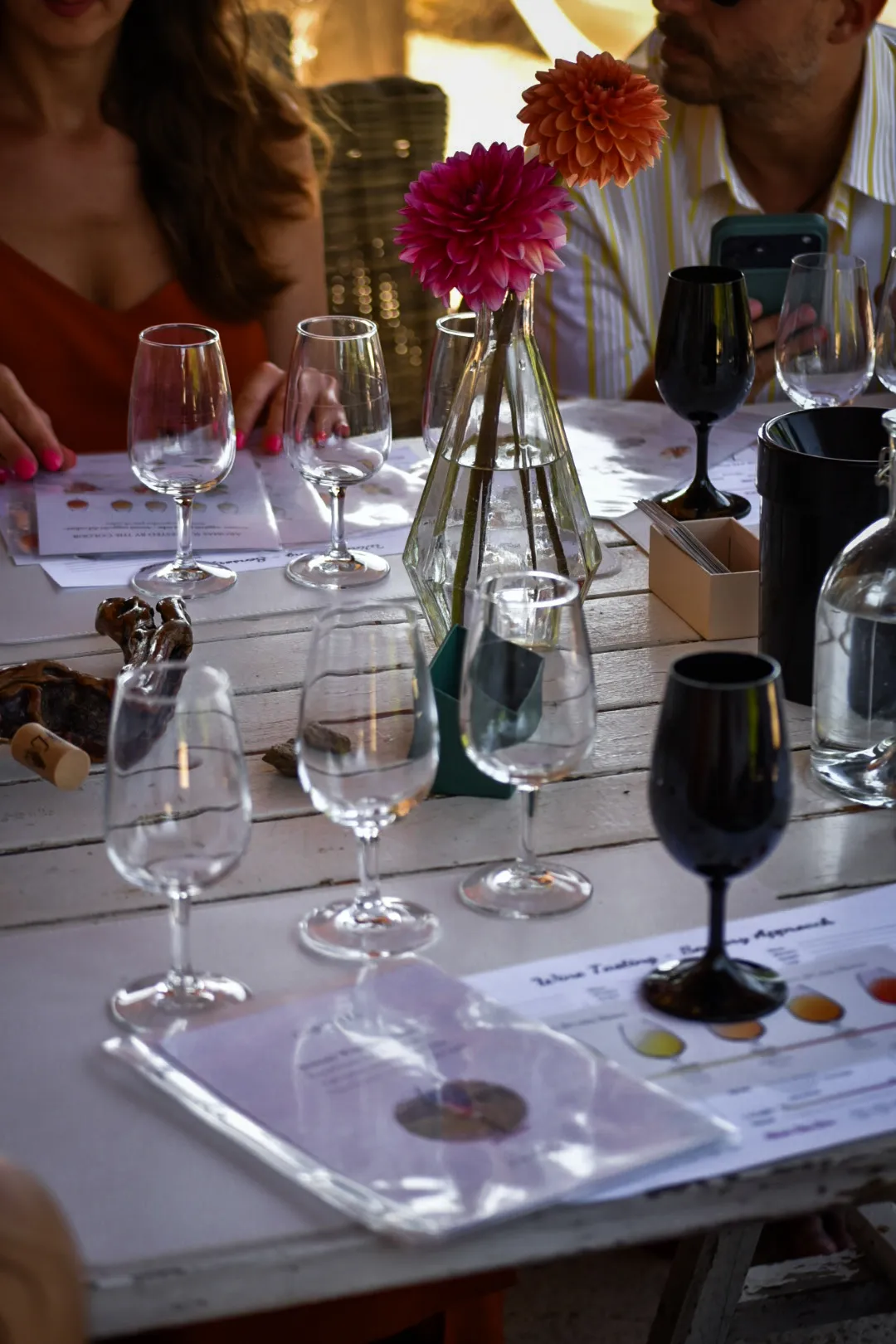
When I began my first sommelier training in Italy, in 2013–2014, this promise came back to me quite naturally.
At last I was discovering the world that had intimidated me for so long. Regions, grape varieties, aromas, winemaking methods: everything fascinated me.
But even as I learned, I was already thinking about how I might one day pass this knowledge on.
How could a complicated notion become something easy to grasp? How could you make someone feel a difference rather than just explain it?
I had always loved visual approaches, objects, colours, experiences that engage several senses.
Over the years, this desire to share took ever more concrete forms. What began as a personal promise became an essential part of my work.
What I would tell that young woman today
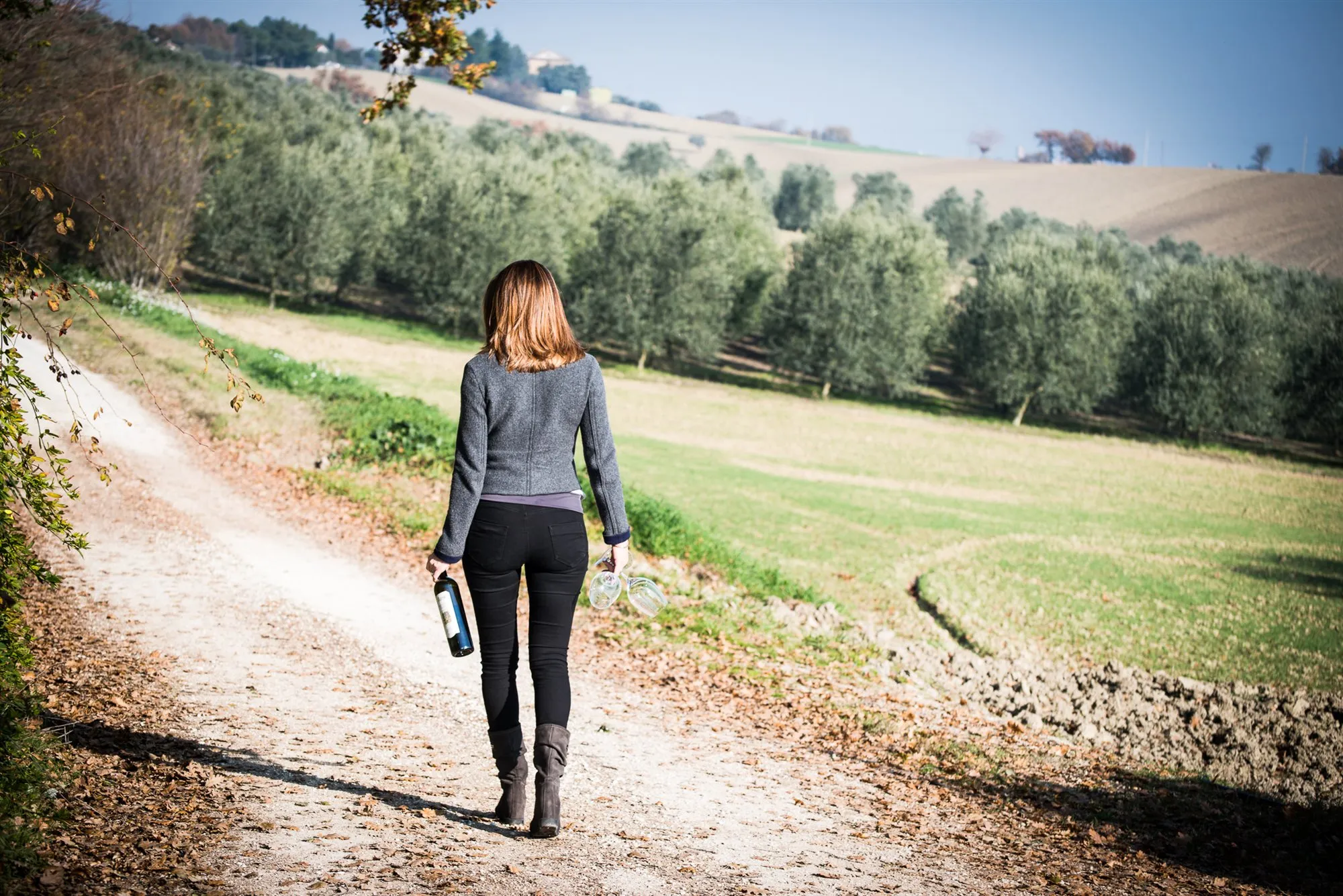
When I lead a tasting, I sometimes recognise in certain participants the reserve I knew so well. A hesitation before speaking, the fear of not finding the right words.
I think back then to those drinks shared with my colleagues.
If I could meet the young woman I was, I would not give her a list of regions to memorise, nor a few bottle names to make a good impression.
I would tell her that she has the right not to know.
That she can ask a question, admit she doesn’t know a region, ask why two wines are different.
And that she doesn’t need to understand everything to begin discovering.
It is from this experience, and from my love of sharing, that Calice des Sens was born, many years later.
So that the first keys to wine would be easier to find, and everyone could discover them at their own pace.
Alexandra Baudon · International sommelier and wine educator
The Journal letter
Once a month: new stories from the Journal, something to try at home and a little news from the workshop.
Thank you! The next letter will be waiting in your inbox.