

Wine, from fingertips to palate
When touch helps us understand what the mouth feels.
How do you describe what you feel when a wine enters your mouth? Through ribbons of different textures and a palate wheel, I invite you to discover the sensations of wine differently, from touch to the pleasure of tasting. · wine texture · palate sensations · wine tannins · astringency · balance in wine · palate wheel · Wine, from fingertips to palate How do you describe what you feel when a wine enters your mouth? Through ribbons of different textures and a palate wheel, I invite you to discover the sensations of wine differently, from touch to the pleasure of tasting. wine texture palate sensations wine tannins astringency balance in wine palate wheel
How do you describe what you feel when a wine enters your mouth? Through ribbons of different textures and a palate wheel, I invite you to discover the sensations of wine differently, from touch to the pleasure of tasting.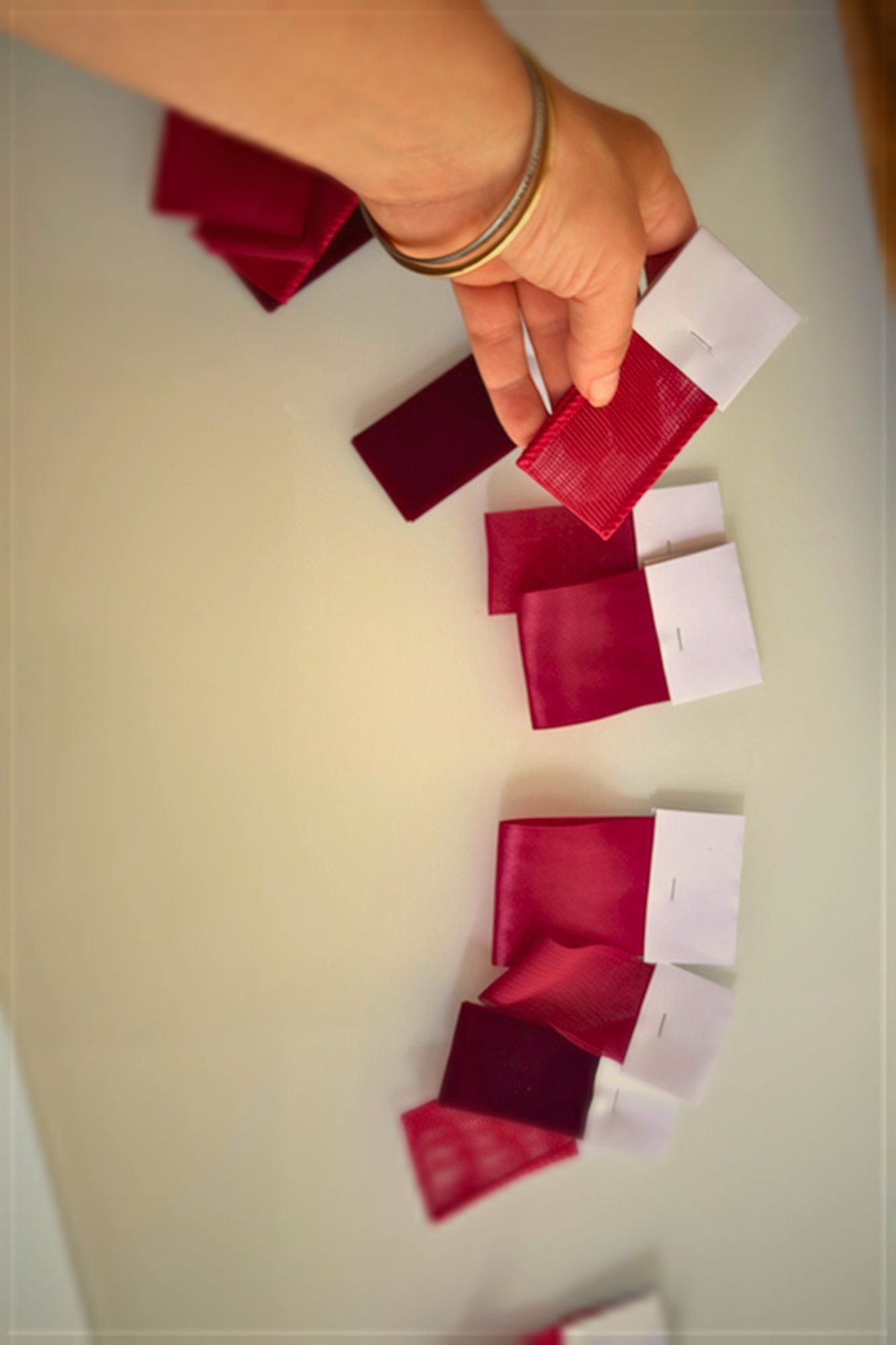
On my tasting table, among the glasses and teaching materials, I sometimes lay out a collection of ribbons. There is almost weightless tulle, thicker fabrics, velvet, fine materials, supple or slightly rough, which I invite participants to take between their fingers.
At first, their presence can be surprising. What does a piece of fabric have to do with a glass of wine?
Yet when you take the time to touch these materials, their differences become obvious. Some glide with an almost imperceptible softness, others wrap around the fingers, while the roughest offer a resistance you recognise immediately.
These sensations are familiar to us, even if we rarely take the time to notice them. They belong to our memory of touch, built up through everyday experience.
And it is precisely this memory that can help us understand what we feel when wine enters the mouth.
Touching wine without our hands
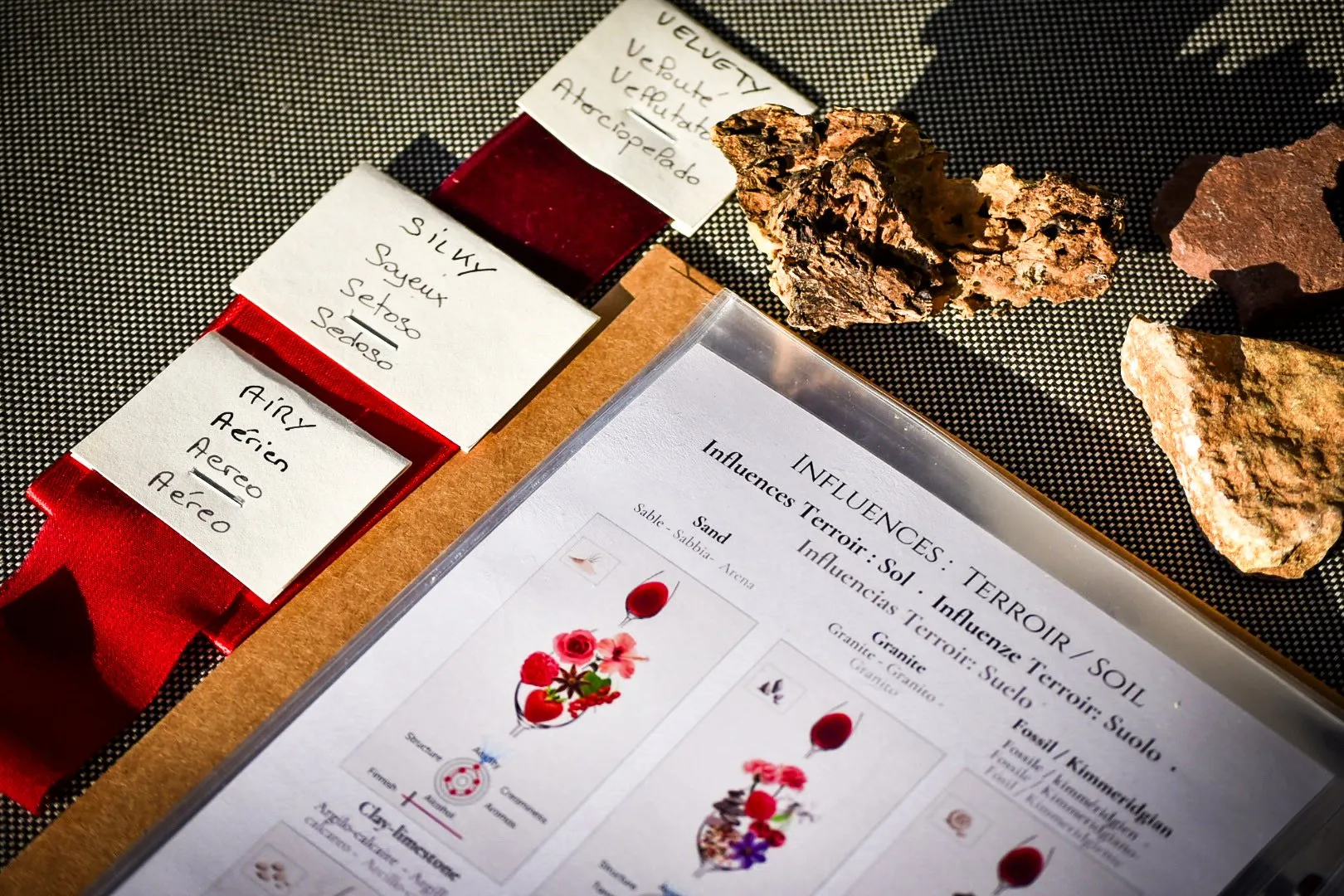
We readily speak of a wine as silky, velvety, creamy, supple or firm. These expressions have become so common in the vocabulary of tasting that we sometimes forget their origin: they borrow from touch the sensations we are trying to put into words.
The mouth, too, has a remarkable tactile sensitivity. The lips, tongue, cheeks and other surfaces of the mouth all contribute to perceiving texture, temperature and sensations of contact.
Tannins, for example, can cause that drying or rough impression we call astringency. They interact notably with the proteins in saliva, reducing the natural feeling of slipperiness inside the mouth. Depending on their nature, concentration and the wine’s overall characteristics, this sensation can be more or less pronounced.
This is where my ribbons come into their own.
A very fine tulle can evoke a light, almost airy material, while velvet suggests a more enveloping softness. A coarser fabric helps us imagine a sensation of grain, resistance or roughness.
The aim is obviously not to reproduce exactly what happens in the mouth: the feel of a fabric and the astringency of a wine rely on different mechanisms. But the analogy gives a concrete form to a perception that can be hard to express.
When participants then recognise some of these impressions in a wine, they already have a point of comparison.
Their hands gave them words that the mouth can now recognise.
A meeting of sensations
Tasting on the palate is often the most eagerly awaited part of a workshop. After looking at the colour and discovering the aromas, we finally reach the moment when the wine reveals itself differently.
But it is also a particularly rich stage, because several perceptions arrive almost at once.
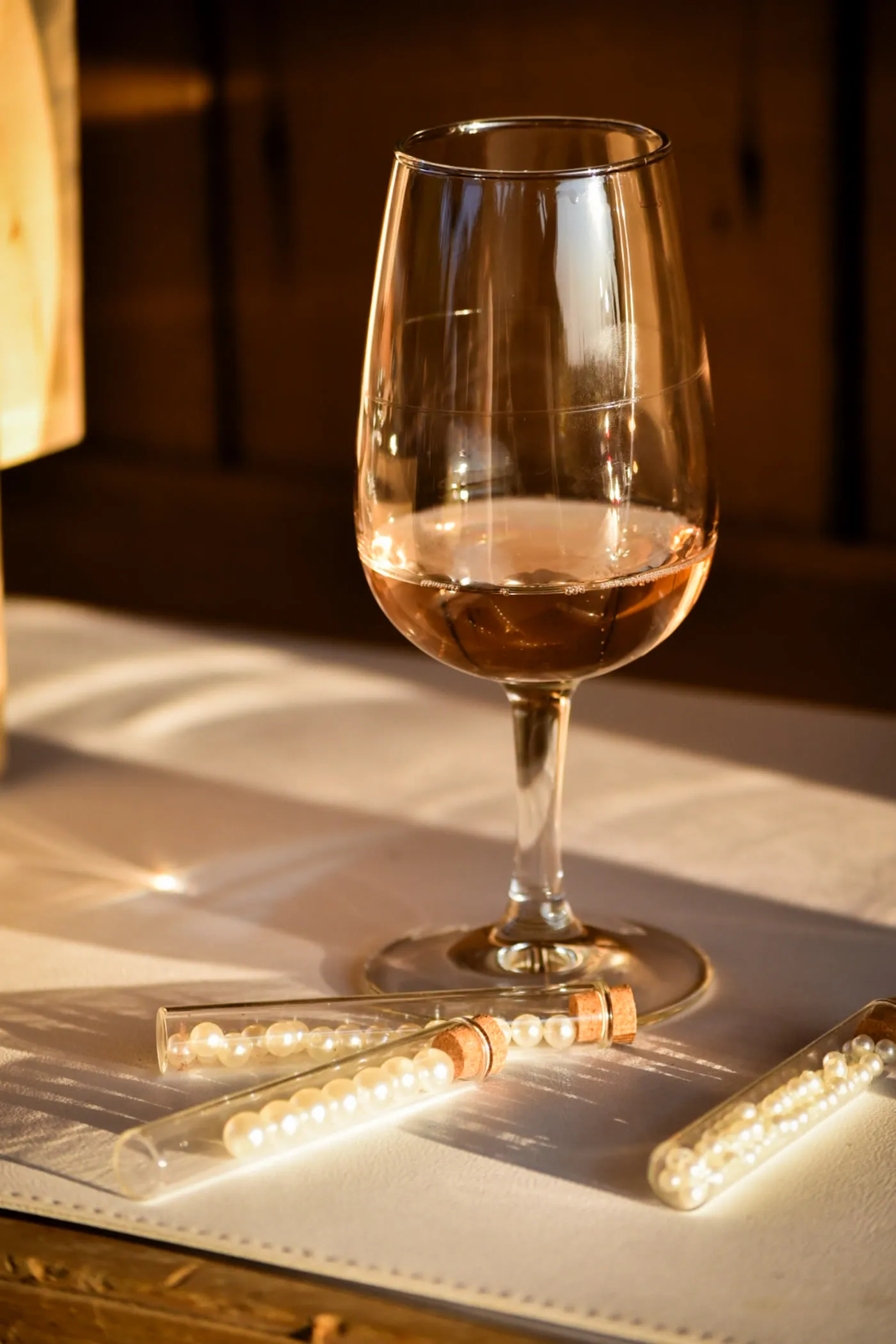
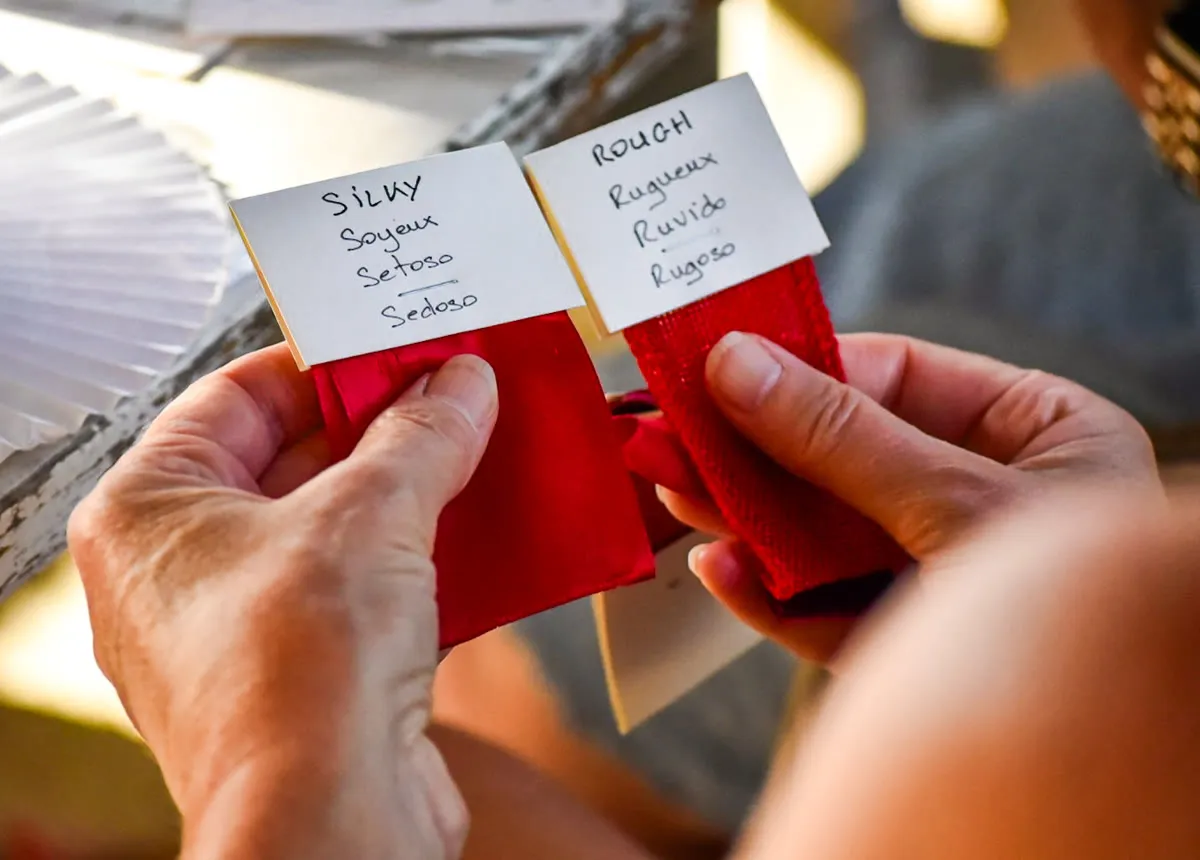
There are the tastes, notably acidity, any sweetness and bitterness. There are tactile sensations, such as astringency, viscosity or effervescence, to which are added the warmth alcohol can bring and impressions of freshness or substance.
The aromas also keep making themselves felt. When the wine is in the mouth, volatile molecules can travel up to the nasal cavity from the back of the palate: this is retronasal smell. It contributes greatly to the impression of tasting fruit, flowers, spices or other aroma families.
All of this blends into an experience that we first perceive as a whole.
That is why I think it is important not to ask participants to identify everything straight away. A first impression can be simple: this wine seems fresh, light, full, enveloping or particularly structured.
We can then return to the different dimensions, tell them apart and understand how they contribute to the overall impression.
Tasting then becomes a journey through several registers, rather than a series of answers to find.
Giving a shape to what we feel
To accompany this exploration, I created my own palate wheel, inspired by the classic tools for analysing the palate, but designed to make sensations easier to visualise and compare.
It brings together several dimensions: acidity, tannins, creaminess, aromas, alcohol and overall structure.
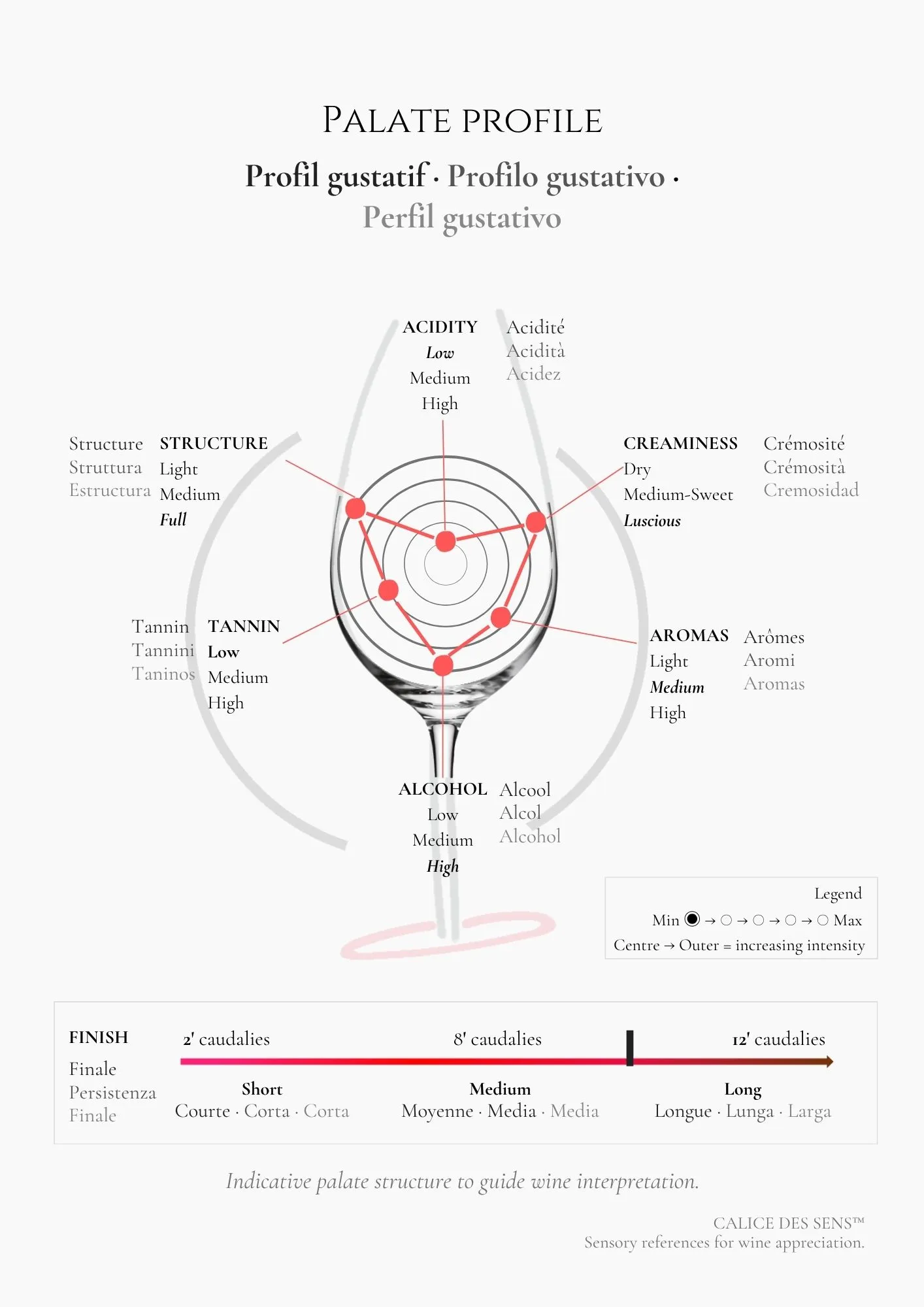
The aromas appear in this wheel to represent those we perceive in the mouth through retronasal smell, extending the first impressions discovered on the nose.
Each dimension can be shown according to its intensity using concentric circles. The further we move from the centre, the more pronounced the sensation; conversely, values close to the centre correspond to more discreet perceptions.
Gradually, a silhouette appears.
A wine can show lively acidity while keeping a delicate texture. Another can offer generous substance, firm tannins and more moderate aromatic intensity. The different dimensions do not necessarily rise together, and that is precisely what makes each profile interesting.
I chose to include the notion of creaminess, a word that quite naturally evokes a sensation of texture and that I can easily find in the different languages of my workshops.
In this tool, it serves as a landmark for exploring an impression of softness and enveloping texture – what some would describe as smoothness, others as roundness. These terms are not perfect synonyms, but they help approach different facets of the sensation.
Creaminess can notably be influenced by ageing on the lees, malolactic fermentation or certain compounds in the wine, without a single mechanism explaining every impression of texture.
The wheel is neither a score nor a model one must absolutely conform to. It helps us step back, compare the dimensions and discover that a wine can never be summed up by a single characteristic.
And when we taste several wines, the differences become particularly visible.
Sweetness, another kind of softness
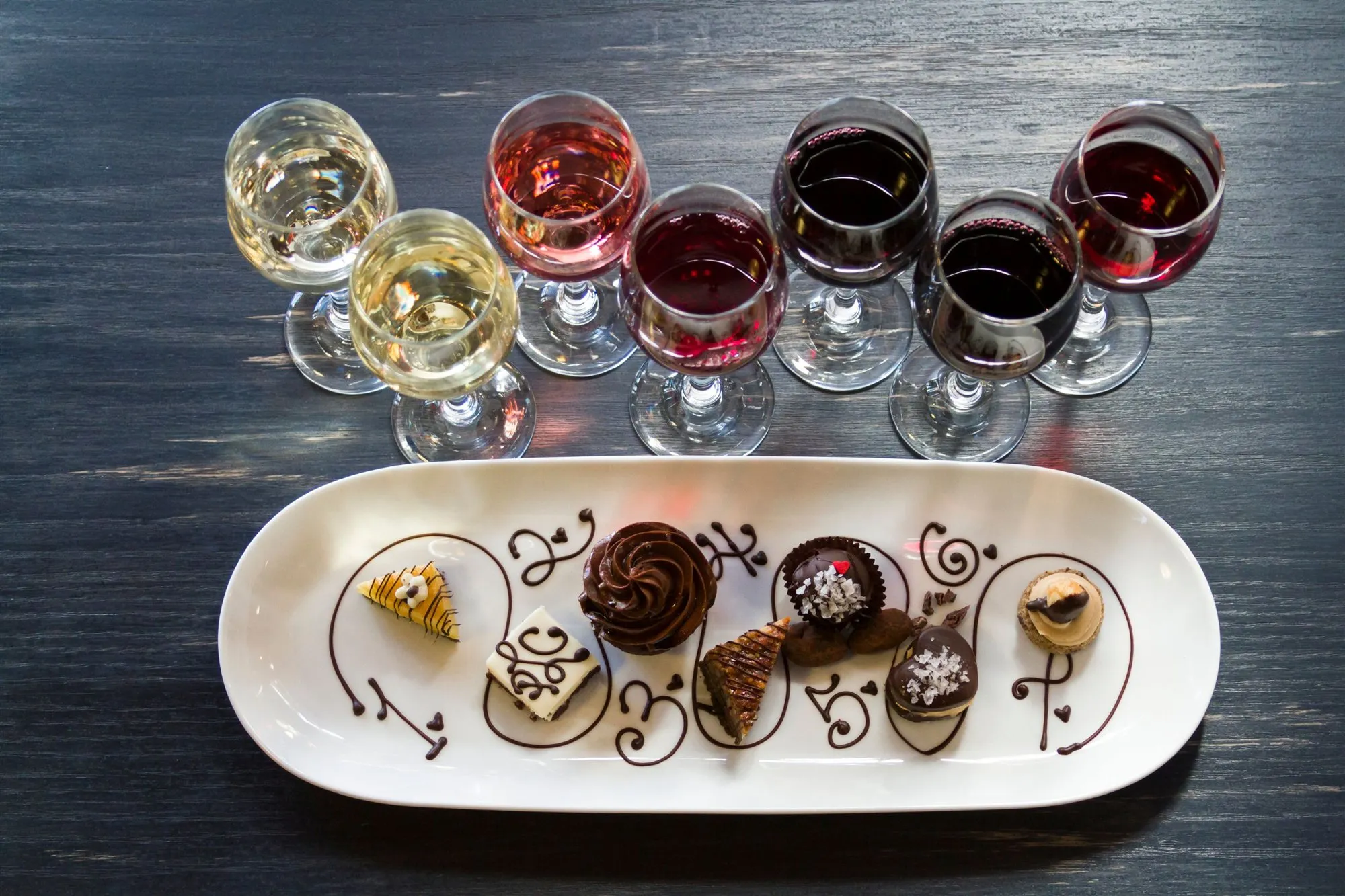
The softness of a wine deserves particular attention, because we sometimes use the same words to describe very different perceptions.
A wine can seem round or creamy without containing much sugar. Conversely, a sugary sweetness can be perceptible in a wine whose texture is not particularly enveloping.
That is why my materials distinguish creaminess, which concerns the texture we feel, from sweetness, which corresponds to the perception of sugar.
The latter depends notably on residual sugar, but also on its balance with acidity and the wine’s other characteristics. Lively acidity can soften the impression of sweetness, while a less acidic wine may seem sweeter at a comparable sugar level.
So simply calling a wine “sweet” or “soft” is not enough to know precisely what we felt.
Are we talking about a sugary taste, an enveloping texture or a general sense of roundness?
The distinction may seem subtle, but it helps a great deal to refine the vocabulary of tasting.
Balance, where the sensations meet
Once the main dimensions have been identified, another question arises: how do they fit together?
We sometimes tend to imagine that a balanced wine would be one in which all the sensations have a comparable intensity. Yet balance does not work like an average.
A wine can show very marked acidity and remain harmonious, just as a red with powerful tannins can find its balance through its substance, its fruit and its overall structure.
Acidity brings liveliness and can counterbalance an impression of richness. Texture can make a wine more enveloping, while tannins contribute to its backbone. These relationships are complex: no sensation automatically offsets another, and their harmony depends on the wine as a whole.
To help participants visualise this diversity, my materials also show three broad silhouettes: light and fruity, round and generous, powerful and structured.
They illustrate different ways a wine can fill the mouth, without locking grape varieties or styles into rigid categories.
A light wine can be extremely refined, while a powerful wine can prove remarkably harmonious. The richness of a tasting does not lie in systematically seeking intensity, but in understanding how the sensations answer one another.
It is often at this point that the palate wheel becomes particularly telling: we no longer just look at the different dimensions, we begin to understand how they relate.
What remains once the wine is gone
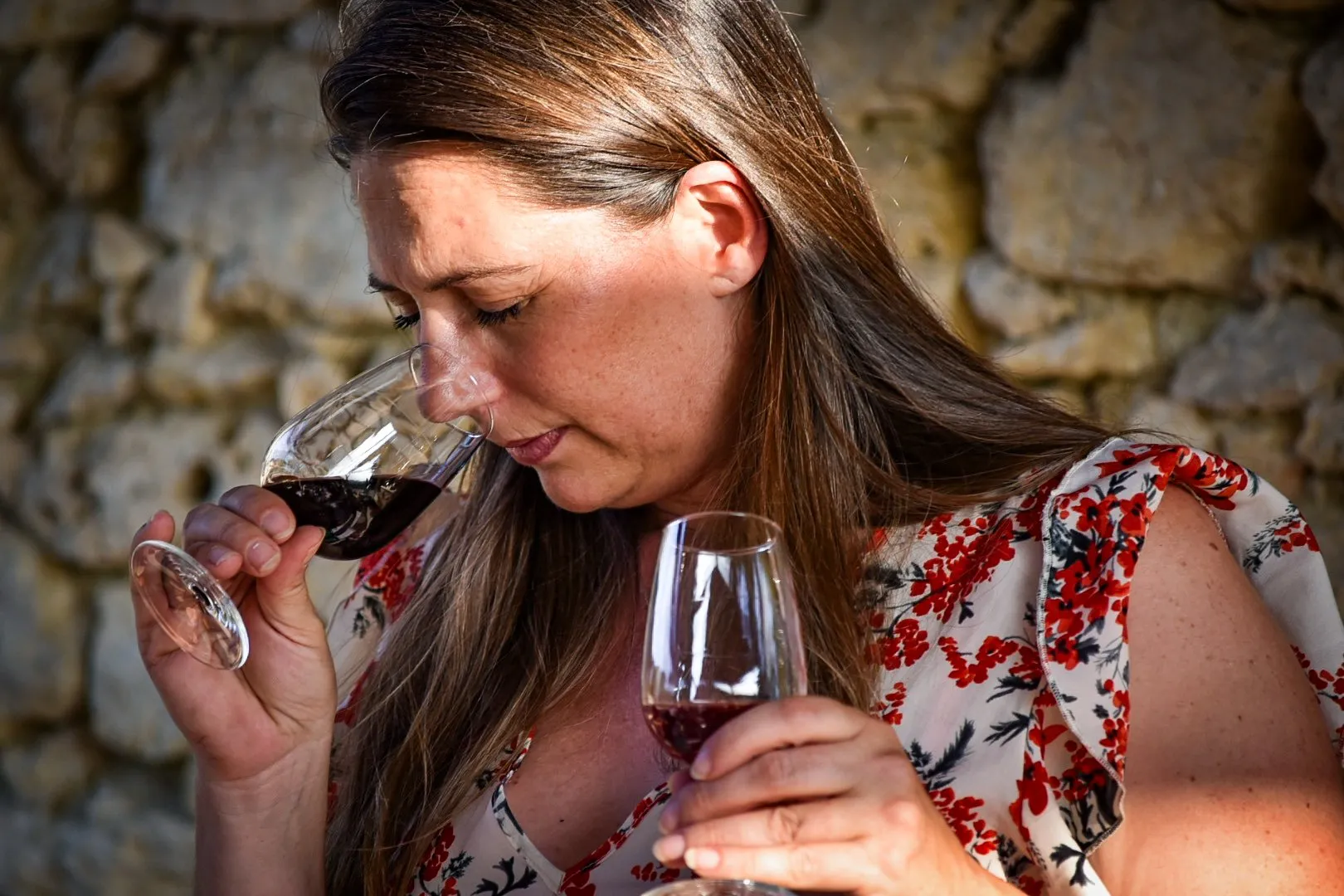
The experience does not end when we swallow or spit the wine. Some sensations fade quickly, while others continue to make themselves felt.
The aromas can linger through retronasal smell, a tannic impression can remain on the gums, and freshness, warmth or bitterness can extend our perception.
We then enter the realm of the finish.
It is interesting to distinguish the persistence of sensations in general from aromatic persistence, which concerns more precisely how long aromatic impressions remain perceptible after the wine has left the mouth.
A long finish can contribute to a wine’s quality, but its length alone is not enough to define its interest. The nature of what remains, its precision and its harmony matter just as much.
This last stage also lets us look back on the path travelled since the beginning of the tasting.
The colour had given us first clues, the nose had raised certain expectations, and the palate now comes to confirm, complete or sometimes contradict these impressions.
What we had observed separately begins to make sense as a more coherent whole.
Understanding without forgetting pleasure
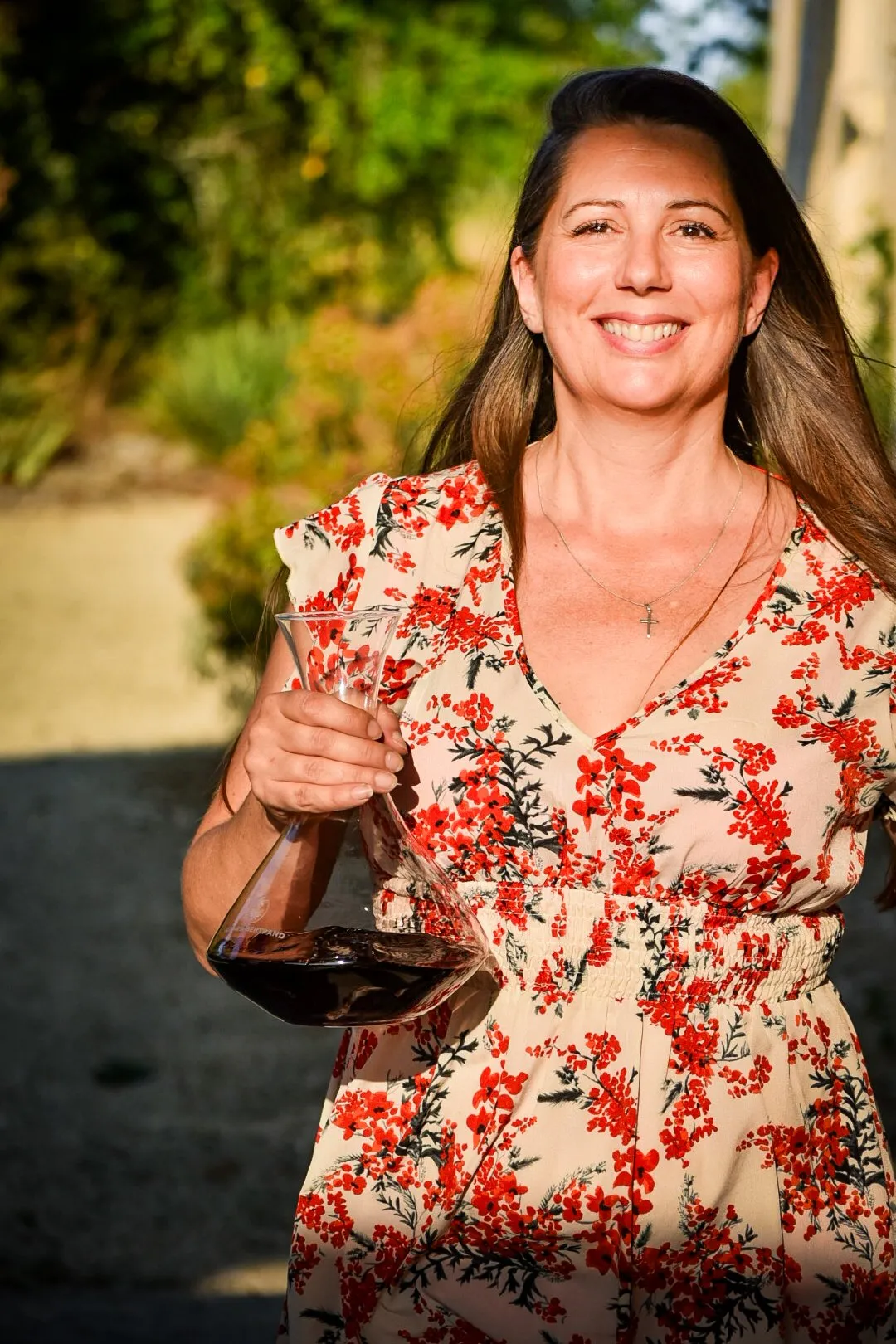
When I watch participants handle the ribbons and then try to represent their sensations on the palate wheel, I find again what made me want to create these tools: making accessible perceptions we already have, but do not always know how to recognise or express.
We all know the softness of a fabric, the roughness of a material, the freshness of a sensation or the warmth that spreads. These experiences are part of our everyday life and form a sensory memory we can rely on.
We can begin to taste attentively long before we have an elaborate wine vocabulary. The words will come gradually, as the sensations become more familiar.
And above all, I want this discovery to keep its dimension of pleasure.
Because while analysis helps us understand a wine better, it must never take us away from that simple moment when we taste it, when we discover what we like, what surprises us or what intrigues us.
The ribbons, the palate wheel and the different silhouettes are, in the end, only paths to accompany this experience.
They allow us to connect what we feel with what we already know, to give a shape to sometimes elusive impressions, and gradually to refine our experience.
We learn to taste with our mouth, but also with everything our senses have already taught us.
And when the words become more precise, the pleasure itself can remain perfectly simple.
Alexandra Baudon · International sommelier and wine educator
The Journal letter
Once a month: new stories from the Journal, something to try at home and a little news from the workshop.
Thank you! The next letter will be waiting in your inbox.