

The vines that kept their roots
From phylloxera to the slopes of Etna, by way of the old vines of the Gers: the story of what the vine lost, what it kept, and what we are still trying to understand.
On the slopes of Etna, some old vines still grow on their own roots. In the Gers, at Sarragachies, others came through the phylloxera crisis. What can they teach us today? An exploration between living heritage, wine history and scientific research. · ungrafted vines · own-rooted vines · phylloxera · rootstock · Sarragachies · Saint-Mont · historic monument vineyard · Etna · Salvo Foti · Marc Birebent · The vines that kept their roots On the slopes of Etna, some old vines still grow on their own roots. In the Gers, at Sarragachies, others came through the phylloxera crisis. What can they teach us today? An exploration between living heritage, wine history and scientific research. ungrafted vines own-rooted vines phylloxera rootstock Sarragachies Saint-Mont historic monument vineyard Etna Salvo Foti Marc Birebent
On the slopes of Etna, some old vines still grow on their own roots. In the Gers, at Sarragachies, others came through the phylloxera crisis. What can they teach us today? An exploration between living heritage, wine history and scientific research.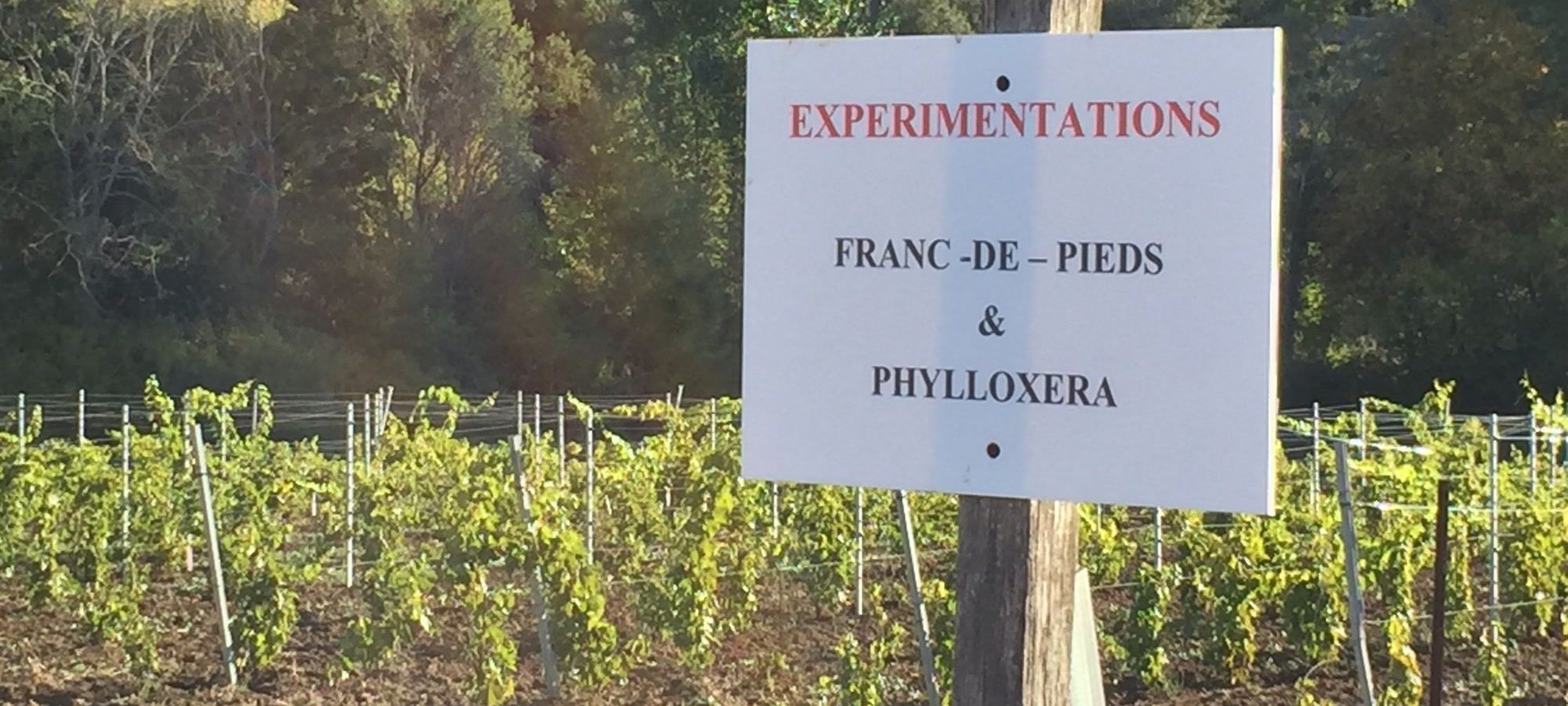
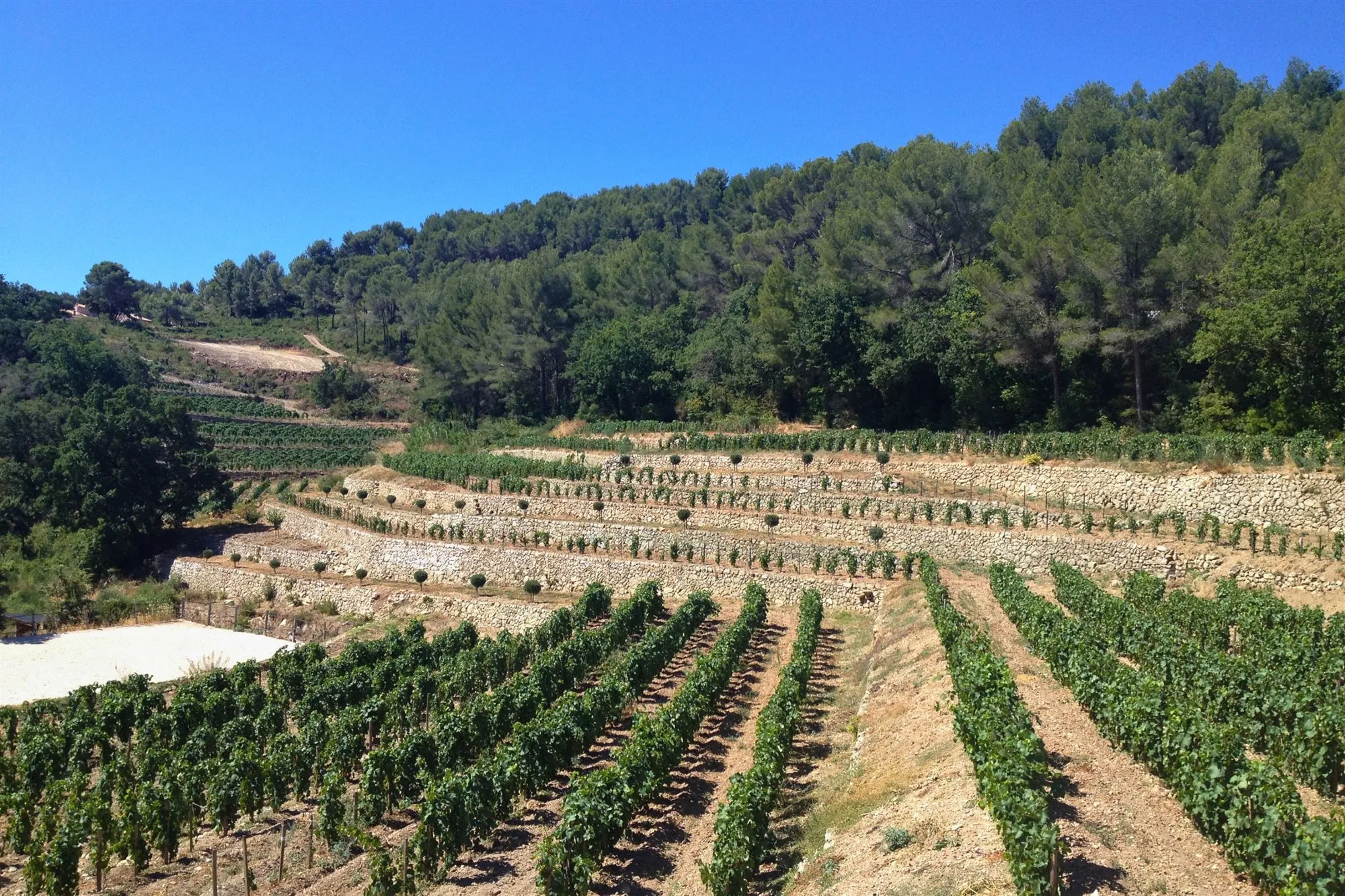
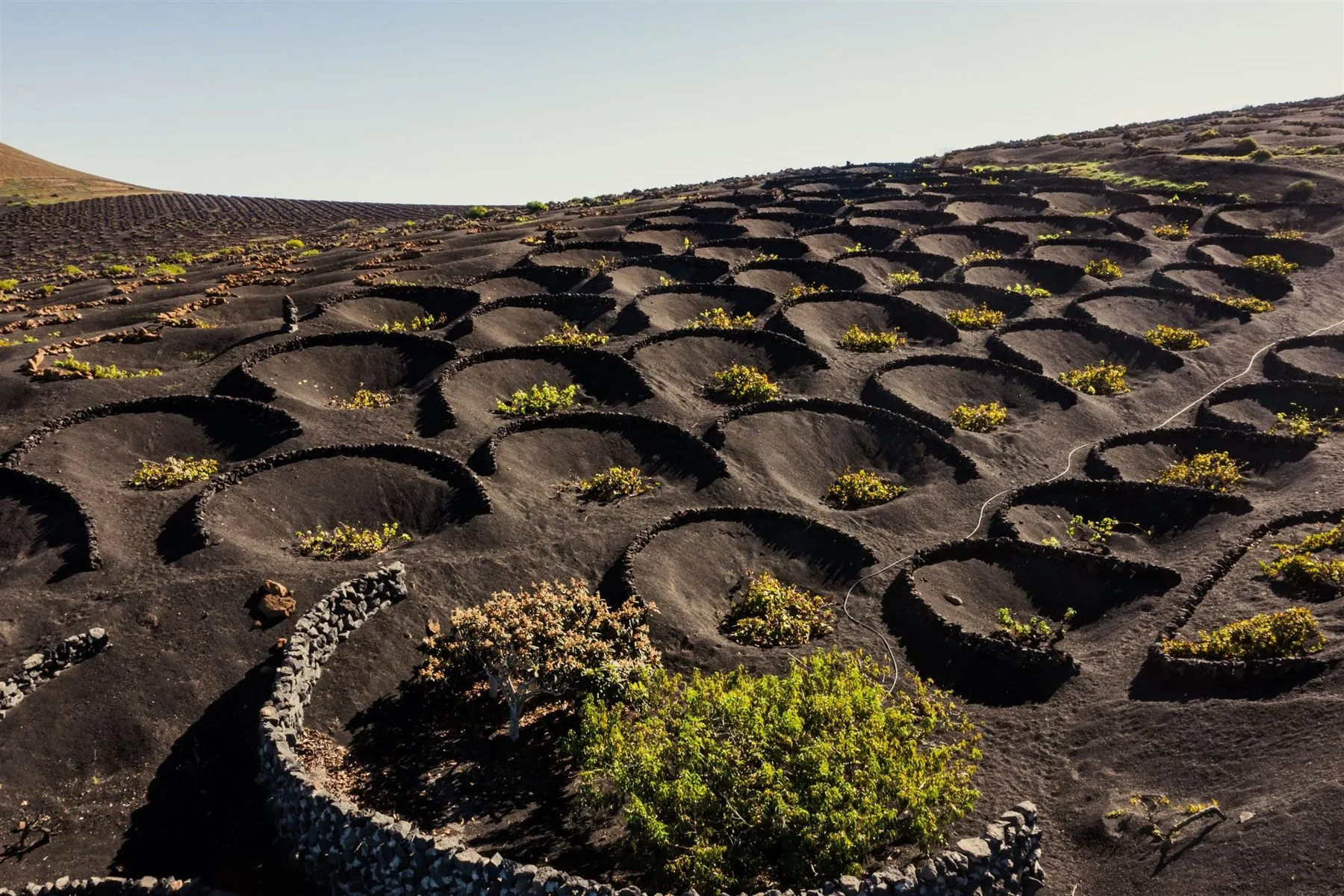
On the slopes of Etna, the earth can be black, almost unreal. Fragments of lava break the surface between the stones, low walls trace terraces, and the vines sometimes seem to rise straight out of the volcano.
I brought back a few pieces of lava from this landscape, gathered at the foot of Salvo Foti’s vines. They are modest stones, dark and rough, but they take me back to a land where the vine has a particularly ancient relationship with the earth.
Some of these vines are more than a hundred years old. Others are older still. And among them are vines with a characteristic that has become rare in European viticulture: they grow on their own roots.
They are called ungrafted, or own-rooted, vines.
At first glance, there is nothing spectacular. No extraordinary leaves, no mysterious bunches, no obvious sign that would let a passer-by tell them apart from their neighbours.
The difference lies underground.
And to understand why it interests us so much, we have to go back to one of the greatest catastrophes in the history of wine.
The day the roots became vulnerable
In the 19th century, a tiny insect from North America began to devastate the vineyards of Europe.
Its name: phylloxera.
Barely visible to the naked eye, it attacks the roots of the vine in particular. Its bites cause lesions that weaken the tissues and encourage their decay. In susceptible European vines, the roots eventually stop working properly.
The vines wither. Whole plots disappear. The crisis upends the countryside, ruins families and lastingly transforms wine landscapes.
For years, one solution follows another. People try treating the soil, flooding the plots, protecting the roots by various means. Some methods work in particular situations, but none on its own can save the vineyard as a whole.
The answer that finally prevails is as ingenious as it is radical: keep the European grape varieties to produce the fruit, while giving them the roots of American vines that resist phylloxera.
This is the principle of grafting.
The part above ground, called the scion, belongs to a grape variety such as Grenache, Chardonnay or Sangiovese. Below the graft union is the rootstock, selected for its resistance to the pest, but also for how well it suits the soil.
Two plant parts joined to form a single vine.
This gesture made it possible to rebuild much of Europe’s vineyard. Without it, the history of wine as we know it today would have been profoundly different.
But it also changed the way the vine sends its roots into the earth.
A vine on its own roots
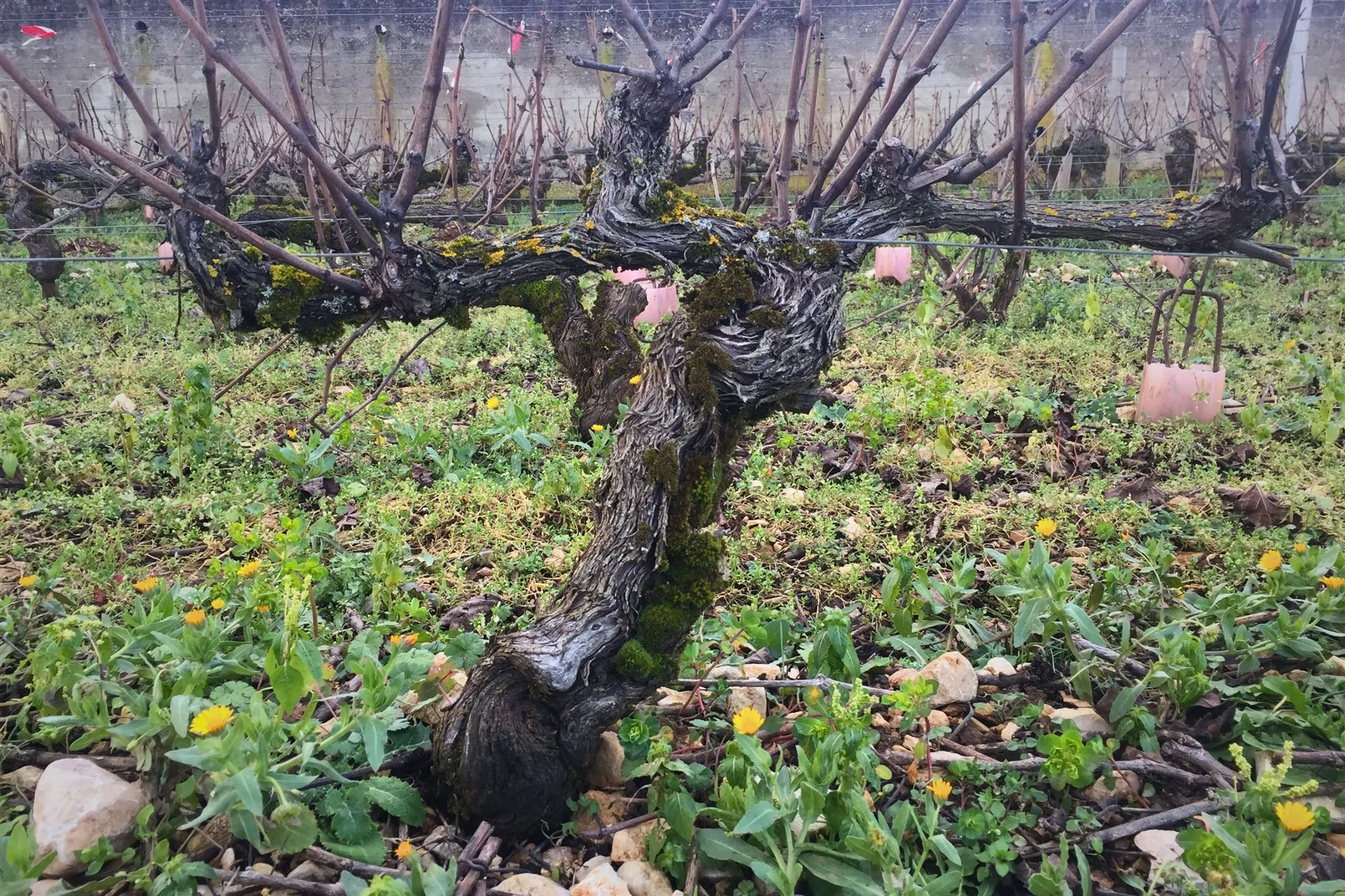
An own-rooted vine is not grafted.
The grape variety we see above the ground is also the one that forms the root system. There is no junction between two different plant materials, no rootstock belonging to another species or to a hybrid selected for its characteristics.
The plant grows on its own roots, as European vines did before grafting became widespread.
There is something fascinating about this continuity. It lets us observe another way for the vine to develop, explore its surroundings and respond to the constraints around it.
This does not mean, however, that an own-rooted vine is automatically healthier, more vigorous or able to produce a better wine.
The rootstock also plays an essential role in how the plant works. Depending on its nature, it can influence vigour, the uptake of water and minerals, tolerance to certain soil constraints and, indirectly, the ripening of the grapes.
So the question is not whether the original roots are always preferable.
It is to understand what changes when a vine grows on its own roots rather than on those of another plant material.
And why, despite phylloxera, some have been able to keep this particularity.
The survivors
Phylloxera did not wipe out every own-rooted vine.
In various vineyards around the world, ungrafted vines came through the crisis or are still grown today. They can be found in some very sandy soils, where conditions are unfavourable to the pest.
Sand can offer natural protection, without being a universal guarantee.
Other situations are more complex. Geographical isolation, the health history of the plots, the characteristics of the soil or a limited presence of phylloxera can all help explain why certain vines survived.
It would be misleading to present all these survivors as plants that became resistant on their own. Some above all benefited from an environment that protected them. Others remind us that the mechanisms behind their survival are, in some cases, still poorly understood.
These old vines are therefore a precious heritage, not only because some have lived through several generations of winegrowers, but also because they give us the chance to study root systems and growing histories that have become uncommon.
They are living witnesses to another kind of viticulture.
At Sarragachies, roots that tell the story of the Gers
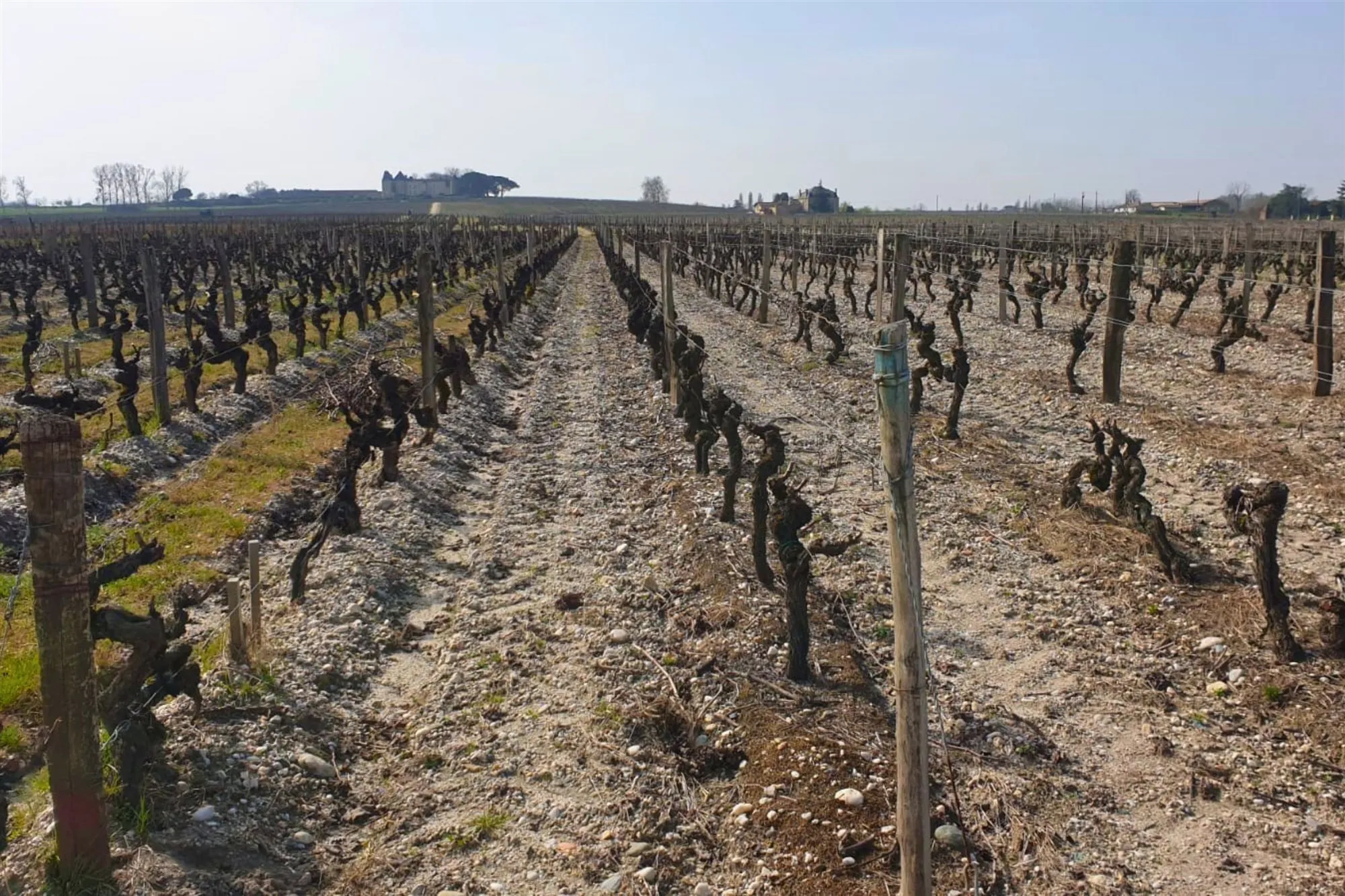
You do not need to cross Europe to meet these surviving vines. Here in the Gers, at Sarragachies, a small plot in the Saint-Mont vineyard holds something extraordinary: vines that were already growing on their own roots before phylloxera upended French viticulture.
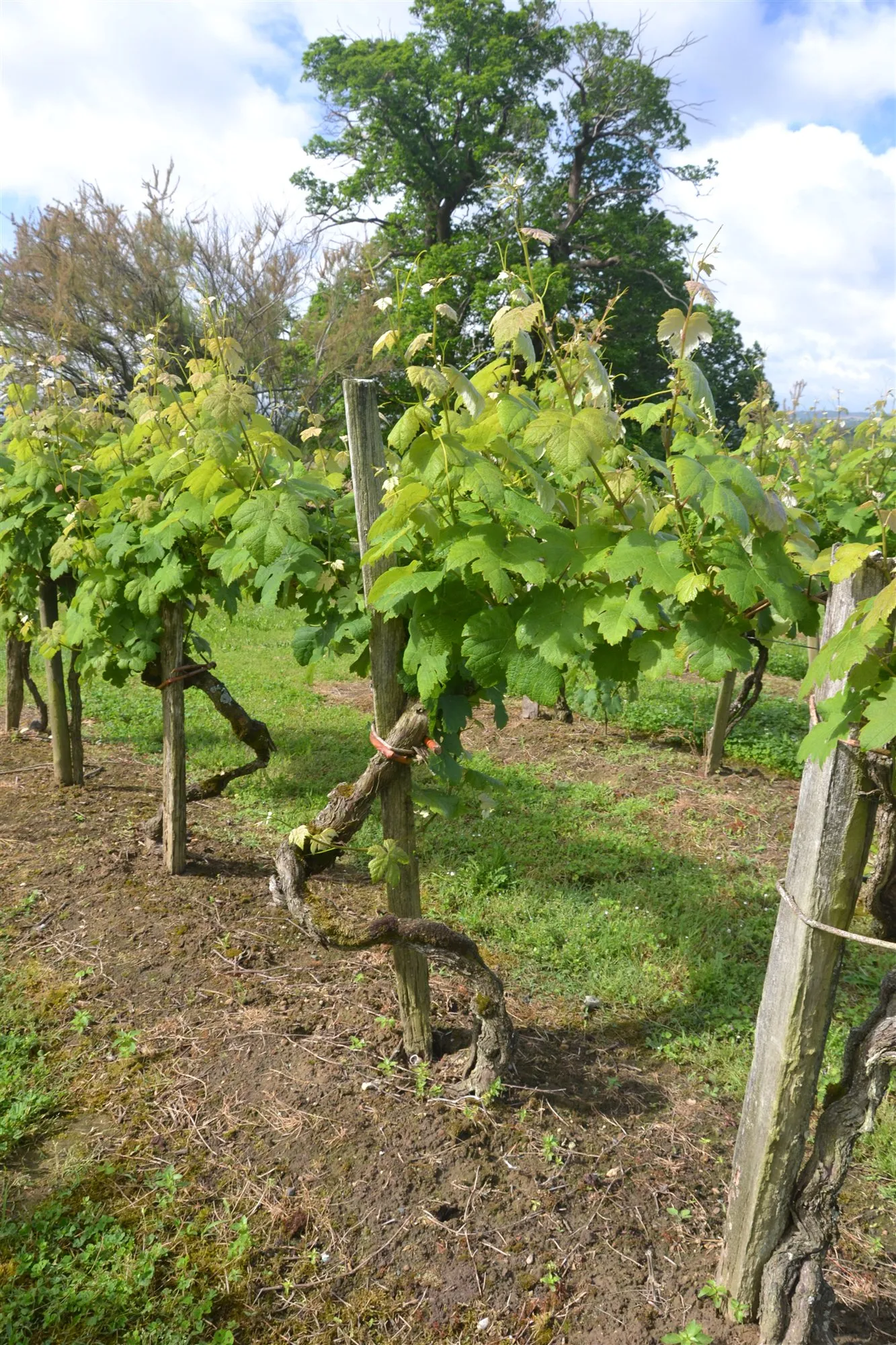
The Pédebernade family has watched over this remarkable heritage for generations. In deeply sandy soil, twelve rows of old vines have kept a way of growing and being cultivated that belongs to another era. The vines are sometimes planted in pairs, the grape varieties grow side by side without the uniformity of our contemporary vineyards, and some varieties long escaped all identification.
In 2012, this plot became the first vineyard in France to be protected as a Historic Monument. Not for the reputation of a prestigious cuvée, but for what it represents: a living memory of farming practices, a rare genetic diversity and a family history patiently preserved.
I particularly love this idea. A historic monument that is still pruned, tended and watched as it grows. A heritage that is not frozen in stone, but still bears leaves and grapes.
And one that reminds us that, sometimes, the greatest treasures of wine are found very close to home.
On Etna, the memory of the volcano
Let us return to Sicily.
On the flanks of Etna, some old vineyards have kept own-rooted vines thanks, among other things, to the nature of their volcanic soils, which are sometimes very sandy.
We must, however, resist an overly simple explanation: it is not the volcanic character of the soils that protects against phylloxera, but certain of their physical properties, including their sandy texture. Not all of Etna’s soils share these characteristics, and not all the volcano’s vines are own-rooted.
In this landscape, Salvo Foti is among the figures who have helped preserve and pass on traditional winegrowing practices. With I Vigneri, he champions growing in alberello, a low training system close to the bush vine, deeply bound up with the history of the volcano.
The old vines of Nerello Mascalese, Nerello Cappuccio or Carricante are part of this identity, just like the terraces of volcanic stone and the work needed to tend plots that are sometimes hard to reach.
What moves me in these landscapes is not only the age of the vines. It is the continuity between a plant, a way of growing it and a land whose geological history is visible everywhere.
The pieces of lava I kept obviously prove nothing about the quality of a wine or the behaviour of its roots. But they remind me that behind every bottle lies a very real physical environment, with its constraints, its possibilities and its singularities.
And that there are still places where we can observe vines whose roots have never been replaced.
In Provence, the questions continue
Yet the story of own-rooted vines does not belong only to old vineyards or to lands protected from phylloxera.
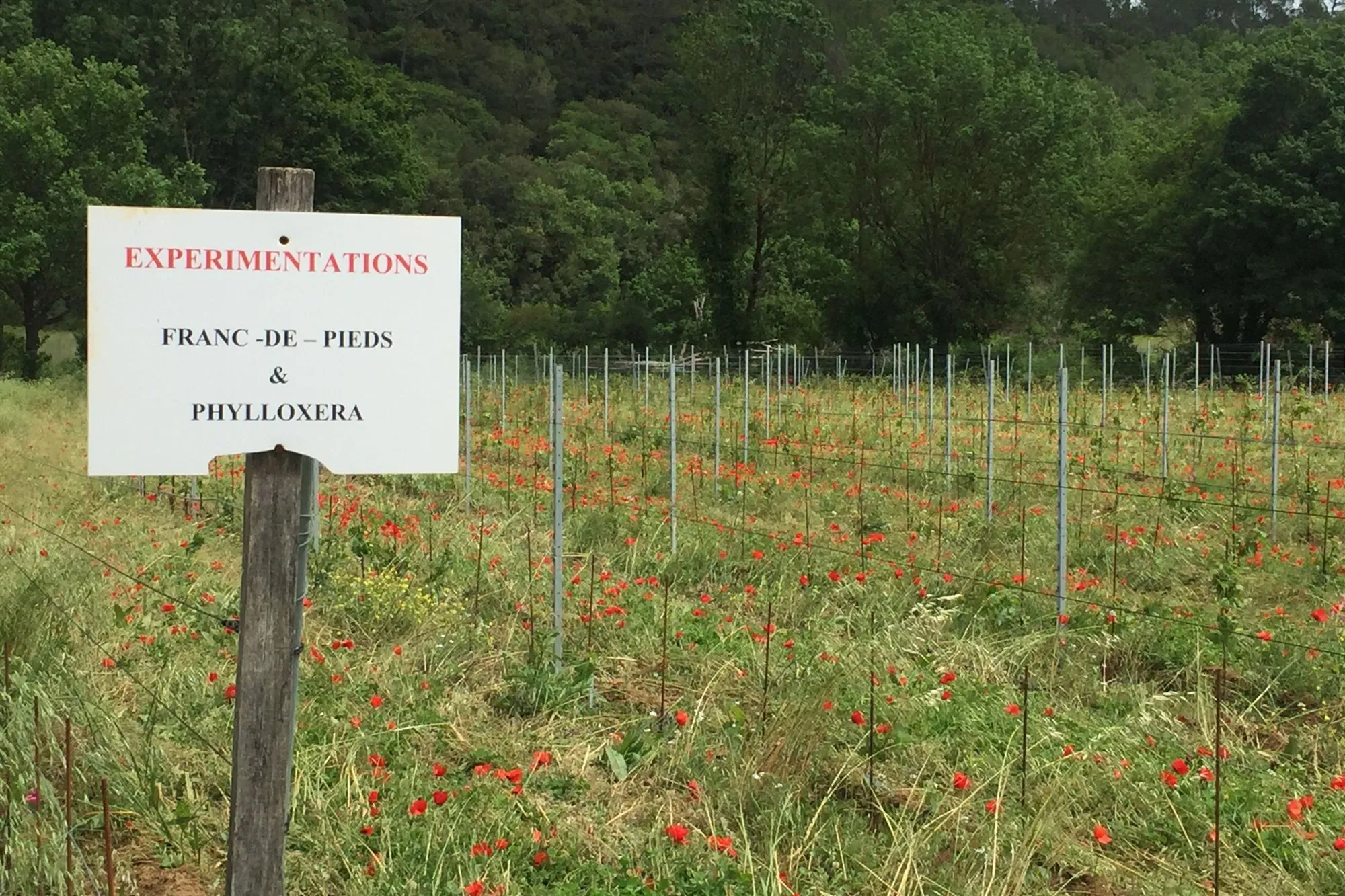
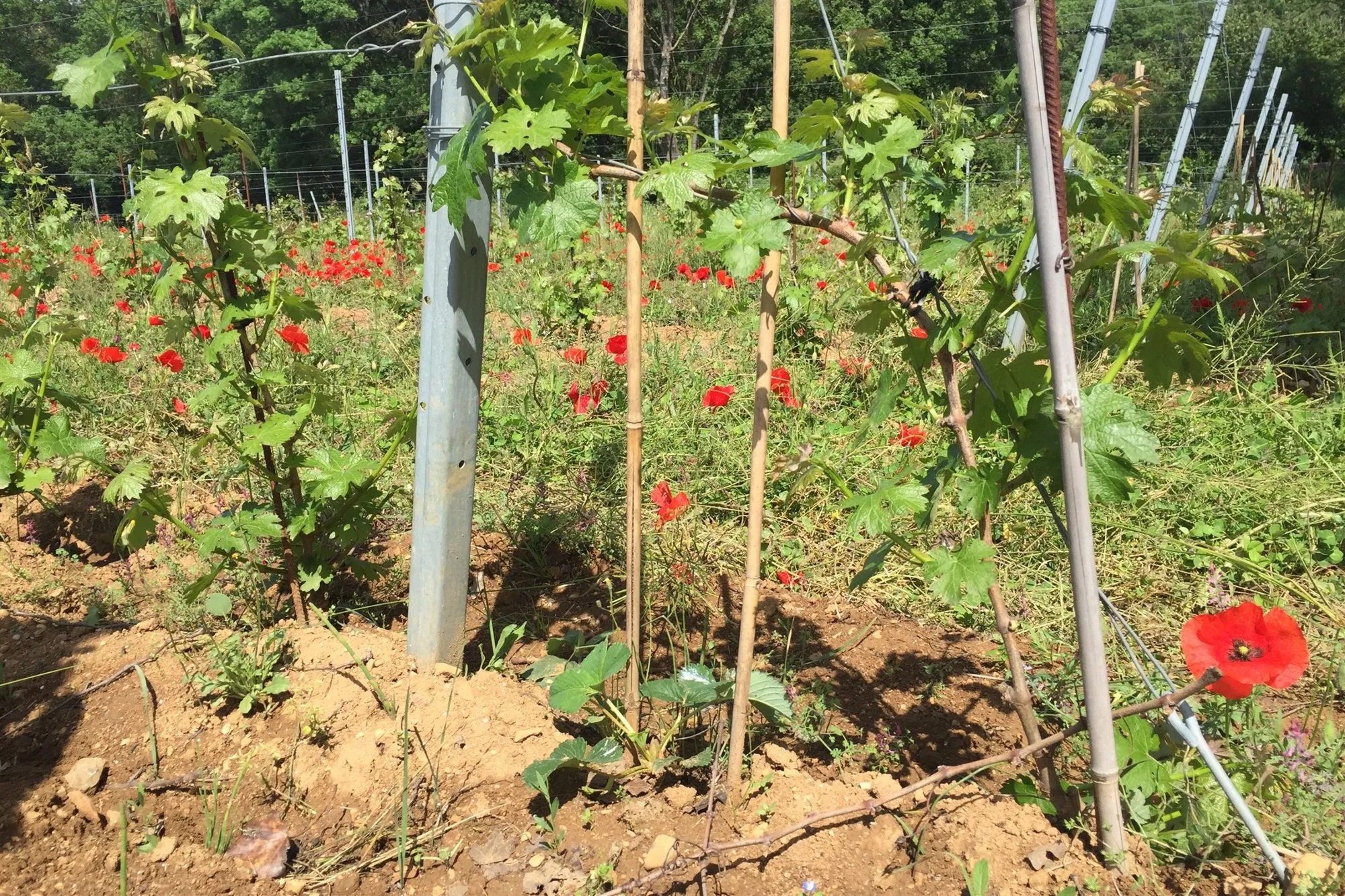
In Provence, Marc Birebent has spent several years exploring the possibility of growing and preserving ungrafted vines, at Cabasse in the Var.
A specialist in grafting techniques, he knows precisely what this practice makes possible, but also the questions it raises about how vines function and how long they live.
That is what makes his approach particularly interesting.
It is not simply about mourning a pre-phylloxera viticulture. It is about experimenting, observing and understanding what can be considered today, in conditions where the pest is still present.
Through the association Les Vieilles Branches, of which he is president, conservation and experimental work seeks to learn more about own-rooted vines and how they behave.
Between the rows, it is the draught horses of Gilles Fougerouse (Labour Vignes 83) that work the earth, without compacting the soil around the young vines.
These trials do not prove that European vines could now do without rootstocks on a large scale. Phylloxera remains a real threat, and the results must be examined with all due caution.
But they raise a legitimate question: have we explored every possibility offered by the diversity of vines, soils and ways of growing?
It is a question that deserves to be studied rather than settled by conviction.
What grafting really changes
Grafting is not a simple mechanical assembly.
When the scion and the rootstock heal together, vascular connections form to allow water, minerals and the substances produced by the plant to circulate.
The quality of this union matters for how the vine works and how long it lives. A faulty union can disrupt these exchanges, while a well-made graft allows the plant to develop over the long term.
The choice of rootstock matters too. It influences the relationship between the vine and its environment, and can help it adapt to different types of soil.
Research is also looking at the physiological interactions and regulatory mechanisms between scion and rootstock, including certain epigenetic phenomena.
But we must distinguish an open scientific question from a demonstrated conclusion.
We cannot claim that grafting necessarily harms the vine, that it is solely responsible for its decline, or that the absence of a graft would guarantee a better expression of terroir.
Trunk diseases, water stress, growing practices, plant material and environmental conditions interact in complex ways.
Own-rooted vines can help us better understand some of these mechanisms. On their own, they are not the answer to every difficulty facing viticulture today.
A different wine, really?
This is probably the question that comes to mind most naturally.
Does a wine from an own-rooted vine taste different?
Some winegrowers and tasters describe differences in texture, balance or aromatic expression between wines from grafted and ungrafted vines.
These observations deserve our attention, but they are not enough to establish a general rule.
To compare the two systems rigorously, we would have to take into account the grape variety, the soil, the age of the vines, the plant material, the yields, the ripeness of the grapes and the winemaking choices.
So many factors that can influence the result.
The words “own-rooted” therefore tell us about an important characteristic of the plant. They guarantee neither superior quality nor a universal taste profile.
And that is just as it should be.
Wine does not need another absolute promise. It needs us to keep observing, comparing and understanding what makes it different.
Keeping the roots, keeping the questions
There is something deeply moving in the idea of a vine that has kept its own roots.
Not because it would be more authentic than all the others, nor because it would hold some lost secret that modern viticulture must necessarily rediscover.
But because it reminds us that agricultural history never moves in a straight line.
Grafting saved Europe’s vineyards from a major catastrophe. Rootstocks continue to provide indispensable services. And yet, in certain places, ungrafted vines have survived, while others are now the subject of new experiments.
These realities are not necessarily opposed. On the contrary, they can enrich our understanding of the living world.
I like to think that the landscapes of Sarragachies, the old vines of Etna and the research under way in Provence each take part, in their own way, in this same curiosity. On one side, old vines that still carry the memory of a land and of the generations who tended them; on the other, people trying to understand what these plants can teach us for the future.
Between the two lie the earth, the roots and many questions we have not yet answered.
The next time you look at a vine, remember that what you see is only part of its story. Beneath your feet lies another world, usually invisible, that plays a part in its life and in the life of the wine.
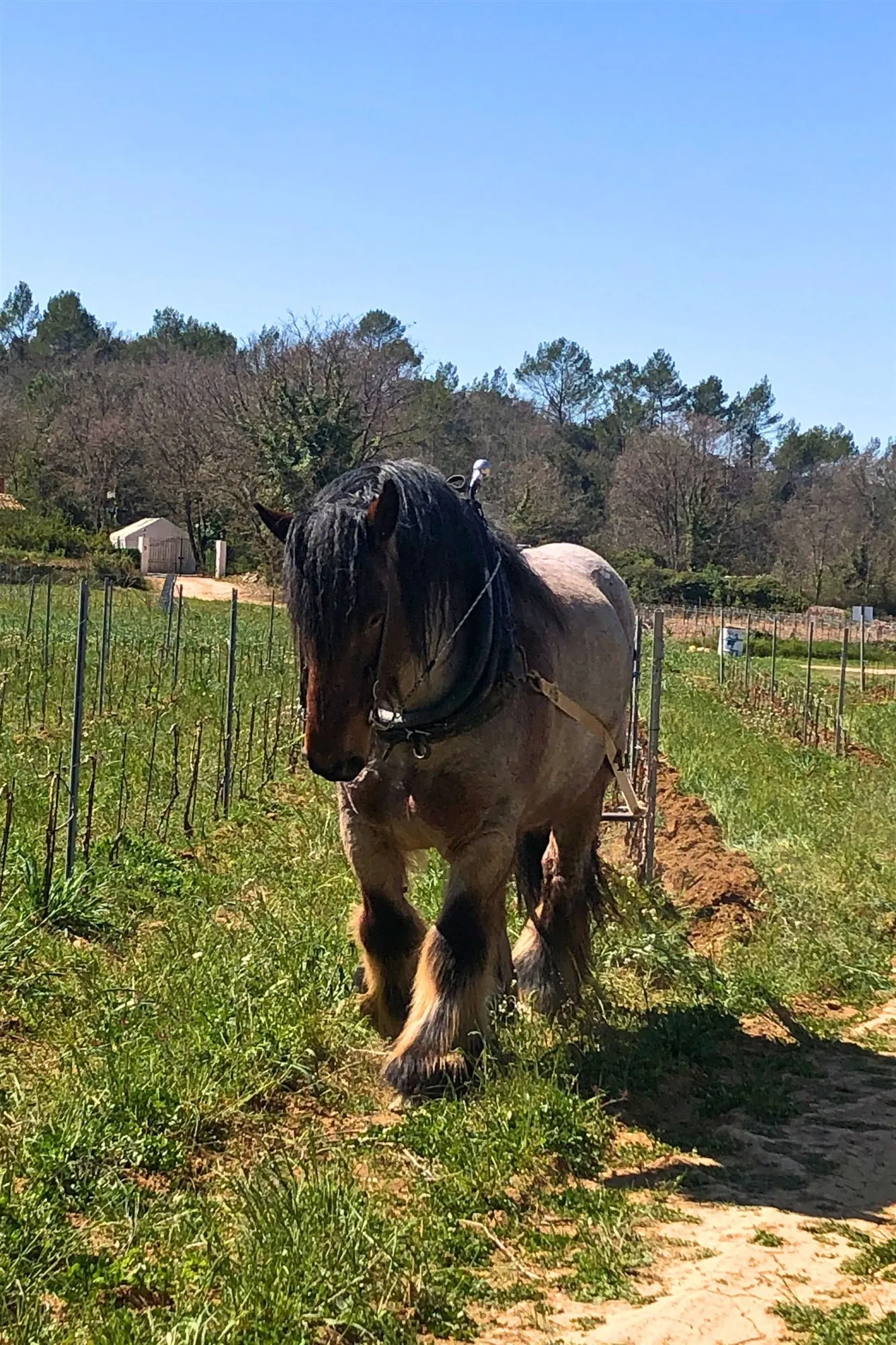

Some vines have kept their roots. Above all, they invite us not to lose our curiosity.
Alexandra Baudon · International sommelier and wine educator
The Journal letter
Once a month: new stories from the Journal, something to try at home and a little news from the workshop.
Thank you! The next letter will be waiting in your inbox.