

Why do we choose the second-cheapest wine?
A wine list, a few glances around the table… and suddenly, choosing a bottle becomes a surprisingly complicated affair.
A wine list, a few glances around the table and a delicate question: how much can we spend without looking as though we are counting? With humour, let us discover why the second-cheapest wine attracts us so much, and what our choices say about us. · second-cheapest wine · wine list · restaurant wine prices · choosing wine in a restaurant · psychology of price · sommelier advice · Why do we choose the second-cheapest wine? A wine list, a few glances around the table and a delicate question: how much can we spend without looking as though we are counting? With humour, let us discover why the second-cheapest wine attracts us so much, and what our choices say about us. second-cheapest wine wine list restaurant wine prices choosing wine in a restaurant psychology of price sommelier advice
A wine list, a few glances around the table and a delicate question: how much can we spend without looking as though we are counting? With humour, let us discover why the second-cheapest wine attracts us so much, and what our choices say about us.
It all begins with a perfectly innocent sentence.
“Will you sort out the wine?”
You had not asked for anything. You were quietly settled, looking at the menu, perhaps even already set on ordering something delicious. But now the wine list lands in your hands, and three people are looking at you with that slightly unnerving confidence we place in the person who is supposed to know.
“Choose whatever you like, we trust you.”
Wonderful.
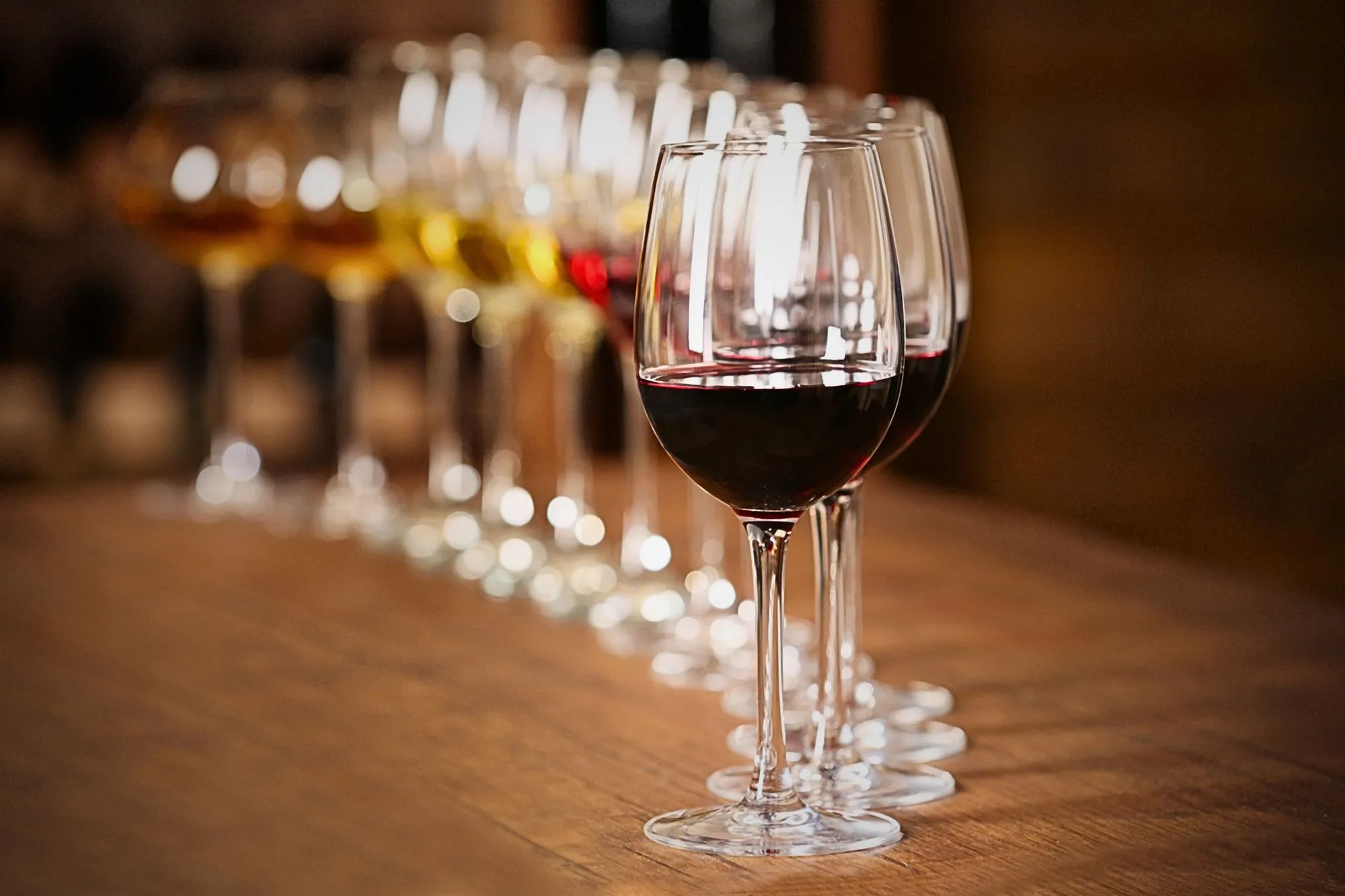
You open the list.
The first bottle costs 24 euros. The second, 29. Then the prices climb: 38, 46, 65, 90 euros… and a few wines where you would rather not check whether it is the price of the bottle or of a weekend for two.
You vaguely know some of the appellations. Others are completely unfamiliar. And above all, one question starts to take up far more room than grape varieties, terroirs or food pairings:
How much can we reasonably spend without looking as though we are counting?
Welcome to the great diplomacy of the wine list.
The second price, such a comfortable refuge
The cheapest wine is right there in front of us. It could be very good, perfectly suited to the meal, and perhaps even more interesting than some bottles offered at twice the price.
But something holds us back.
Ordering the cheapest, is that admitting we have no wish to spend more? Giving the impression that we are choosing purely on budget? And what if someone around the table thought we were not making any effort?
So our eyes slide down to the next line.
Five euros more. Sometimes eight. A sum modest enough to seem reasonable, but one that makes us feel we have made a more generous, more considered, almost more elegant choice.
We have not necessarily chosen a better wine. Above all, we have bought ourselves a little social peace of mind.
And when the bottle finally arrives, everyone tastes and a voice exclaims “Oh, this wine is really good!”, we feel a delicious satisfaction. We smile modestly, as though our choice were the fruit of in-depth knowledge of the vineyard, and we take great care not to mention that we had mostly noticed its position on the list.
After all, there is no need to reveal every secret of a great decision.
The funniest part is that nobody around the table may have had the slightest expectation on the matter. Everyone was already thinking about their starter, except us, who have just spent two minutes silently negotiating with our pride.
Price has its little powers

We would like to believe that we always choose a wine for what it is. Its origin, its grape variety, its style, the sensations it promises.
In reality, price joins the conversation too, sometimes before we have even read the name of the estate.
An expensive wine may seem more promising because we spontaneously associate price with quality. Conversely, a cheap bottle can arouse unjustified suspicion, as though its price necessarily revealed something about its faults.
Studies in neuroscience have shown, under controlled experimental conditions, that information about a wine’s price can influence the pleasure felt when tasting it.
This obviously does not mean that sticking a 100-euro label on any bottle is enough to make it delicious. But our expectations shape our experience, and price sometimes helps to shape those expectations.
It is a rather fascinating phenomenon: we can taste with our palate while letting our brain discreetly consult the bill.
What if the restaurant already knew our little strategy?
We often hear it said that restaurateurs deliberately put their best margins on the second-cheapest wine, precisely because customers hesitate to order the first.
It is an appealing story. It spreads easily, because it seems to explain both our behaviour and the way a list might be built to take advantage of it.
But be careful: it is not a proven universal rule.
Pricing policies vary enormously from one establishment to another. Purchase cost, volumes, how quickly bottles sell, the restaurant’s positioning, storage costs and the sommelier’s choices can all come into play. Nothing allows us to say that the second-cheapest bottle is systematically the most profitable for the restaurateur, or the least interesting for the customer.
What is more revealing, in the end, is how easily we believe this story.
We recognise ourselves in the character. We have hesitated before. We have looked at the prices with a very relative discretion, before closing the list with a perfectly relaxed air.
“We’ll have this one.”
As though the choice had been obvious from the start.
“Have whatever you’d like”

There is another formidable phrase.
“Have whatever you’d like, really.”
It is usually said with great kindness by the person treating you, or by the one who has just handed you the list.
And yet it solves absolutely nothing.
Because what you would like, at that precise moment, might be to know the budget everyone is comfortable with. Or to find out whether the person treating you had a 30-euro bottle in mind, or a grand occasion.
You could ask. It would be simple, reasonable and probably appreciated.
But we sometimes have this strange reticence when it comes to money. We would rather interpret glances, guess intentions and build scenarios than say something as ordinary as:
“What budget shall we go for?”
Admittedly, it would lack a little suspense.
What price doesn’t tell us
A wine list is also a curious economic landscape.
Two bottles from the same region can show very different prices. Behind these gaps there are often very concrete realities: the cost of land, yields, manual work, the size of the estate, ageing, scarcity, distribution or an estate’s reputation.
But there are also fashions, sought-after appellations and the prestige attached to certain names.
A high price therefore does not guarantee any particular emotion. And a modest price does not condemn a wine to being ordinary.
I particularly love the discoveries that upset our expectations: a little-known grape variety, a region nobody had considered, a discreet estate whose wine goes wonderfully with the meal.
These bottles remind us that there are many ways of making a fine choice. We can look for a prestigious appellation, of course, but we can also take an interest in a story, a style or a winemaker whose work deserves to be discovered.
The value of a wine cannot be reduced to its price, even if that price sometimes tells part of its story.
The waiter comes back
Here we are, back at the restaurant.
You have been through the list three times. You now know the price of every bottle, but you are not much further on.
The waiter approaches.
“Have you decided?”
There is that moment of hesitation when you could quickly point to something just to get it over with. Yet there is another option: asking for advice.
“We’re looking for a supple red, not too oaky, around 35 euros. What would you recommend?”
There you are.
In one sentence, you have given three precious pieces of information: the style you are looking for, a taste preference and a budget.
A good professional can then guide you towards a bottle that matches what you want. They may even suggest something you would never have thought of ordering.
And you did not need to pretend you knew the whole list.
There is nothing inelegant about stating a budget. On the contrary, it is often the simplest way to turn a hesitant choice into an interesting conversation.
Provided, of course, that the person advising you respects that budget, without trying to trade you up at all costs.
The wine we would never have chosen
Now imagine the waiter suggests a bottle at 28 euros.
Cheaper than the one you had spotted.
You hesitate for a second. Then he tells you about the grape variety, the wine’s freshness, how well it balances the dishes you have ordered. You decide to trust him.
The bottle arrives. We taste.
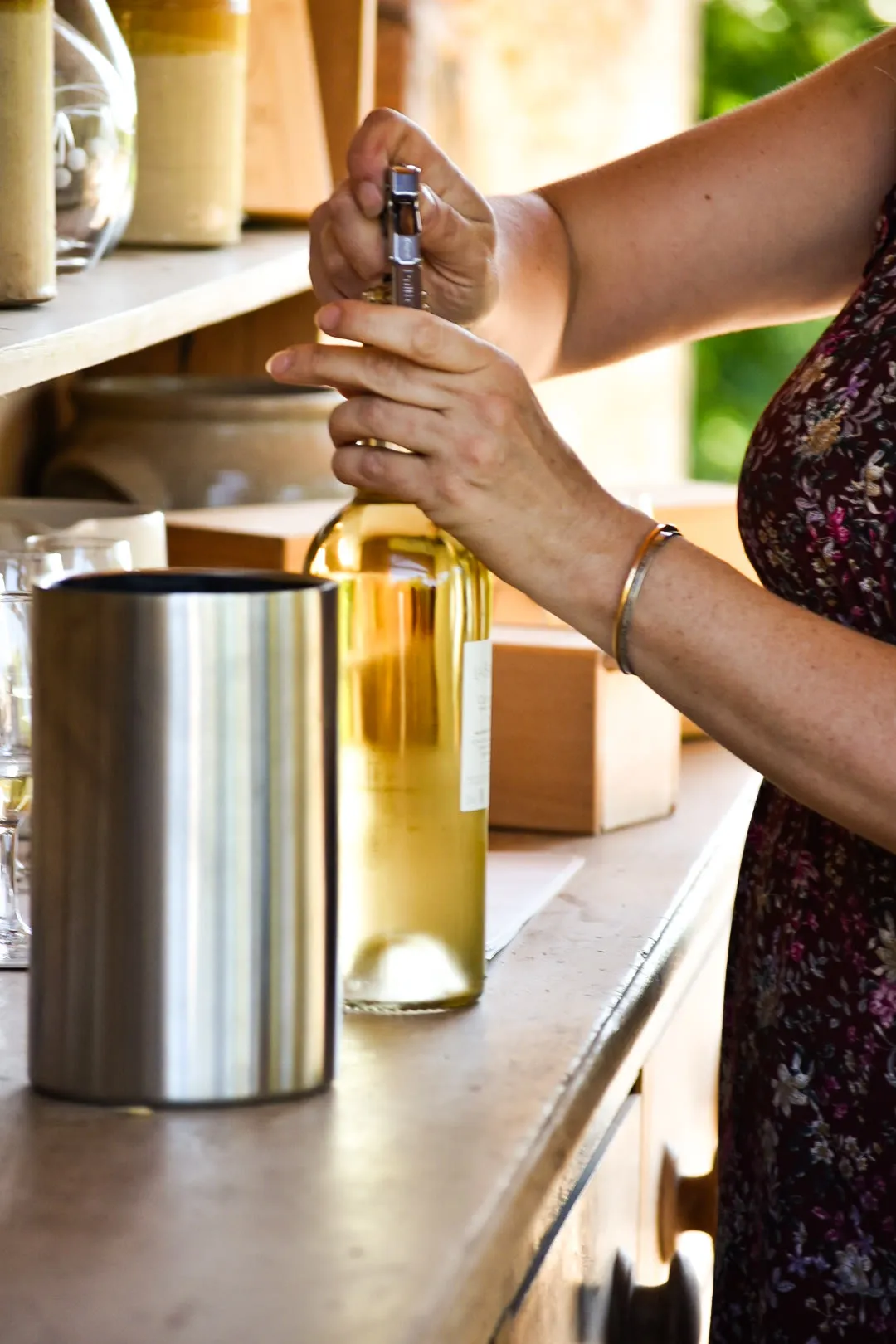
And everyone likes it.
Nobody asks why it did not cost 46 euros. Nobody regrets not having chosen a more famous appellation. The conversation picks up again, the plates arrive and the wine naturally finds its place in the meal.
It is an imaginary scene, of course, but it illustrates something I love about being a sommelier: the finest recommendation is not necessarily the most expensive. It is the one that meets the right people, at the right moment.
It might be an exceptional bottle for a special occasion, or a simple, delicious wine shared without ceremony.
Pleasure does not follow a price list.
In the end, who is really looking at the price?
Perhaps next time we will still choose the second-cheapest wine.
Out of habit. Out of caution. Because we genuinely like it. Or because, despite all our fine reflections, we will not have entirely escaped our little inner calculations.
And that is not so very serious.
What matters is perhaps to recognise that our choices are never as rational as we would like to believe. They mix our tastes, our means, our memories, our expectations and what we imagine others think of us.
A wine list can then become a small mirror of our contradictions, with its moments of generosity, its hesitations and its bursts of curiosity.
So the next time someone hands you the list saying “Choose whatever you like”, you can always start by asking what the others would like to drink.
And if nobody knows?
At least you will have found an excellent reason to talk about wine before ordering it.
Because the finest choice is perhaps not the one that impresses the table, but the one that makes it want to share the bottle.
Alexandra Baudon · International sommelier and wine educator
The Journal letter
Once a month: new stories from the Journal, something to try at home and a little news from the workshop.
Thank you! The next letter will be waiting in your inbox.