

Learning to look at the colour of wine
Behind the scenes at Calice des Sens, real wine samples invite us to look at colours differently.
Behind the scenes at Calice des Sens, real wine samples invite us to look at colours differently. · colour of wine · wine appearance · observing wine colour · shades of white wine · shades of red wine · how wine colour changes · tasting vials · Learning to look at the colour of wine Behind the scenes at Calice des Sens, real wine samples invite us to look at colours differently. colour of wine wine appearance observing wine colour shades of white wine shades of red wine how wine colour changes tasting vials
Behind the scenes at Calice des Sens, real wine samples invite us to look at colours differently.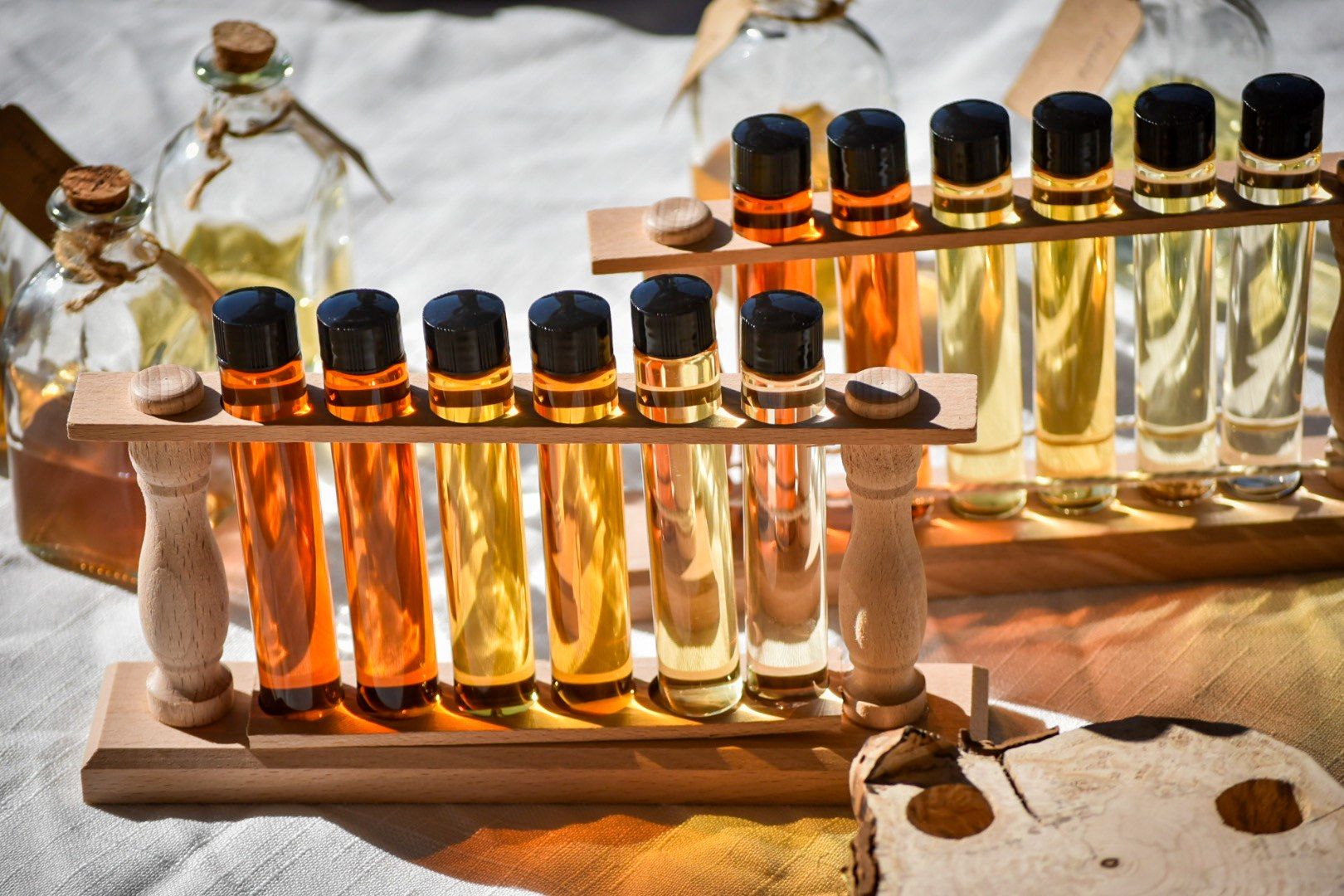
During my tastings, there comes a moment when I pass around the table a small wooden stand holding several vials of wine.
The participants pick them up, look at them, compare them with their glass. The conversation comes alive. People hesitate between two shades, share their impressions, look again.
And time and again, I hear: “Wow!”, “Incredible!”, “Now I understand!”
These reactions always delight me. Because behind these few vials lie years of research, trials and improvements.
And one simple idea: to learn to recognise the colours of wine, why not start by really looking at them?
Before the vials, the glass
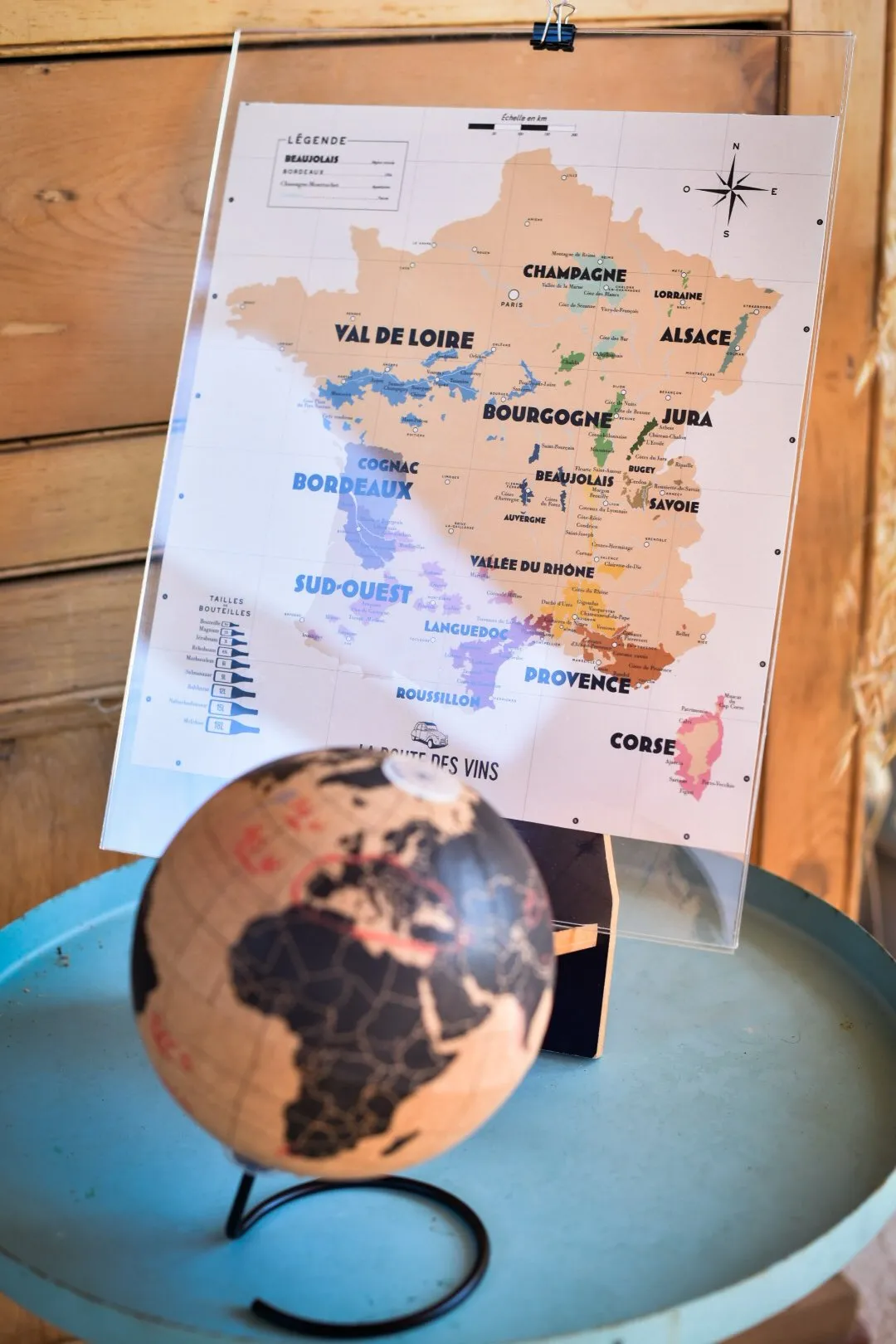
In my workshops, I usually begin with a map of France and one of my teaching sheets devoted to the colours of wine.
I explain that colour can give us first clues about a wine: how it has evolved, sometimes its climatic origin, certain aspects of how it was made.
A white wine from a cool climate often has a paler colour than a white from a warm region, where grapes generally reach a more advanced ripeness. But this is only a tendency: grape variety, winemaking and age also play a part.
I then ask the participants to look at their own glass.
What colour is it?
The question seems simple. Yet when you try to name precisely what you see, things become less obvious.
Is it lemon yellow? Straw yellow? Pale gold? A shade somewhere between two colours?
That is when I pass the vials around.
One colour, many shades
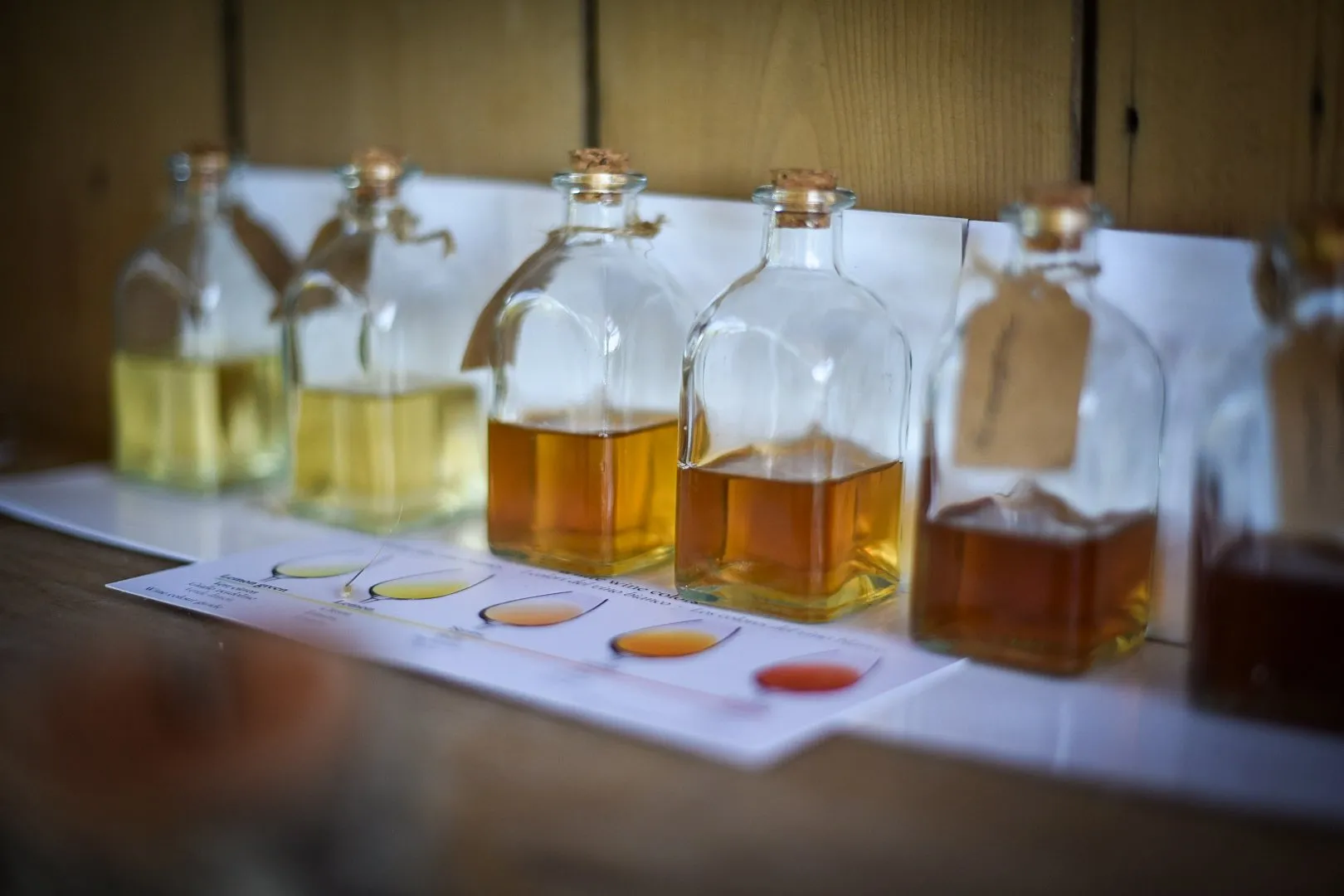
My stands show a progression of colours: lemon-green, lemon, straw, gold and amber for whites; from purple through ruby and garnet to brick-red tints for reds.
Depending on the workshop, I use sets of six or twelve vials.
Each participant can visually match the colour in their glass with the samples, then go back to the teaching sheet to refine their observation.
There is not always a perfect match.
A wine may sit between two shades. It may also show a particular hue and a more or less marked intensity: a straw yellow, for example, can be pale or deep.
It is precisely these differences that make the exercise interesting.
By comparing, participants begin to perceive what escaped them a few minutes earlier.
And because the vials pass from hand to hand, everyone takes the time to look. People go back to their first choice, compare impressions, and discover that the colour of a wine is sometimes more subtle than they imagined.
Whites that deepen, reds that lighten
One of the most interesting observations concerns how colours evolve over time.
Generally speaking, white wines tend to deepen as they age, gradually moving from lemon or straw shades towards more golden, sometimes amber, tones.
Red wines, on the other hand, tend to lose intensity. Their shades evolve from purple or ruby towards garnet, and may then take on orange or brick-red tints.
These changes are not a clock: you cannot determine a wine’s exact age from its colour alone.
But they offer precious visual landmarks.
For reds, I discovered through my trials that a white light placed behind the samples reveals far more of their shades.
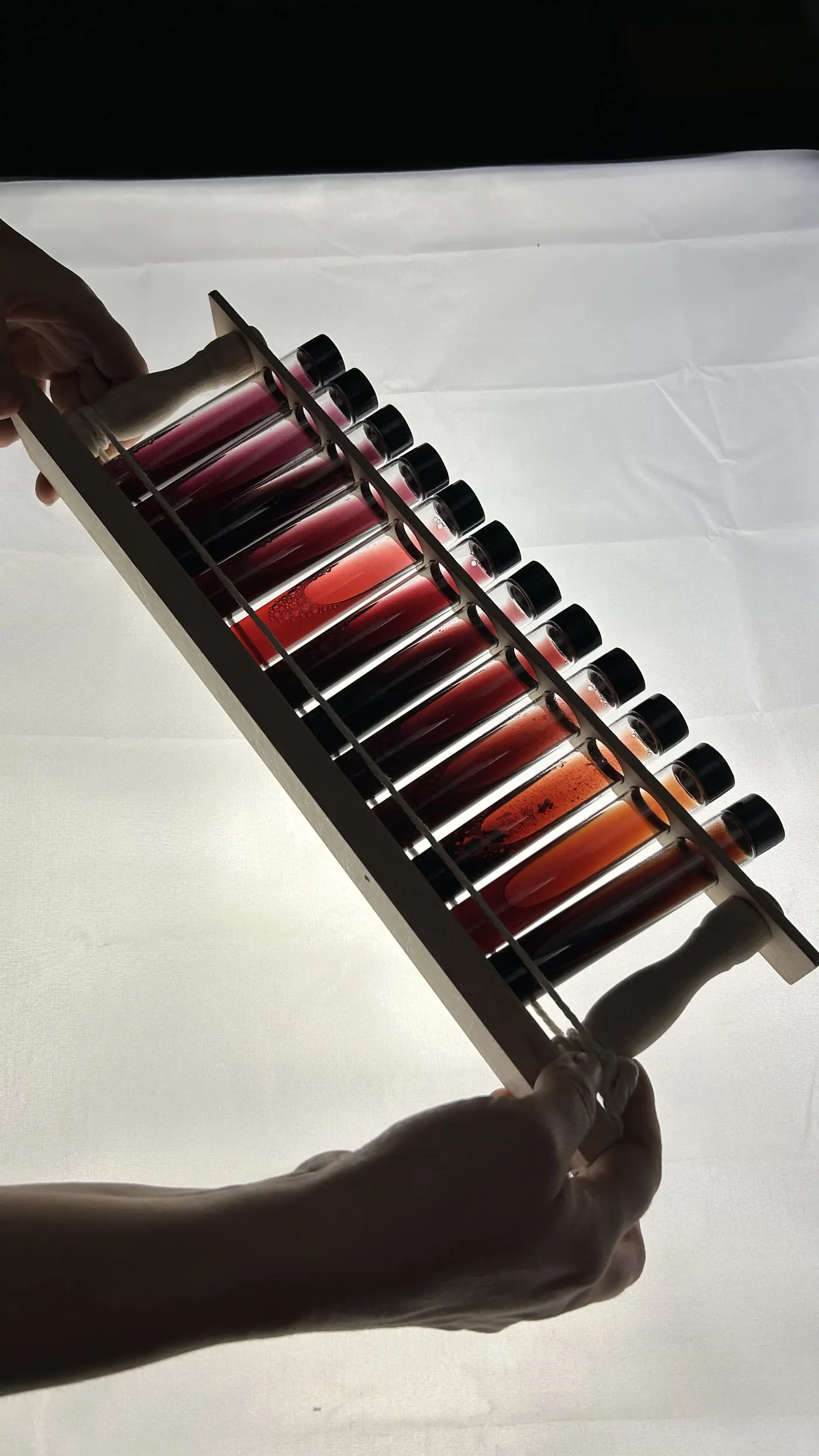
A red that looks very dark may then show reflections that were hard to make out before.
The result is often striking.
It is also an invitation to try the experiment at home: look at your wine in good light, against a light background, then tilt the glass slightly to observe the core and the rim.
For a very dark red, try placing your glass in front of a lamp: its shades will show far better.
Sometimes simply changing the way you look is enough to discover something else.
Years of trials for a few vials
These stands did not appear overnight.
I tried different formats of vials, searched for containers that were both elegant and airtight, and experimented with several presentations.
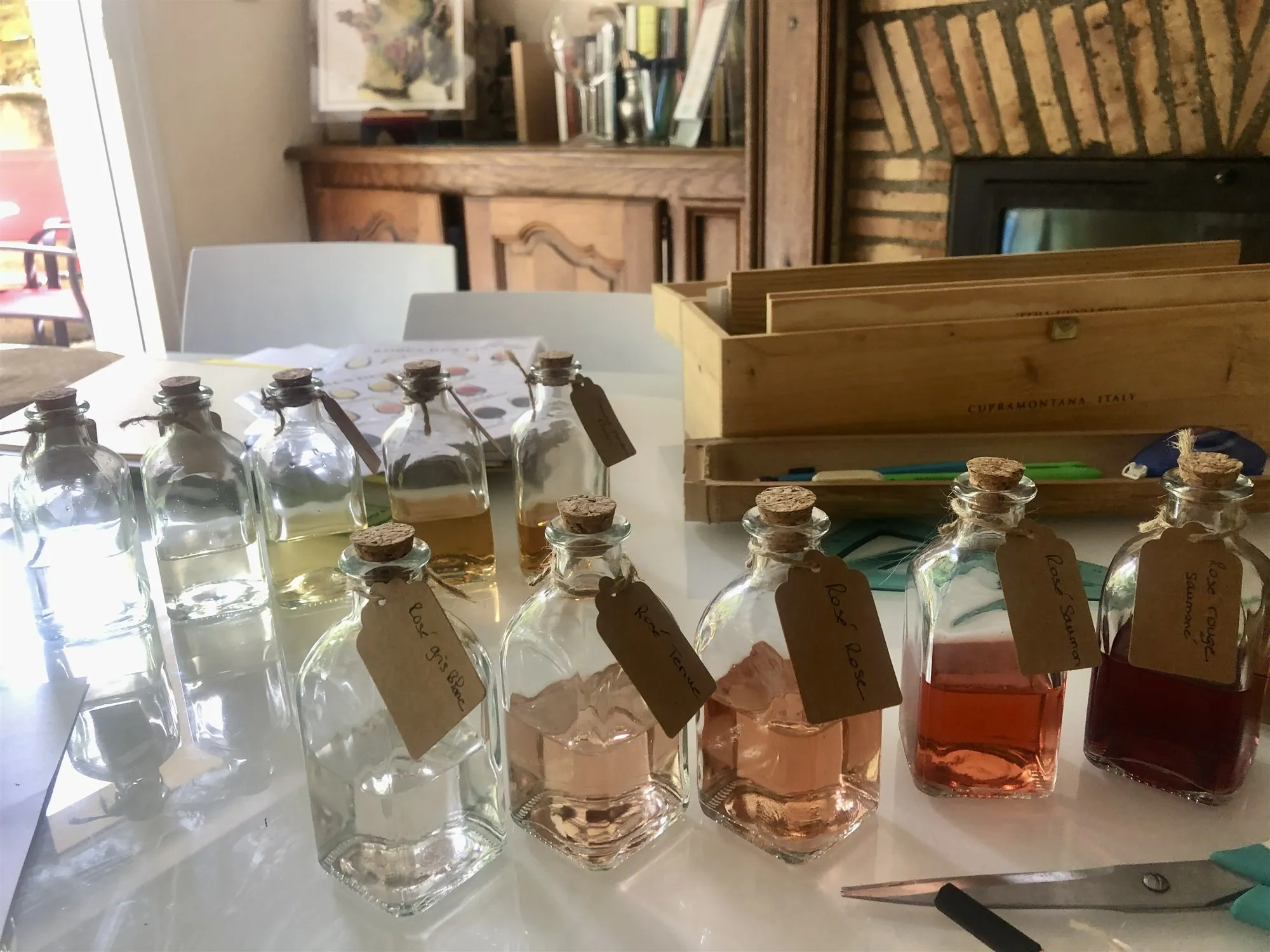
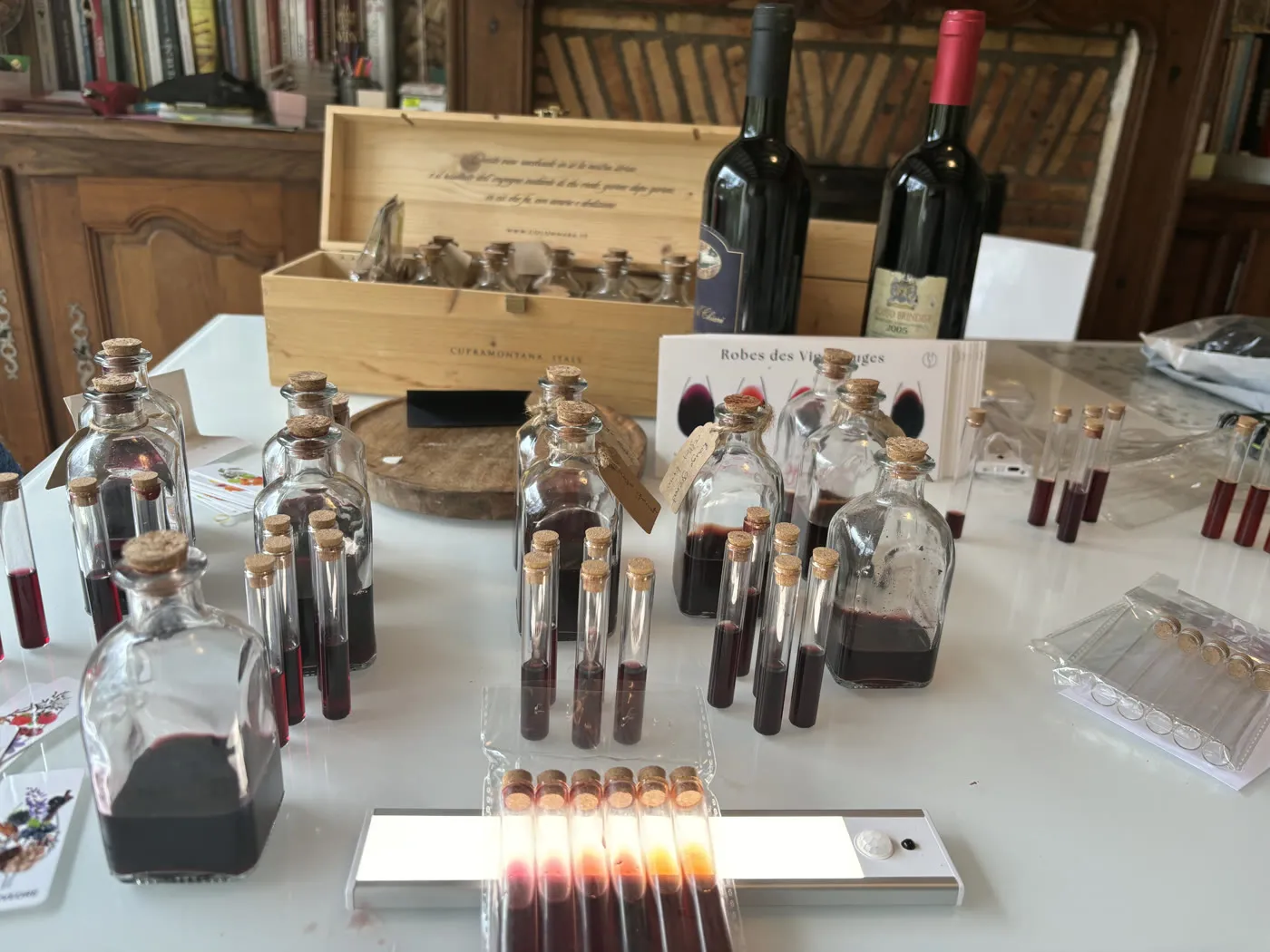
The colours had to remain clearly visible under different lights, and the vials had to pass round easily and be handled without difficulty.
The choice of stand mattered just as much. After several attempts, I found a wooden stand that is pleasant to hold, which presents the vials and lets them travel around the table.
I kept photographs of these different stages. Looking at them today, I can see the path travelled between the first ideas and the stands I now take to each of my tastings.
The vials contain real wine samples, which I renew every year.
This is something I care about: wines evolve, and so do their colours. Renewing them keeps the visual references suited to the demonstrations.
Learning with the eyes, the hands and curiosity
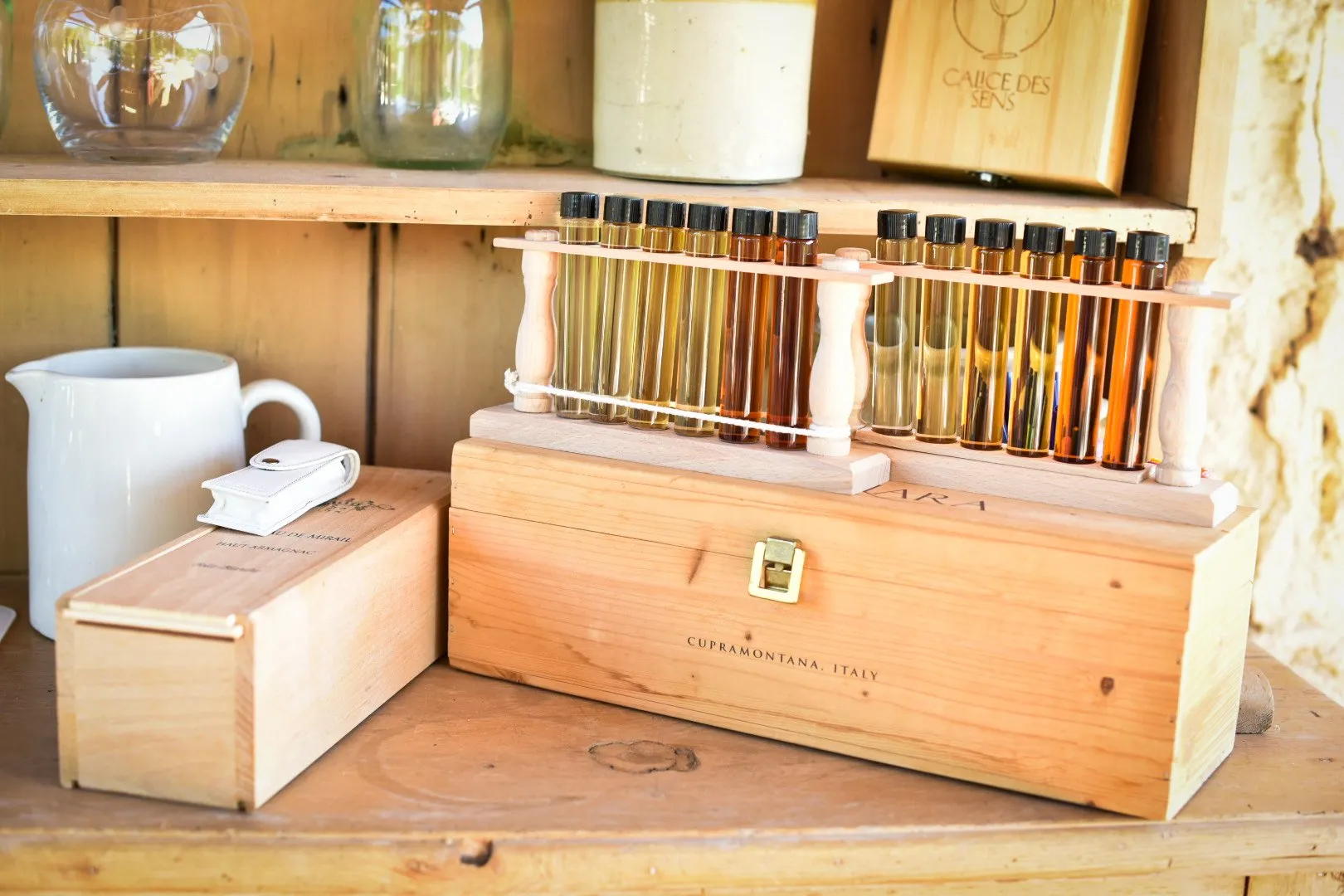
The vials replace neither looking at the glass nor the explanations. They create a link between the two.
The participant first looks at their wine, searches for a colour, and then has real references to compare with what they see.
They may hesitate, change their mind, discover a shade they had not noticed.
Learning becomes a shared experience.
Rosés offer another world of colours, particularly rich, which I explore with different materials. They will have their own place here, behind the scenes.
I love the moment when participants pick up their glass again after looking at the vials.
The wine has not changed.
But sometimes, the way they see it has.
Alexandra Baudon · International sommelier and wine educator
The Journal letter
Once a month: new stories from the Journal, something to try at home and a little news from the workshop.
Thank you! The next letter will be waiting in your inbox.