

Wine as a Path: from the Earth to the Chalice
The Calice Method
A colour that intrigues, an aroma you recognise without being able to name it, a texture that surprises: wine first reveals itself through sensations.
Over the course of my workshops, I have learnt that these first impressions are doorways. Sometimes it only takes looking differently, touching a material or comparing two glasses for what you sensed without being able to say it to begin to make sense.
The Calice Method grew out of this experience. It invites you to observe, to sense, to understand, and then to explore. A path that starts from our senses and brings us closer to what shapes a wine: the grape, the land, the climate, time and the choices of those who make it.
IObserve
It all begins with looking
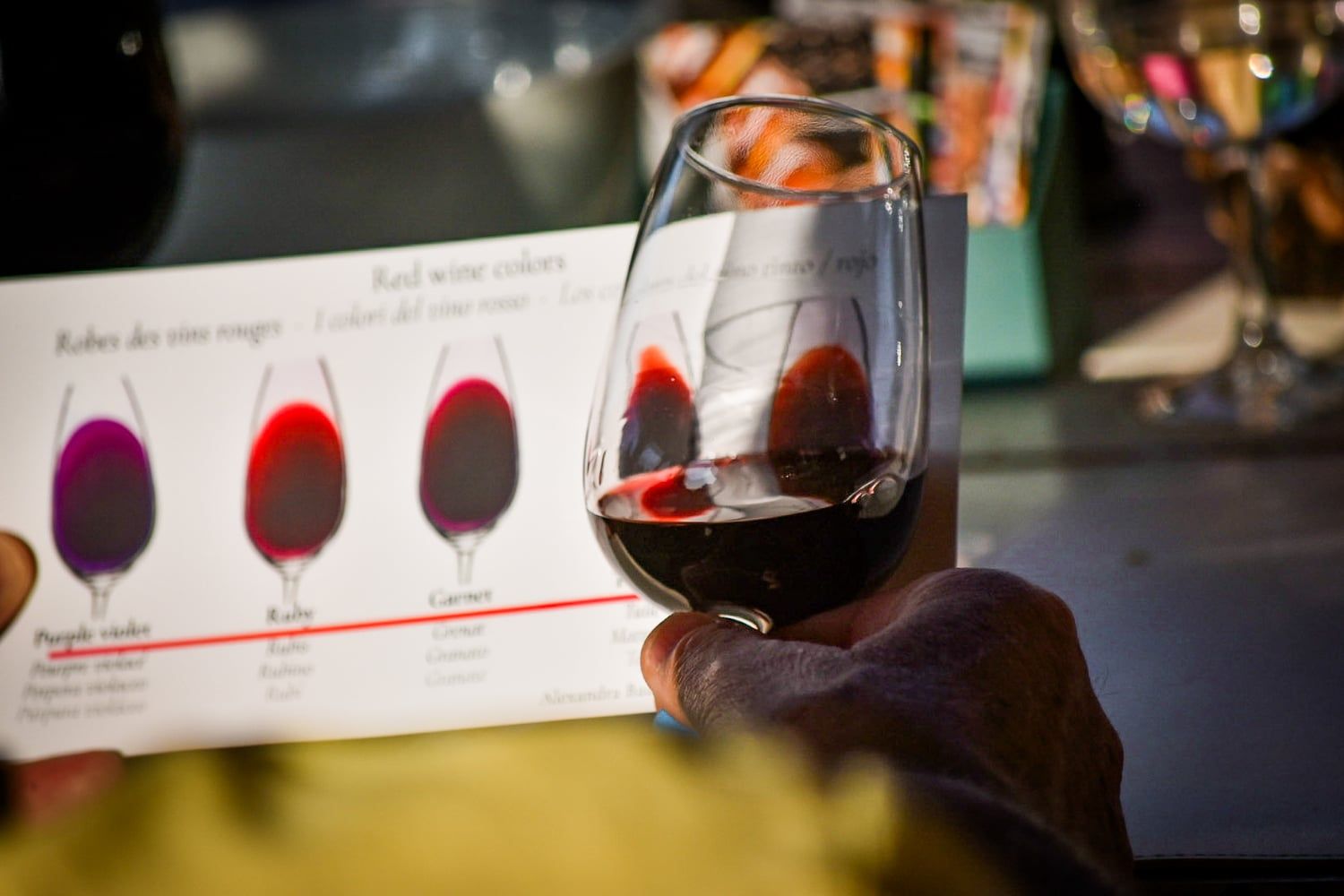
Even before the first sip, a wine offers clues: its colour, its intensity, its reflections.
In my workshops, everyone first looks for the colour of their own glass. Then the vials are passed around the table: real wines, some kept for several years, whose shades bear witness to the passing of time.
We compare, hesitate between two hues, look again. Little by little, the eye learns to tell apart what seemed identical. Colour becomes a first clue to read, without drawing conclusions just yet.
IISense
Finding the words for your sensations
On the nose as on the palate, many sensations arrive before the words to describe them.
A scent calls to mind a fruit, a flower, a memory. Then comes the first sip: freshness, roundness, tannins, texture, what lingers once you have tasted it. Some sensations are recognised at once; others need a little attention.
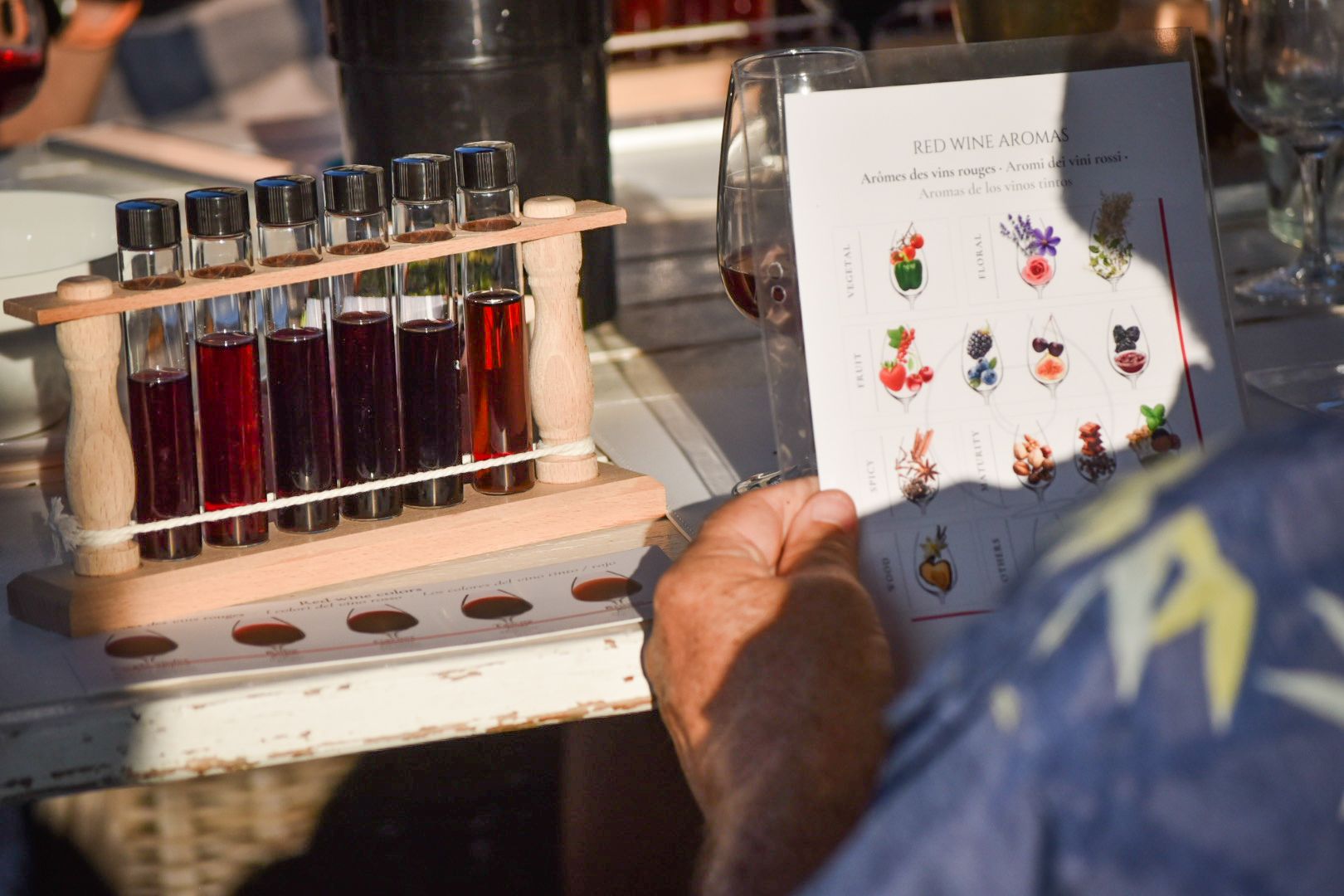
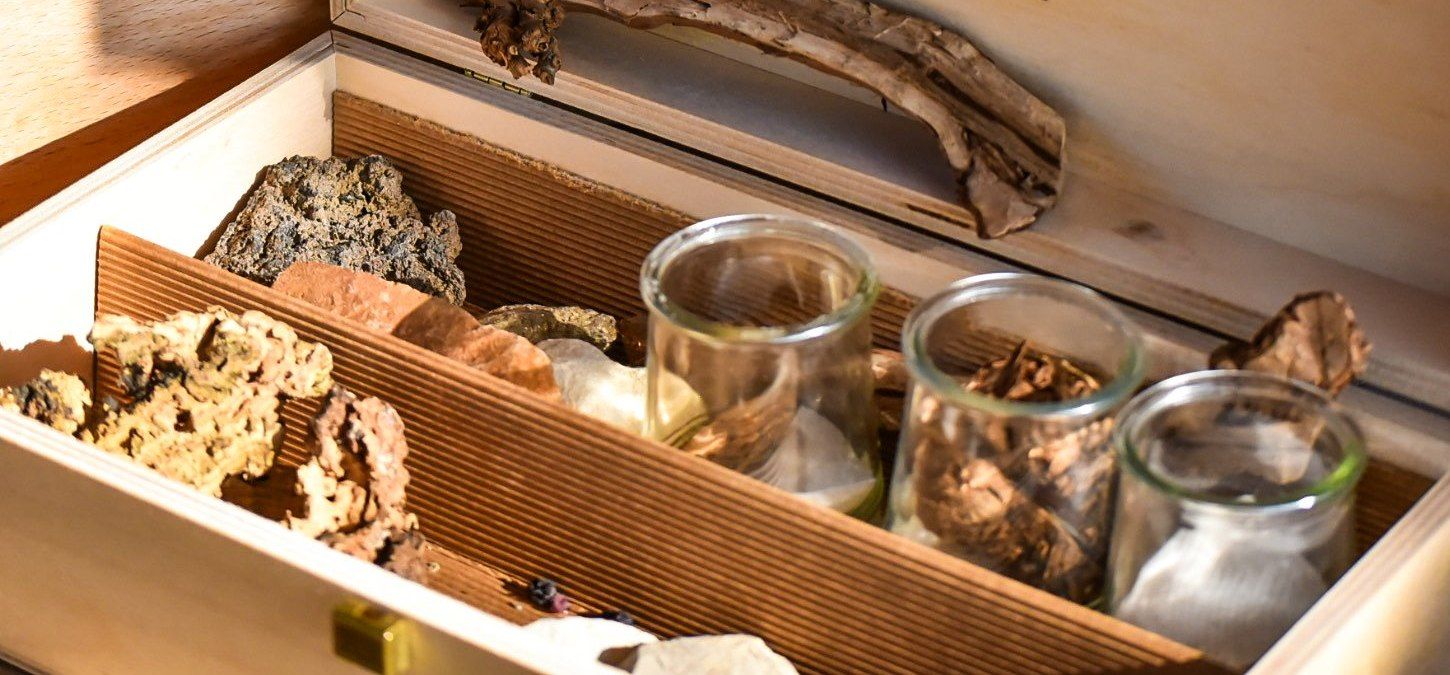
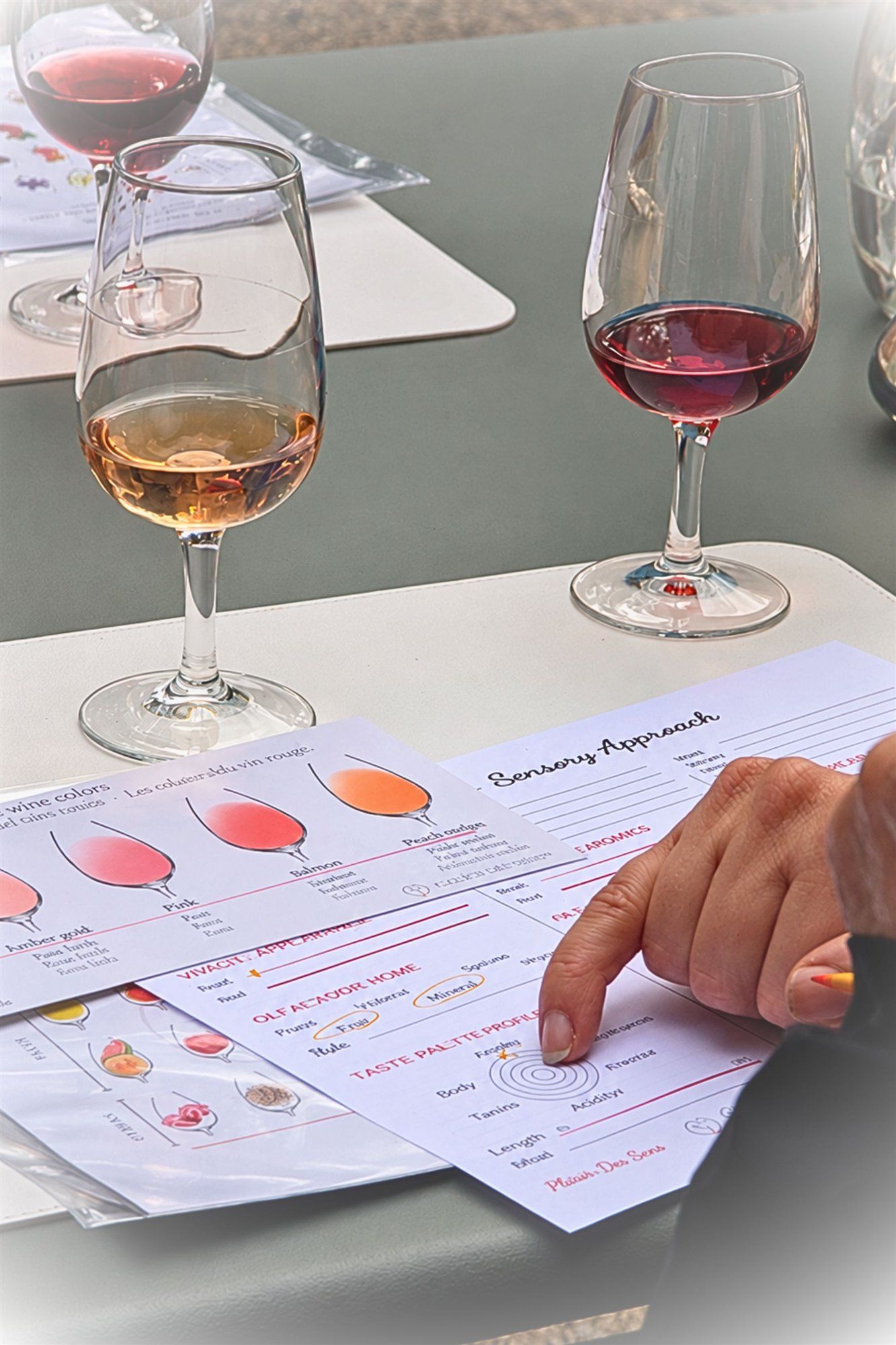
The aroma charts, with their icons and their aromatic chalice, help you picture what you perceive. Other materials are passed from hand to hand, to touch and to compare. They offer reference points for expressing what each person feels, without imposing a single answer.
IIIUnderstand
Linking sensations to their origins
Why can two wines made from the same grape seem so different? Why does one feel fresher, the other riper or more ample?
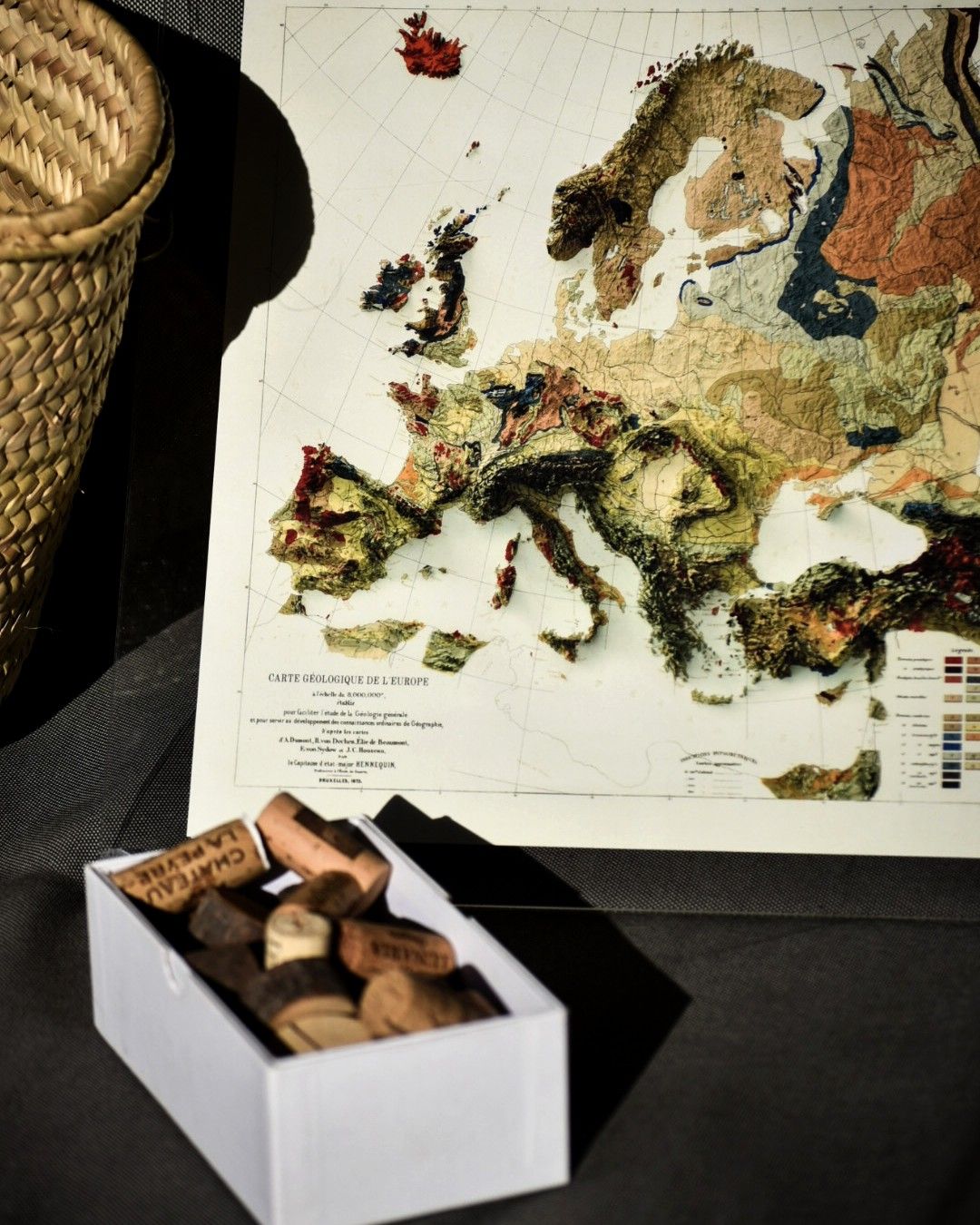
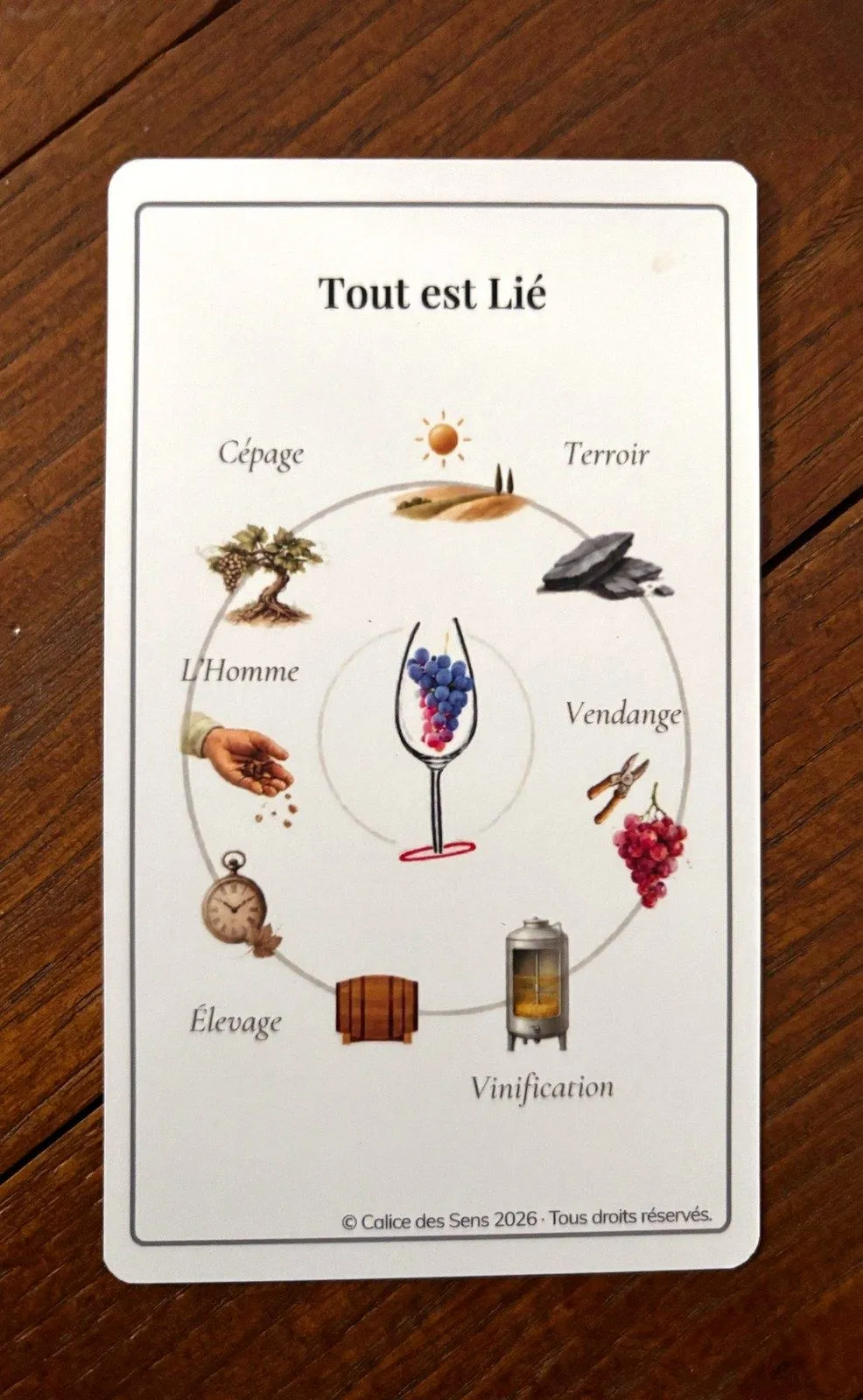
These questions take us beyond the glass. Through the wines we taste, maps and comparisons, we explore the influence of climate, soils, the grape, winemaking choices and time. A single variety can reveal very different expressions depending on where it is grown.
Learning to taste is learning to make connections: between colour and the way a wine evolves, between the ripeness of the grapes and certain sensations on the palate, between a climate and the expressions of a grape. Paths to read a wine, never absolute rules.
Wine then takes on another dimension: behind the sensations, a landscape, a craft and a story begin to emerge.
IVExplore
Compare, associate, remember
Around the table, two or three glasses are often tasted side by side. We move from one to the other and back to the first: what was only an impression becomes a difference you can name.
But what interests me is also what remains after the tasting. For years I have been creating materials that give a tangible form to the notions of wine. A shade finds its vial, a sensation its material, an aroma its place in the chalice, a wine its landscape and its story. So many different paths to find the same knowledge again.
By linking what you see, what you touch, what you taste and what you understand, memories are built differently. You learn by searching, by comparing, sometimes by having fun. And when you find a sensation again in another glass, a connection awakens, knowledge returns, a new question appears.
To each their own path
Sharing my passion for wine, passing on what I know and awakening the curiosity of those discovering it: this is what has driven me for years.
Over time, I have created materials to bring knowledge to life, awaken the senses and help it stay in the memory. What matters most to me is creating paths so that everyone can make their own connections and find again what they discovered, long after the tasting.
The Calice des Sens box sets grew out of this experience. Inspired by my teaching creations, they extend this approach through cards and a booklet, so that each theme can be explored freely, at your own pace. One day, these paths may take other forms: between the pages of a book, or at a distance, to learn wherever you are.
- In a workshopEach chosen theme comes to life around selected wines, sensory materials and conversation: an experience to share, where discoveries are made together.
- At homeThe Calice box sets let you explore a theme in depth through the cards and their booklet. The Foundations box sets also provide the essentials of tasting.
- Week after weekThe Journal takes time for stories: of vines and wines, of encounters and emotions, told as if by the fireside, when time seems to slow down.
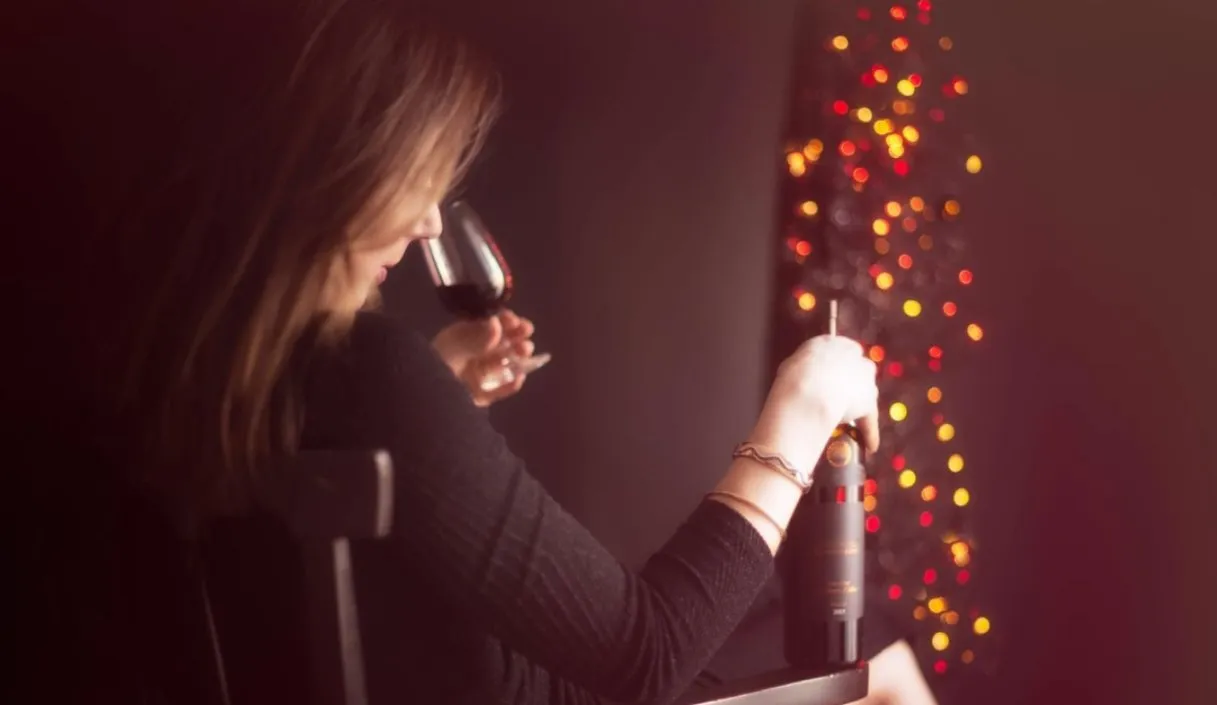
Knowledge illuminates intuition without ever extinguishing it.
Alexandra Baudon
Photo: Ester Menniti