

How to taste wine: learning to trust your senses
Wine is not only something you learn. It is something you feel.
how to taste wine · wine tasting · wine aromas · tasting vocabulary · How to taste wine: learning to trust your senses how to taste wine wine tasting wine aromas tasting vocabulary
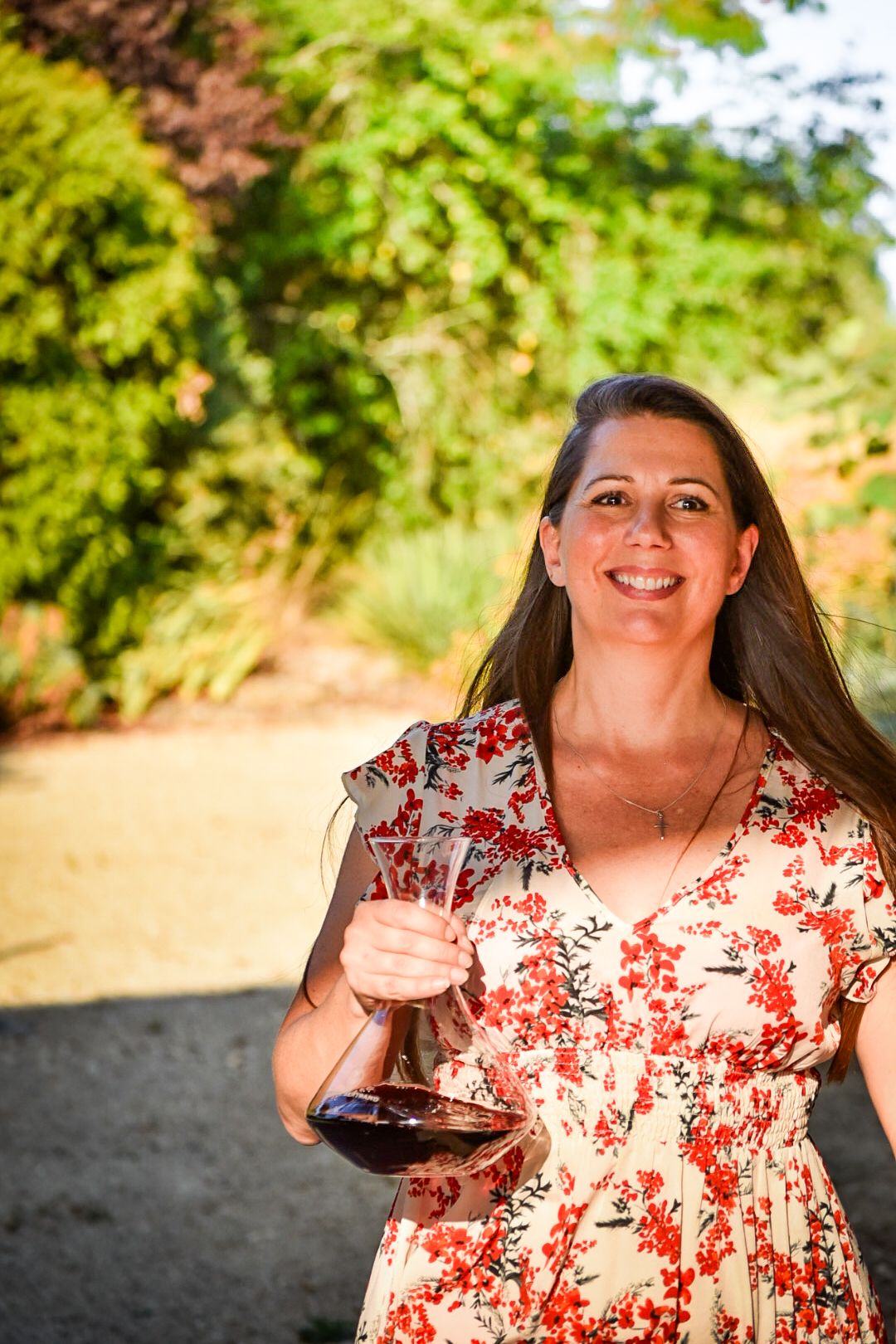
There is a hesitation I often meet at the start of a tasting. The glass is there, and so are the first impressions. Yet sometimes the words are slow to come.
“I can’t find the right words.”
“I’m not sure if that’s right.”
Some people recognise an aroma; others search without finding it. We listen to our neighbour and doubt what we smelled ourselves. And sometimes, lacking the words, we fall back on what we know: “I like it” or “I don’t like it”.
That is often where my work as a sommelier and educator begins.
I explain that there is no wrong answer when you express what you genuinely feel. A scent may bring back a memory for one person and mean nothing to another. We do not share the same memories, nor the same sensory references.
But trusting your senses does not mean giving up on understanding.
There is a moment I particularly love in my workshops: the “Ah! Now I get it!” that bursts out when a participant, thanks to a landmark on a tasting sheet, finds the words for what they were already perceiving in the glass.
That is the heart of what I pass on: a few keys so that sensations become more familiar, and everyone can explore wine with greater confidence.
The eye: the first clues
Before the glass even reaches your lips, the wine is already telling you something.
Its colour, its intensity and its reflections can offer clues about the grape variety, the winemaking choices and how the wine has evolved.
A white may show greenish glints, a pale yellow colour or golden hues. A red can range from bright ruby to garnet, sometimes with brick-coloured tints as it ages.
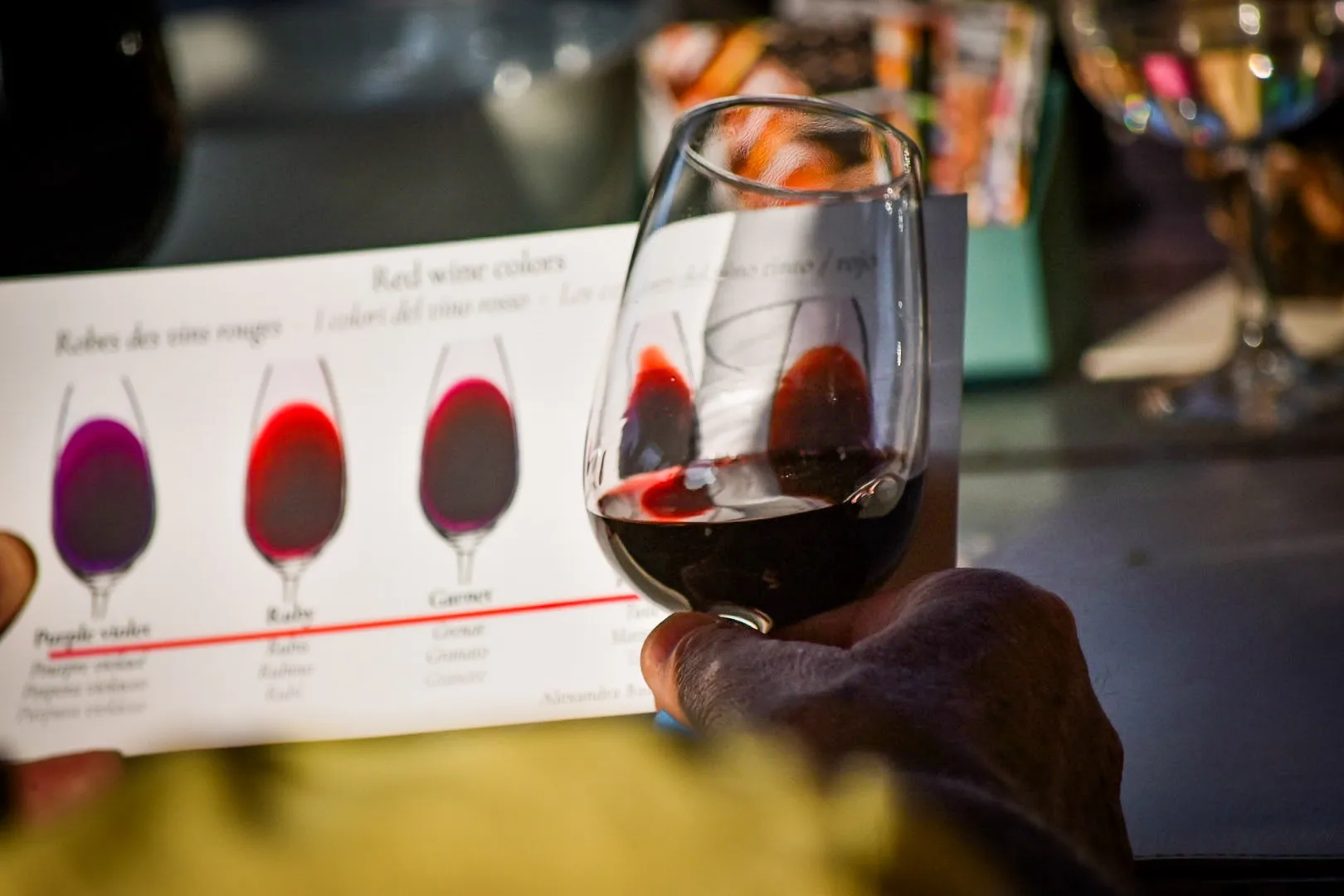
But beware of jumping to conclusions: a golden white is not necessarily old, and a pale red is not necessarily light.
Colour offers clues. It does not deliver a verdict.
Tilt your glass slightly against a light background. Take a few seconds simply to look, without rushing to interpret.
The nose: aromas have a memory
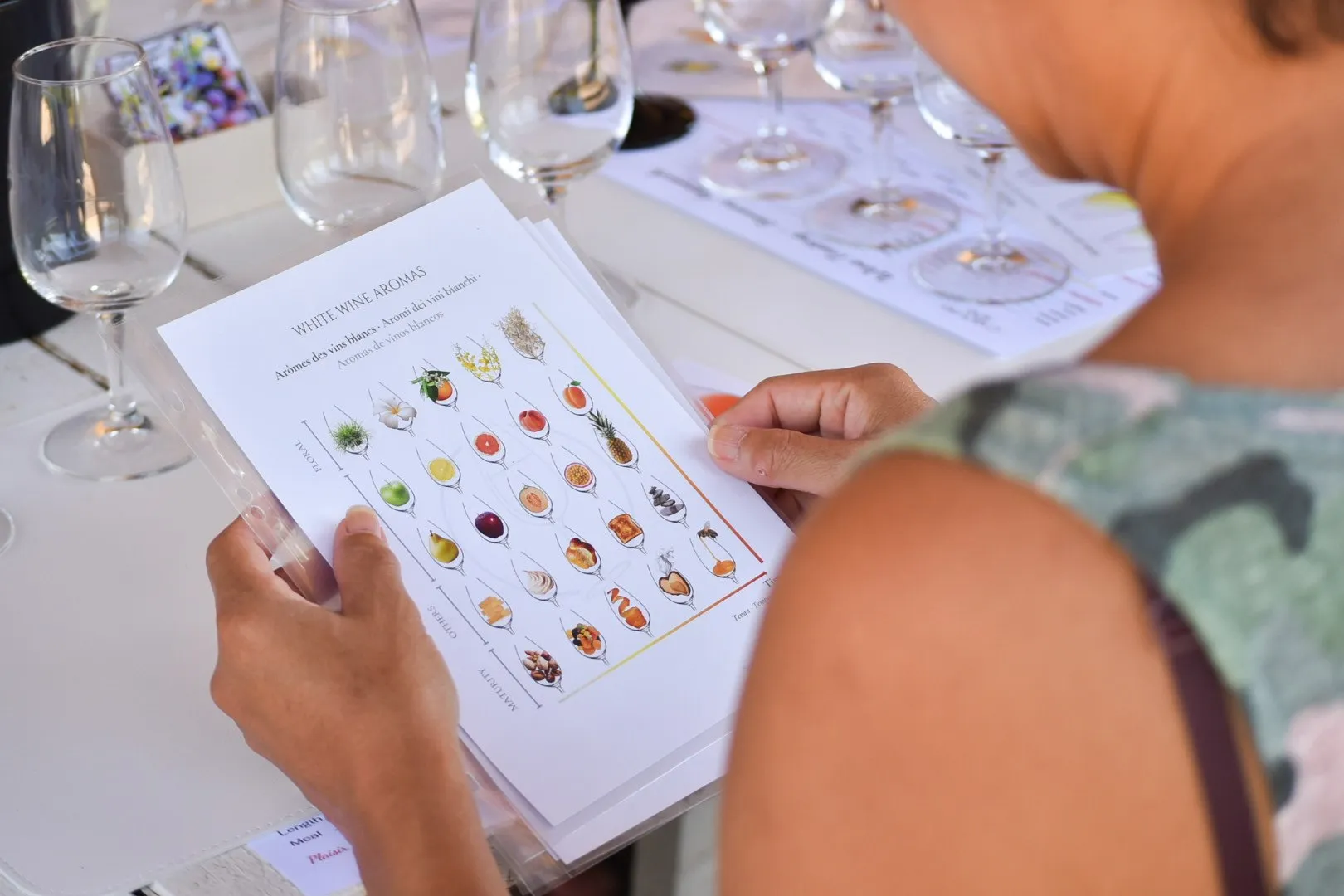
Sometimes we recognise a smell without being able to name it. It feels familiar, yet we cannot remember where we met it before.
Our olfactory memory builds up over the years, through food, places, seasons and memories.
During a tasting, many people immediately look for one precise aroma. Yet starting with an overall impression is often easier.
Bring your nose to the glass without swirling it. This is the first nose.
Do you sense something fruity, floral, herbaceous or spicy? Recognising an aroma family is already an excellent landmark.
Then gently swirl the wine. This aeration helps release the aromatic compounds. Return to the glass for the second nose: have some nuances become easier to perceive?
If your neighbour recognises violet where you simply sense a floral note, it does not mean you have tasted any less well. Your olfactory memories are different.
With experience, the associations grow richer and the words come more naturally.
The palate: understanding what you feel
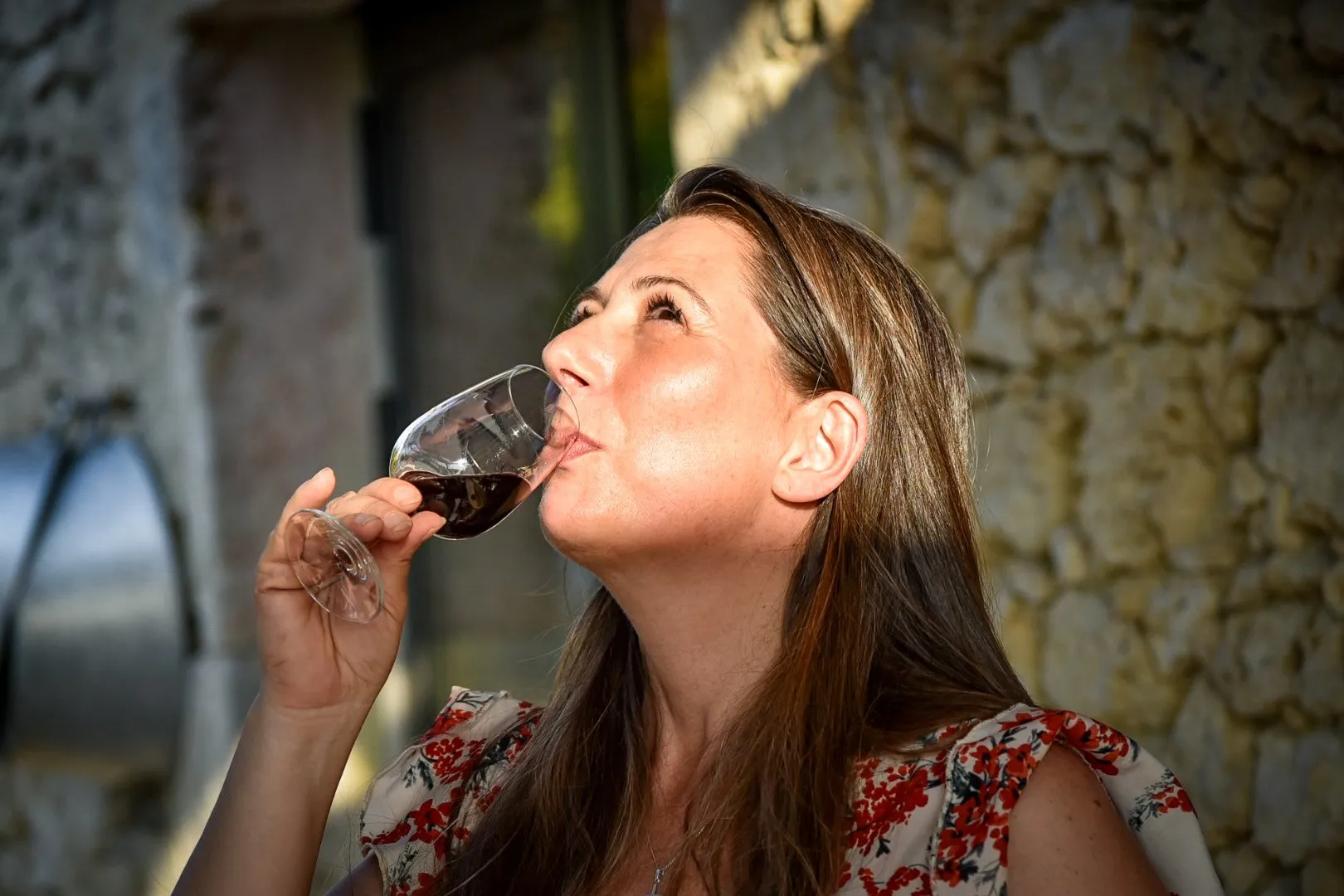
The first sip reveals another dimension of the wine: its freshness, its texture, its balance.
Rather than trying to identify everything, start by noticing a few essential sensations.
Acidity brings freshness and makes your mouth water. It gives the wine its lively, sometimes vibrant character.
Tannins, found mainly in red wines, create a drying or rough sensation on the gums and inside the cheeks. This is astringency. It is different from bitterness, which is a taste.
Alcohol can add volume and a sensation of warmth. Together with the wine’s other components, it contributes to its body: that impression of weight and volume in the mouth that makes a wine feel light, full or enveloping.
Sweetness comes mainly from residual sugar. A very fruity wine can seem sweet while being perfectly dry: fruit aromas do not necessarily mean there is sugar.
And the aromas you find in your mouth? They are perceived through retronasal smell: the aromatic compounds travel up to the nose from the back of the mouth. That is why our sense of smell plays such an important part in what we call taste.
Finally, after swallowing or spitting the wine, pay attention to the aromas that linger. This aromatic persistence is the length of the wine.
There is no need to remember everything at once. Simply ask yourself: does this wine seem fresh? Light or full? Do I feel any drying? Which aromas remain after the sip?
These few questions are already enough to go beyond a simple “I like it” or “I don’t like it”.
From “I like it” to “I understand why”
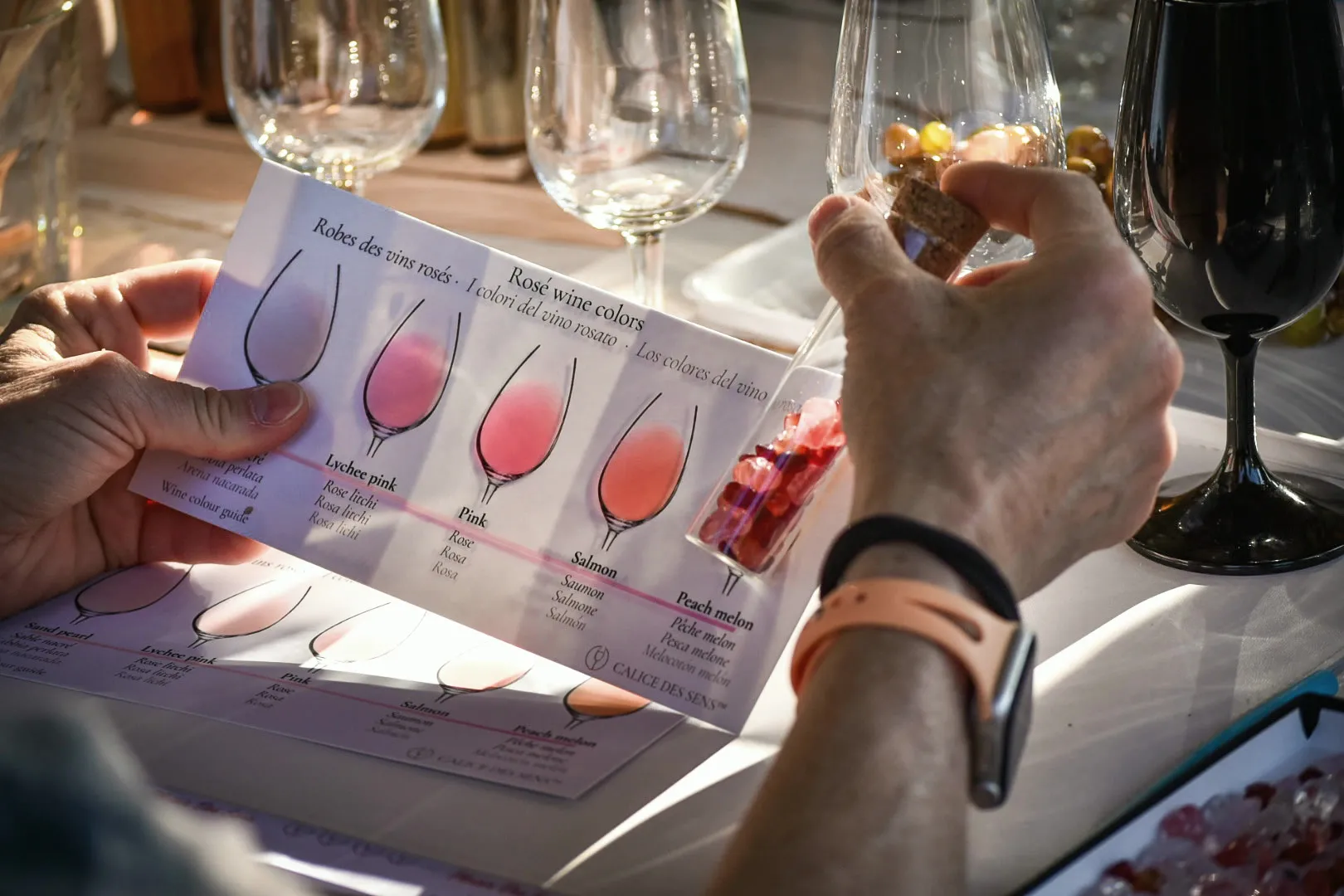
Enjoying a wine and understanding its structure are two different things.
You can love a wine without knowing how to explain why. You can also recognise its qualities without particularly wanting to drink it.
Marked acidity may delight someone who loves freshness, while another person will prefer a rounder wine. The characteristics of the wine are very real, but the way we appreciate them remains personal.
Learning to taste is also discovering your own preferences.
And once you know what you like – a certain freshness, supple tannins, a generous texture – choosing a bottle gradually becomes easier.
Comparing to understand better
In my workshops, I often use a map of France or Europe to place the wines we are about to taste. One wine shaped by the Atlantic, another from a continental climate, a third from further south: these geographical landmarks help show how climate can influence their profile.
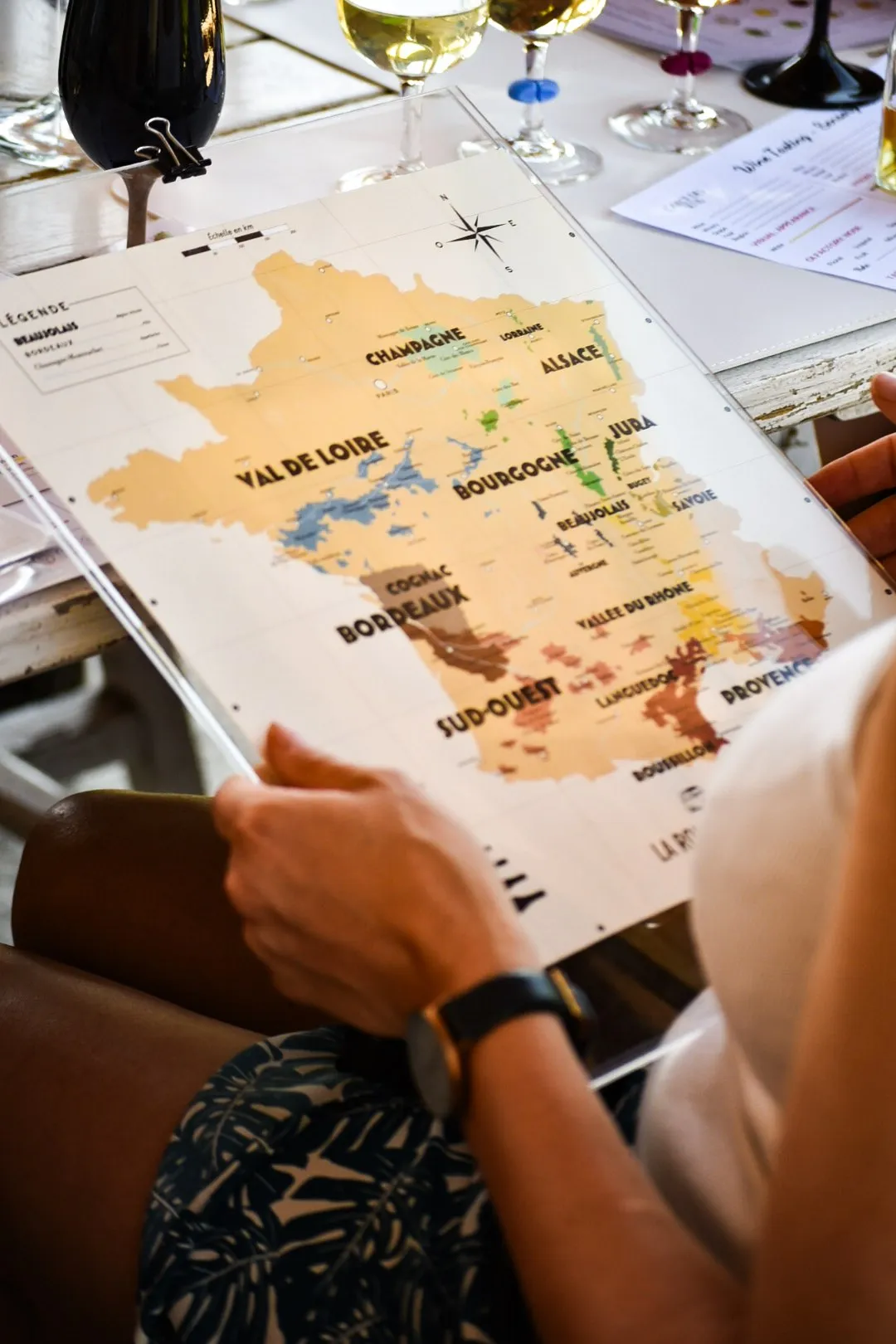
I pair it with my aroma chart. In cooler climates, we often find profiles evoking citrus, green apple or fresh fruit. In warmer climates, the aromas can shift towards riper fruit, sometimes yellow-fleshed or tropical.
These are tendencies, not absolute rules. The grape variety, the altitude, the proximity of the sea and the conditions of the vintage also help shape the wine.
At home, the exercise is easy to repeat: two wines from the same grape variety, one from a cool climate and the other from a warmer one, tasted side by side. It is often through comparison that words like freshness, ripeness or texture take on their full meaning.
I explain how to do it with two Chardonnays, one from Chablis and the other from Languedoc.
Trusting your senses
Tasting a wine is not about finding the aromas that others have identified, nor about searching for the words a sommelier would use.
Tasting is a deeply personal experience. Our memory, our experiences and our sensitivity shape what we perceive and the way we express it.
The same wine can therefore awaken different sensations and memories from one person to another. No vocabulary, on its own, could ever do justice to this diversity.
The words that come to you spontaneously are precious: they are your first tasting language. Trust them.
The vocabulary of wine will then enrich this language, sharpen your perceptions and help you share them.
Because learning to taste is not about replacing your own sensations with other people’s. It is about learning to understand your own better.
Alexandra Baudon · International sommelier and wine educator
The Journal letter
Once a month: new stories from the Journal, something to try at home and a little news from the workshop.
Thank you! The next letter will be waiting in your inbox.