

Wine aromas: what our nose tells us
Why can a wine smell of cherry, rose or pepper when none of these ingredients goes into it? · wine aromas · recognising wine aromas · olfactory memory · first nose second nose · aroma wheel · Wine aromas: what our nose tells us Why can a wine smell of cherry, rose or pepper when none of these ingredients goes into it? wine aromas recognising wine aromas olfactory memory first nose second nose aroma wheel
Why can a wine smell of cherry, rose or pepper when none of these ingredients goes into it?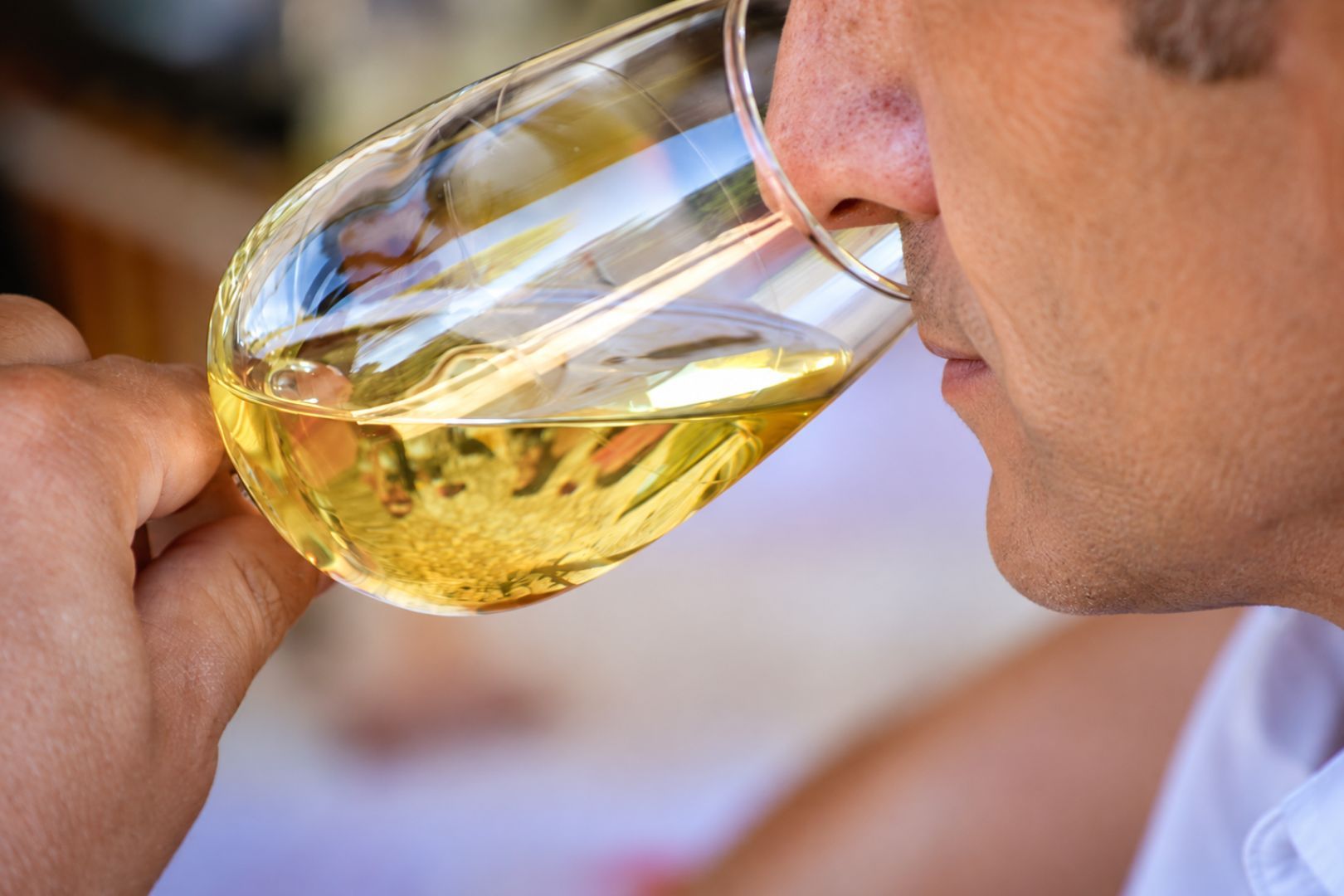
Why can a wine smell of cherry, rose or pepper when none of these ingredients goes into it? The answer lies somewhere between the chemistry of wine, our personal history and the way our brain translates the invisible into familiar images.
Where do aromas come from?
Wine contains hundreds of chemical compounds, some of which have a scent. These molecules come from the grape itself, develop during fermentation, or are transformed during maturation and ageing.
When we perceive an impression of peach in a white wine, it does not mean the wine contains peach. Some molecules simply evoke a smell our brain already recognises – because it has met it elsewhere, in a garden, a kitchen, a market.
This is where our memory comes in. Our personal experiences gradually build up an olfactory library unique to each of us. A smell that one person immediately links to redcurrant may remind someone else of a more familiar red fruit.
Aromas are also a matter of personal perception. That is what makes learning them both demanding and fascinating.
The most delicate exercise in tasting
Recognising aromas is probably the most difficult exercise in tasting.
It very often happens that we recognise a smell without managing to name it. It feels familiar, we know we have met it before – but the word won’t come.
I generally advise starting by identifying a broad family: is it fruity, floral, herbaceous, spicy? Then refining little by little. If the impression is fruity, is it citrus, red fruit, stone fruit? And among red fruits, does it evoke strawberry, cherry or raspberry?
This progression helps you build landmarks without getting lost in a multitude of possibilities.
To train your nose, there is no need to open a bottle. Sometimes it is enough to open your spice cupboard, crush a few aromatic herb leaves, or take the time to smell a piece of fruit before eating it. It is by multiplying these small experiences that our olfactory memory grows richer.
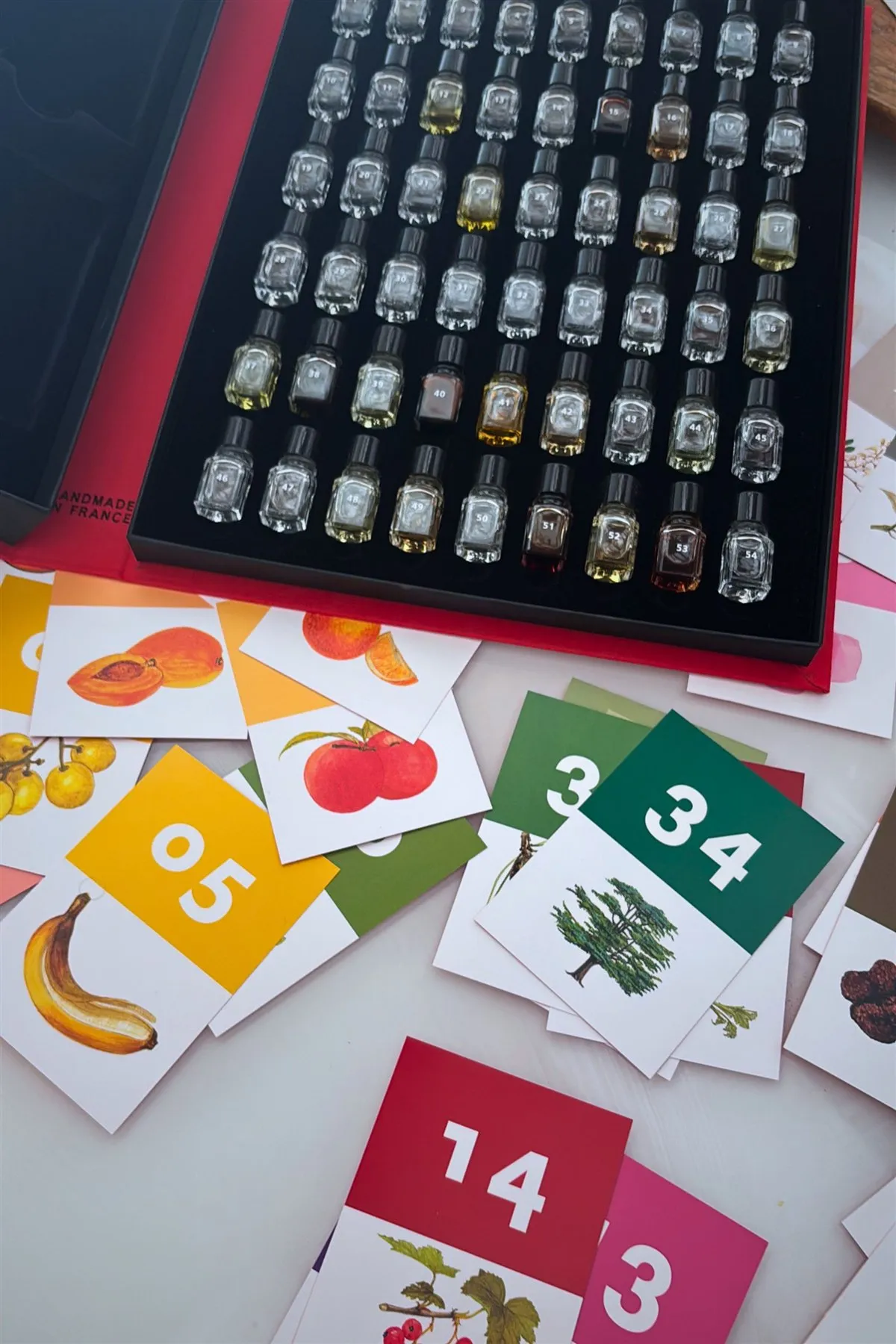
Some choose to go further with aroma recognition kits – the best known being Jean Lenoir’s Le Nez du Vin. These vials make it possible to isolate smells one by one, identify them, memorise them and learn to recognise them out of context. It is an interesting approach for building solid landmarks and gradually widening your aromatic repertoire.
When the strawberry goes round the table
Group tastings sometimes lead to rather amusing situations.
Imagine someone announcing with conviction: “I can smell strawberry!”
And a few moments later, strawberry seems to appear in several glasses around the table.
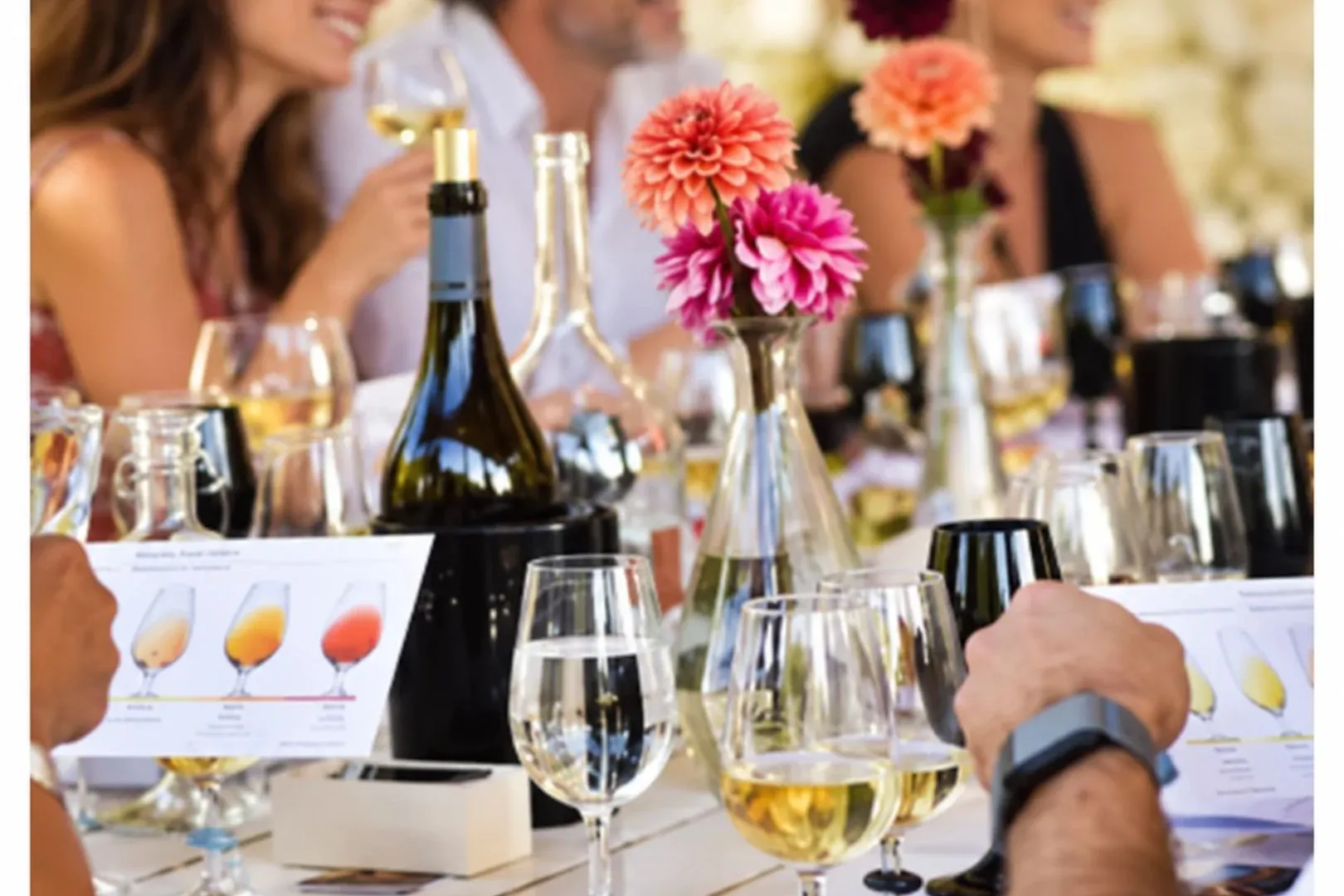
Coincidence? Not necessarily. Our brain is sensitive to suggestion. When an aroma is named, our attention can naturally turn towards it – at the expense of other impressions we might have noticed on our own.
This does not mean the participants are inventing what they smell. Simply, our expectations and the words we hear influence our perception.
That is why I always suggest taking a few moments to smell the wine individually before sharing. The discussions then become much richer: everyone brings their own references, without the first answer given imposing itself on the whole group.
First nose, second nose
During a tasting, I suggest starting by smelling the wine without swirling the glass.
This is the first nose: the first impressions, sometimes clear and expressive, sometimes discreet, sometimes hard to define.
Then comes the second nose. By gently swirling the wine in the glass, we help release certain volatile compounds. Other nuances may then appear – the wine may seem more intense, more expressive, or simply different.
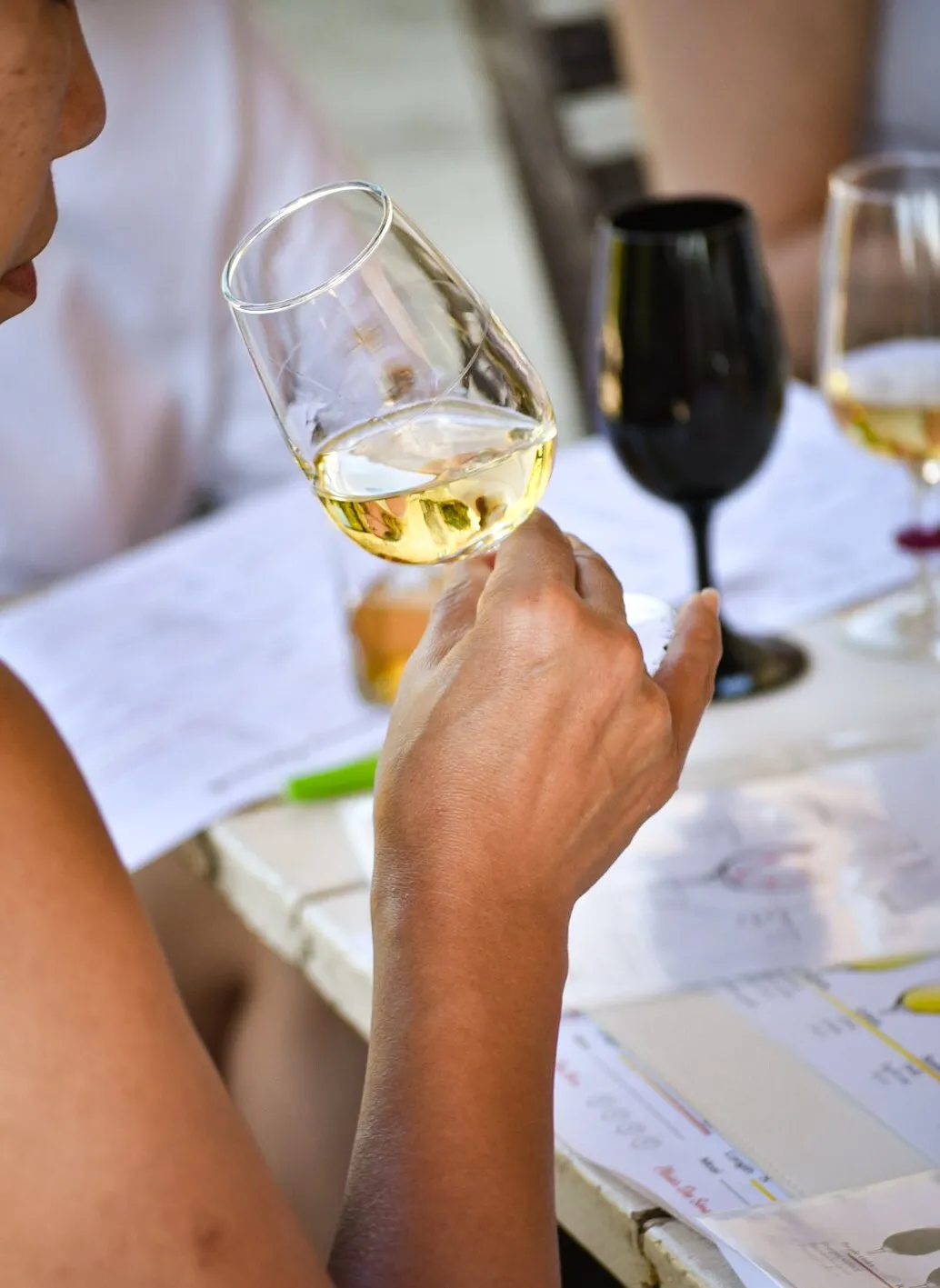
The aim is not to draw up a long list of aromas straight away, but to observe their families, their character and how they combine. Fresh fruit does not tell the same story as ripe or jammy fruit. Delicate floral notes do not give the same impression as spicy or oaky aromas.
Little by little, these nuances sketch the profile of the wine.
The birth of the aromatic Calice
When I began creating my teaching materials, I represented a single aroma per Calice.
But very quickly, something became obvious: a wine cannot be summed up by a single smell. What characterises it is also the way several aromas meet and form a whole.
So I began bringing different aromas together in the same Calice, organising them around wine profiles.
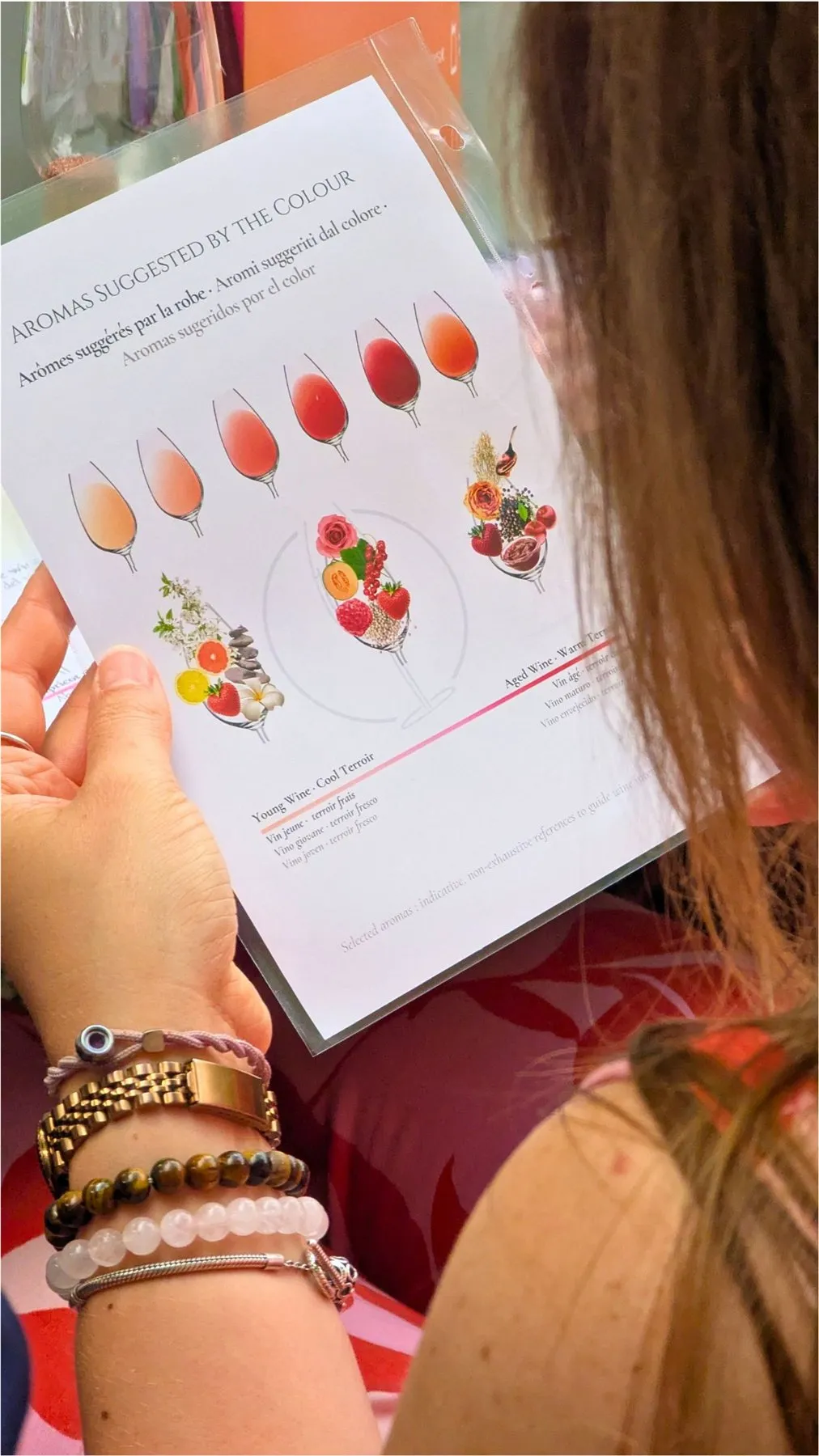
For whites, I first explored three expressions: a light wine from a cool climate, with notes of citrus, green apple and white flowers; a more structured wine, marked by riper fruit; then a mature wine whose aromas had been transformed over time.
For reds, I followed a similar approach: from the fresh red fruit of a light wine to the black fruit, spices and oaky nuances of a more structured red, then to the tertiary aromas of a mature wine.
These first compositions allowed me to make visible differences that we usually perceive through the nose. Gradually, I extended this approach to grape varieties, to their different expressions depending on the terroir, to wine styles and to winemaking methods.
The aromatic Calice does not seek to replace existing tools or to list every possible aroma in a wine. It offers a selection of characteristic landmarks to help recognise a profile, compare several expressions and put words to what we feel.
Where vials let you discover and memorise individual smells, the Calice links these smells together to read an overall profile – an approach that grew gradually out of my years of teaching.
Landmarks, never imposed answers
The aroma wheel and the aromatic Calice play complementary roles.
The first helps you explore the broad families and enrich your vocabulary. The second visually brings together the main aromas of a wine profile or a grape variety.
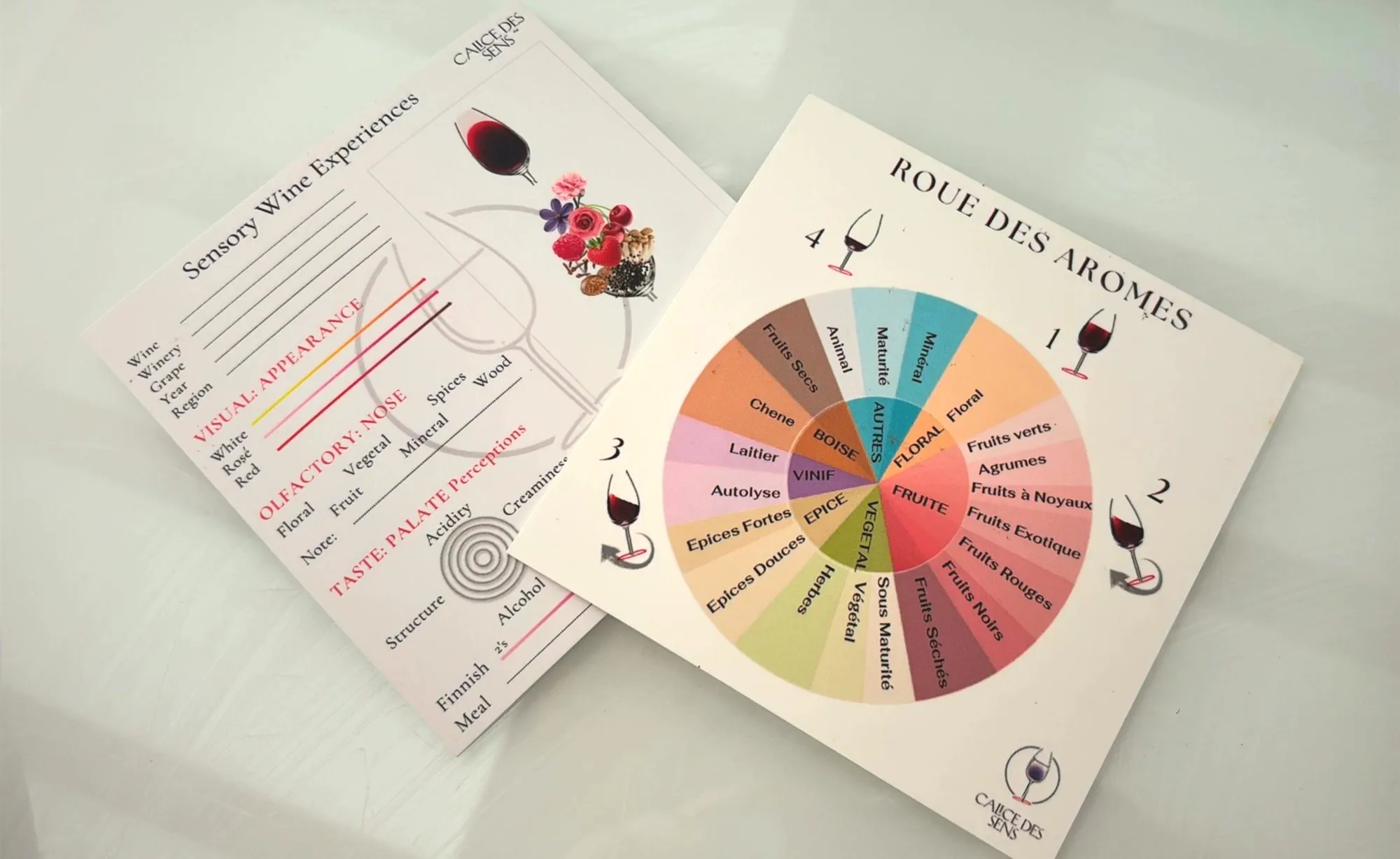
But no tool can predict exactly what we will find in a glass. Two wines from the same grape variety can show very different expressions depending on their origin, the ripeness of the grapes, the winemaking choices or how they have evolved over time. And two people may describe the same wine differently.
With time and practice, our nose becomes sharper, our vocabulary richer, and nuances that were once hard to identify become more familiar.
One aroma catches our attention. Together, they reveal the profile of the wine.
Alexandra Baudon · International sommelier and wine educator
The Journal letter
Once a month: new stories from the Journal, something to try at home and a little news from the workshop.
Thank you! The next letter will be waiting in your inbox.